
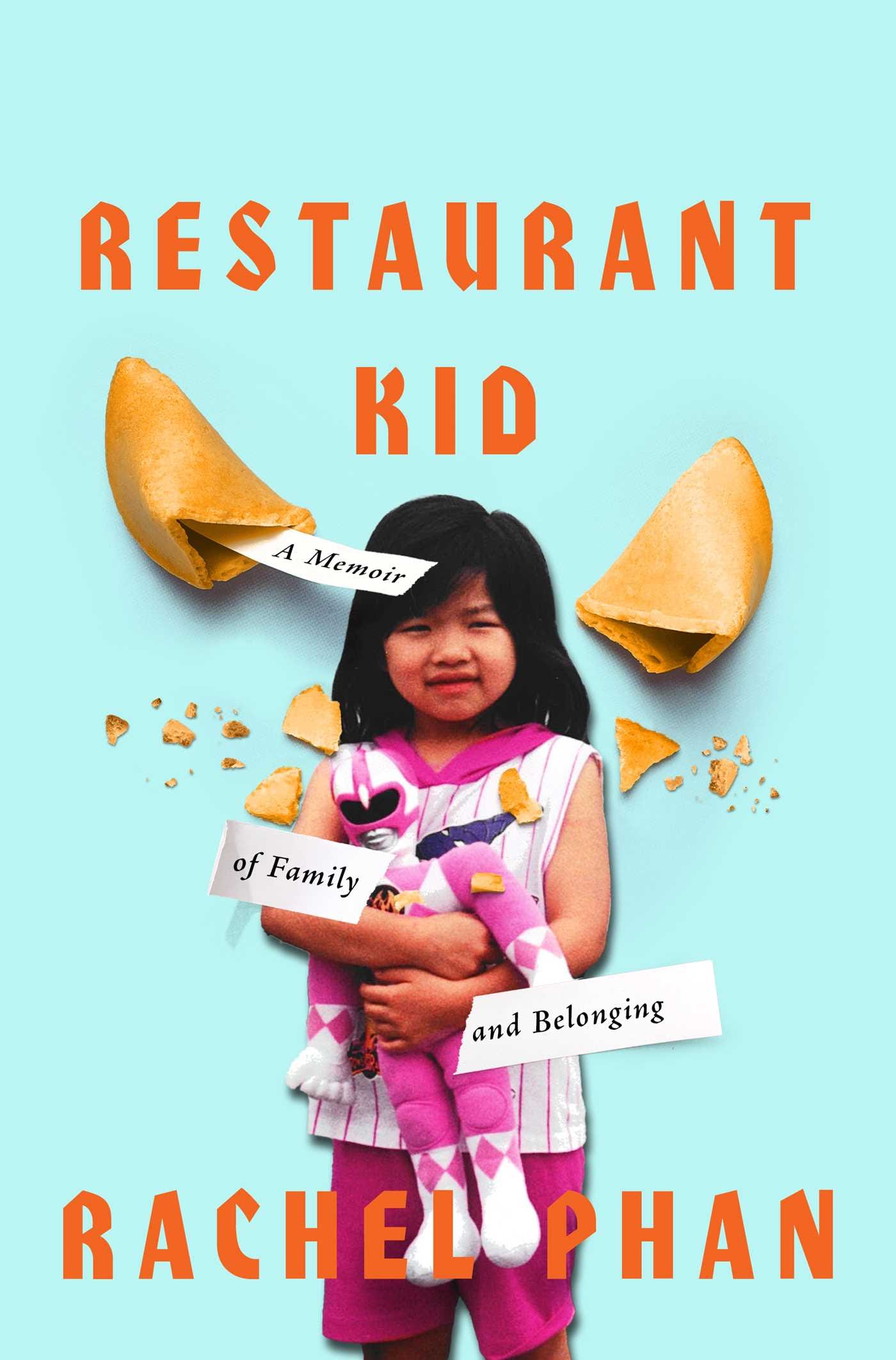
Restaurant Kid
Pegasus Books
2025
Rachel Phan is 3 years old when she meets her replacement: the restaurant her parents opened and christened with her Chinese name, May May. It’s then that she becomes, as the title of her memoir says, a Restaurant Kid.
Restaurant owner is one of those occupations that define not only the person’s life but their family’s life. In “Restaurant Kid,” Phan shares her stories growing up in and around her family’s restaurant, and how things are changing now that her parents are nearing retirement age. But this heartfelt debut goes far beyond stories from inside the restaurant.
Phan’s story is set in circumstances that are both extreme yet normal. When she was growing up, her immediate family made up a third of the Asian population of her hometown of Kingsville, Ontario. She was immediately ostracized for being the only Asian in her class and not looking like her classmates.
“Why do you look like that?” she’s asked by a potential new friend when she’s 5.
For third-culture kids like Phan who live in places without large diaspora populations, being the only one (and noticing it) is a common experience. I did when I was growing up in Arkansas. In various publications online, I have my own archive of angsty writing about that. Phan and I join the growing chorus of Asian diaspora writers who felt both “too Asian” and “too not Asian” (American in my case, Canadian in hers) at the same time. It’s a journey that many of us have to go on for acceptance and to find our own place in the world.
Phan had it rough. She’s called by a friend to unironically ask if their restaurant serves dog. Boys proudly proclaim to her that they have “yellow fever.” She’s bullied. I wonder if people in Phan’s age look at people like me who grew up in the advent of “Crazy Rich Asians” and “To All the Boys I’ve Loved Before” and think we have it easy.
I don’t blame them. Sometimes I catch myself thinking that way about those who are in high school now. “Crazy Rich Asians,” came out when I was in high school. What if I had all this representation when I was a kid?
Which begs a bigger question: What is the role of stories about lonely angsty Asians like us now now? Haven’t things gotten better? But maybe every generation of Asian Americans wonders the same thing, from different vantage points, constantly. Despite cultural touchpoints such as “K-pop Demon Hunters,” “To all the Boys I’ve Loved Before,” and “Shang-Chi and the Legend of the Ten Rings,” some Asian American child is undoubtedly sitting at home right now feeling the same angst that both I and Phan felt with different nuances.
Asian Americans are 50 percent less likely than other racial groups to seek help for mental health conditions, Phan points out in her book. Studies show that second-generation Chinese Canadians actually have more mental illness than their immigrant parents. Maybe third culture kids don’t have a “root culture” to hold onto, she wrote, or maybe they’re just more open to seeking help.
“I can’t speak to the studies and the academic numbers,” Phan continues. “But I can understand not fully belonging anywhere. I understand feeling untethered and unmoored, with no roots anywhere to anchor you down. I understand how this makes you feel like you’re on an island, alone and without the hope of rescue.”
Maybe this hypothetical high school kid is not the only Asian at their school. In fact, maybe their classmates are annoying know-it-alls who think they know more about Asian culture than they do. But that feeling of not enoughness, that feeling like you have to prove something, is still there. And, maybe, Phan’s memoir can make them feel less alone. She takes us on her journey of seeking belonging, dating terrible men, finding her husband (who genuinely seems great), and navigating the pressure of being her parents' retirement plan.
The memoir is a reminder that things have indeed gotten better for many diasporic Asians but that we still have a long way to go.


