
Listening Room Film Festival
Henry Turner Jr's Listening Room Heritage Museum
Baton Rouge
Dec. 6-7 and 12-13
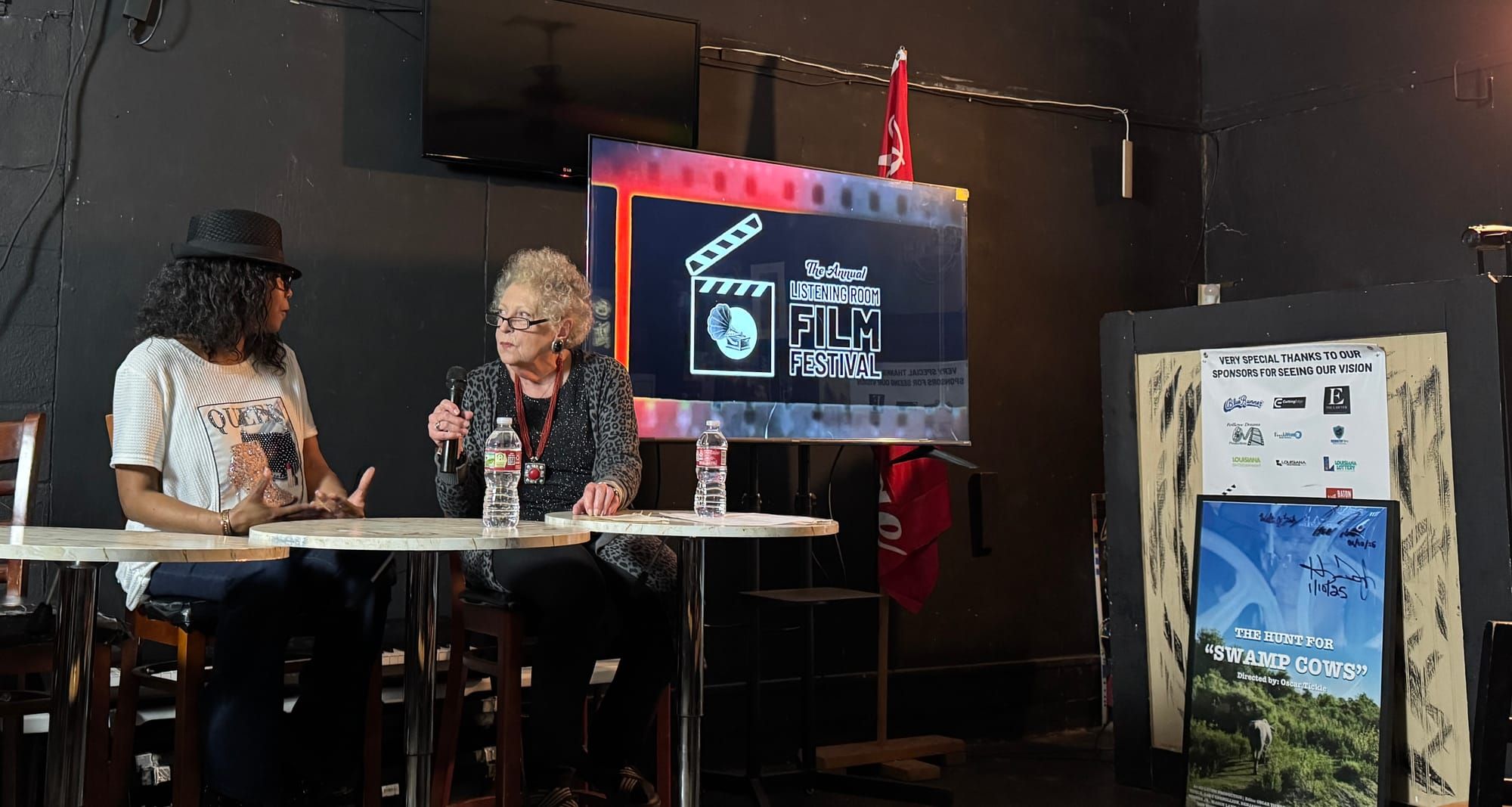
Stepping into the Listening Room Film Festival is like walking into a bar during the daytime. There are a few people and a TV playing something just a little too loud . You get the feeling that it’s a space designed to be used for something else – and it is. A stage peppered with instruments sits to the side of the room, but chairs are set in rows to face a TV.
At the fourth annual festival, the organizers have selected shorts, music videos and full-length features that spotlight social issues and Louisiana music. The festival also provides a space for industry panels and Q&As. Each night ends with live music performances except Dec. 13, which is scheduled to be a closing party featuring dance videos.
According to the schedule, doors opened at 3 p.m. on Saturday with the first screening to start at 3:30 p.m., but when I arrived at 3:15 p.m., they had already started the first short, “When I needed you.”
The short written by Priscilla Adams is about a young heterosexual girl, Meka, who discovers she is HIV positive and reaches out to her church’s pastor for help, only to be met with ridicule and judgment. The second short, also by Adams, was called “High School Honeys.” It features a high school football player with a promising career and smart girlfriend who makes a series of bad choices. At the end of the film, he goes in for a check up and discovers he has HIV; it’s implied that the three girls who have slept with him over the course of the year have it too.
While both films are raising awareness for an important issue that isn’t discussed enough, they’re hamfisted in their delivery. In both, characters seem to be making choices in a complete complete vacuum, divorced from anything else that could be happening outside of the main storyline. In the first, Meka commits suicide following the negative encounter with her pastor. In the other, the protagonist decides to sleep with his girlfriend’s cousin with so little convincing that it makes his actual relationship feel unbelievable.
Trailer for "When I needed you."
In a Q&A after the screening, Adams said that she was drawn to the topic because she went to school witha girl who was rumored to have died of AIDS.
“I didn’t realize myself how prominent it was,” she said, noting that HIV/AIDS is especially prevalent both in the Black community and in Louisiana specifically.
According to CDC data in 2022, Black Americans make up 37 percent of estimated new HIV infections despite only being 12 percent of the population. Louisiana has also consistently ranks close to the top nationally for HIV and AIDS rates.
The shorts manage to steer away from the moralistic messages about abstinence and does raise awareness of how HIV is still an active issue today, but the character’s extreme actions and the dire consequences for them make both shorts feel like After-School Specials.
Awareness is only as good as what you do with it, and what’s the upshot here? Adams said that she tried to infuse her writing with information about testing. (They can just swab now, no need to draw blood.). But if the consequences of getting HIV are always shown to be catastrophic, what are we telling young people who find themselves infected?
It’s totally fair to criticize hypocrisy in churches or show the unintended consequences of sex with multiple partners without protection. But if as a society we want to end the stigma around HIV and make it something that people are both aware of and mobilize to treat effectively/prevent, then the films miss an opportunity for the characters to figure out how to live with it, as over 23,000 Louisiana residents are doing in 2025.
The rest of the festival's offerings cover a range of issues, but it seems like the plethora of single things happening makes the event challenging to market or to attend if you’re not part of the filmmaking world. Whereas other film festivals or screenings are organized around single themes or have several simultaneous events going on, the Listening Room Film Festival has one room and a single event at a time. The festival’s lineup includes speakers on practical filmmaking topics such as how to write on a budget or when you need to hire a lawyer for your production— all spread out on different days. These are invaluable practical topics for those in the industry. For those who are just wanting to watch films, it makes for an awkward scheduling conundrum.
The Listening Room Film Festival shows great potential to tackle hard issues and give access to those who want to make it in the industry. If it wants to appeal to those outside its immediate community, it needs to tweak its schedule...and then stick to it.


