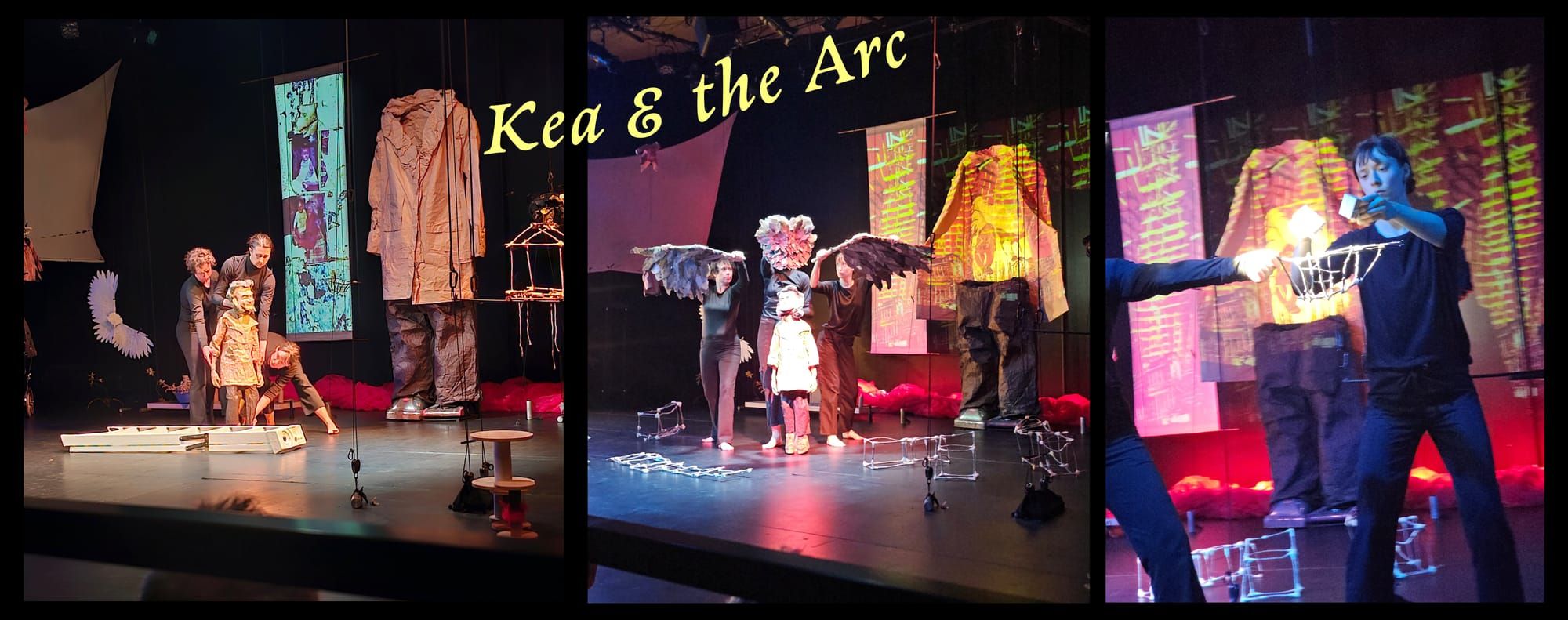
Kea & the Ark
The Sedgwick Theater
Philadelphia
7137 Germantown Ave.
July 1
A friend talked me into seeing a play recently. They grew up around the Philly/New Jersey area and are a fan of odd local histories. I had gleaned from her that it was a play involving "puppets" and that it was about some wild character from years back who actually built an ark. Yes, an actual ark like Noah from the Bible; a gigantic wooden boat. This was intriguing enough to me that I agreed to go. That's about all I knew about it before a few of us drove up to the Sedgwick Theater in Mt Airy to see the play Kea and the Ark.
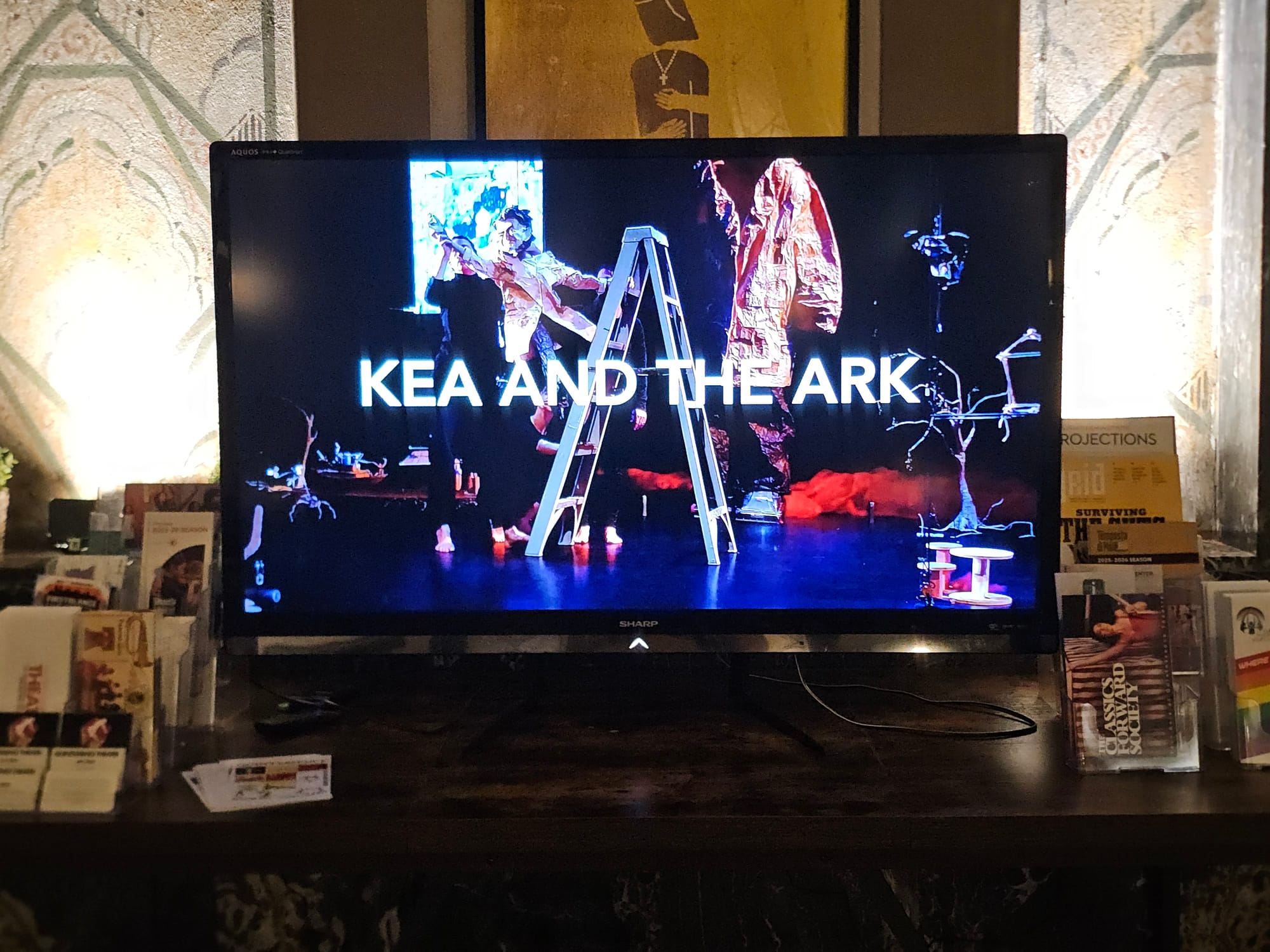
Back in the '80s in Newark, New Jersey, there was an eccentric artist named Kea Tawana. Starting in 1983, Kea began construction on an 86-foot long, 28-foot wide, three-story high ancient wooden yacht. Apparently the act was inspired by the vacuous and devastated state of Newark at the time and was constructed using materials from abandoned houses in the area. It remained an eyesore to local politicians who ordered it demolished in 1988. In 2023, an interdisciplinary artist named Sebastienne Mundheim looked at the construction of this ark and began developing an unusual play using this discarded piece of history as a blueprint to build a narrative around.
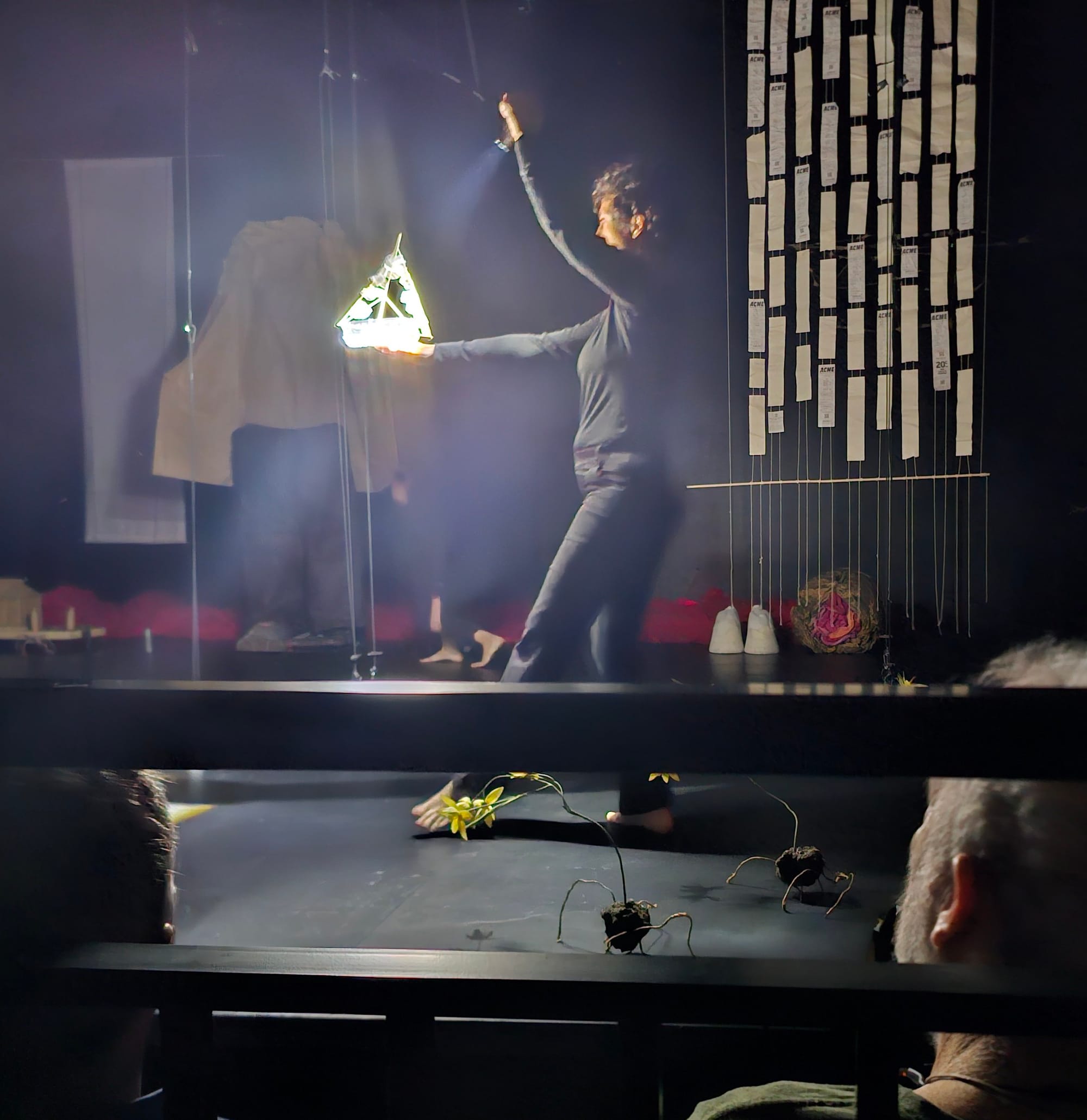
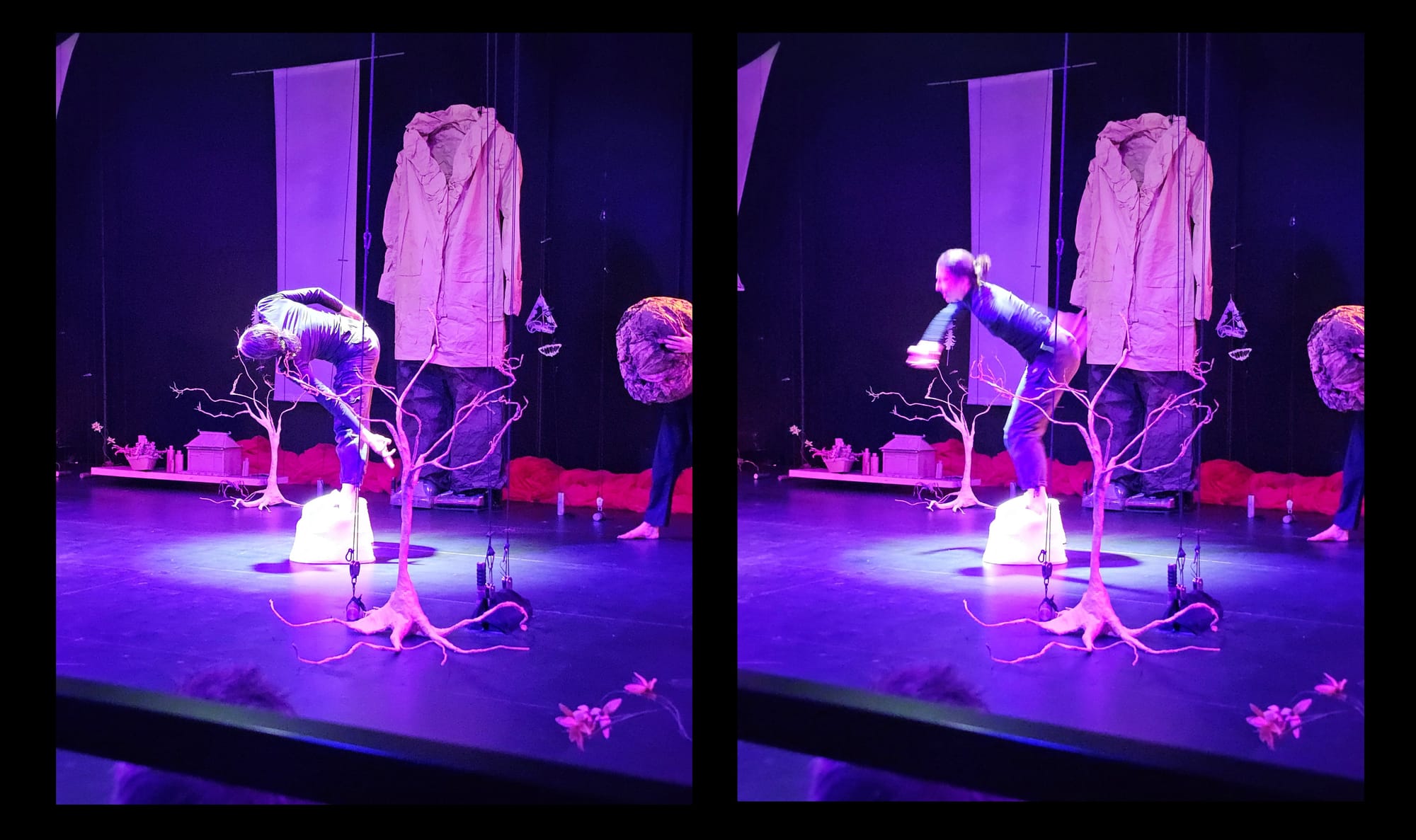
The Sedgwick Theater where the show was held made a fitting backdrop for this immersive story. The 98-year-old theater has an ornate but slightly crumbling look to it. The layout and design of the play featured minimal props and a simple lighting rig capable of lighting up the full stage in deep blues and dark reds, isolating characters, and casting large shadow effects. The first thing we saw was the director Sebastienne Mundheim over to the far left of the stage under a single spotlight. In a soft and even timbre, she led us through the life of the eccentric builder of the ark sequentially, as the narration continued throughout the performance.

Our attention was drawn to historic slides of blueprints, drawings, and objects from the ark itself. Sebastienne's soft narration was accompanied by evocative electric cello, played live from the side of the stage. As we were sitting in the dark listening to the director talk about Kea and the construction of the boat, I experienced a slight feeling of displacement. I was being shown slides and read facts and they seemed real, but the cello and emotional quality of the narration began to feel personal. I started to notice that some pictures of Kea didn't look like Kea at all; they looked more like Sebastienne Mundhelm. Meanwhile, we were relayed commentary about the emotional state of Kea, information that might be difficult to discern from records. We saw the emergence of two puppet cats (they were delicately created and moved by the dancers so skillfully that at moments I forgot I was watching puppets). I asked myself: did Kea actually have cats? Are the cats mentioned in the letters? These details, the cats, the slides of Sebastienne, the internal descriptions of Kea, made me realize I might be watching a play that was as much about Sebastienne Mundheim as it was about Kea Tawana. In reading about Kea through articles and watching a documentary on her, it's been said that Kea, being an incredibly creative person, wasn't always the most reliable narrator. This has made me see the play with a softer focus. It feels to me that the play, although rooted in historic facts, may have more of a subjective or experiential nature in practice.
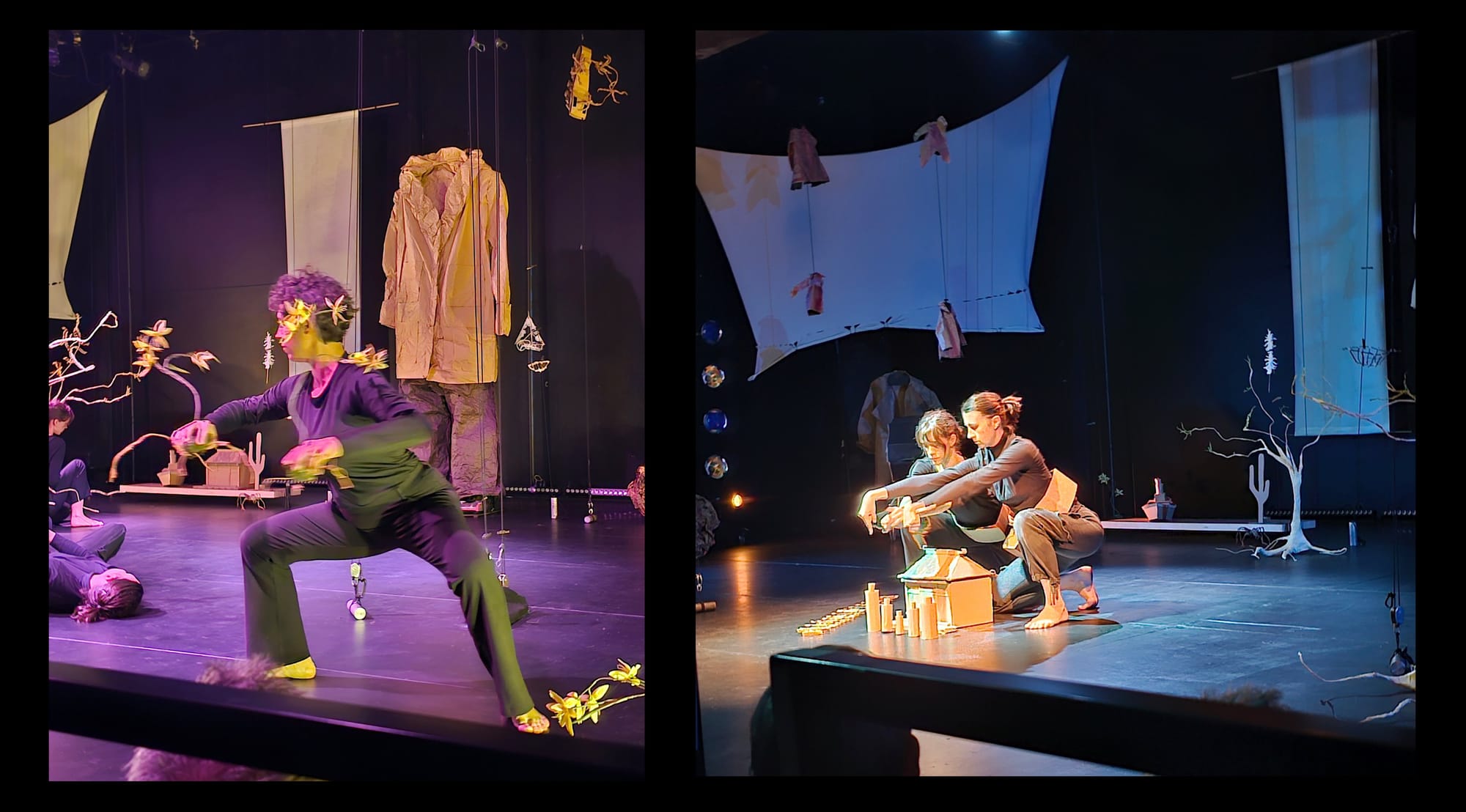
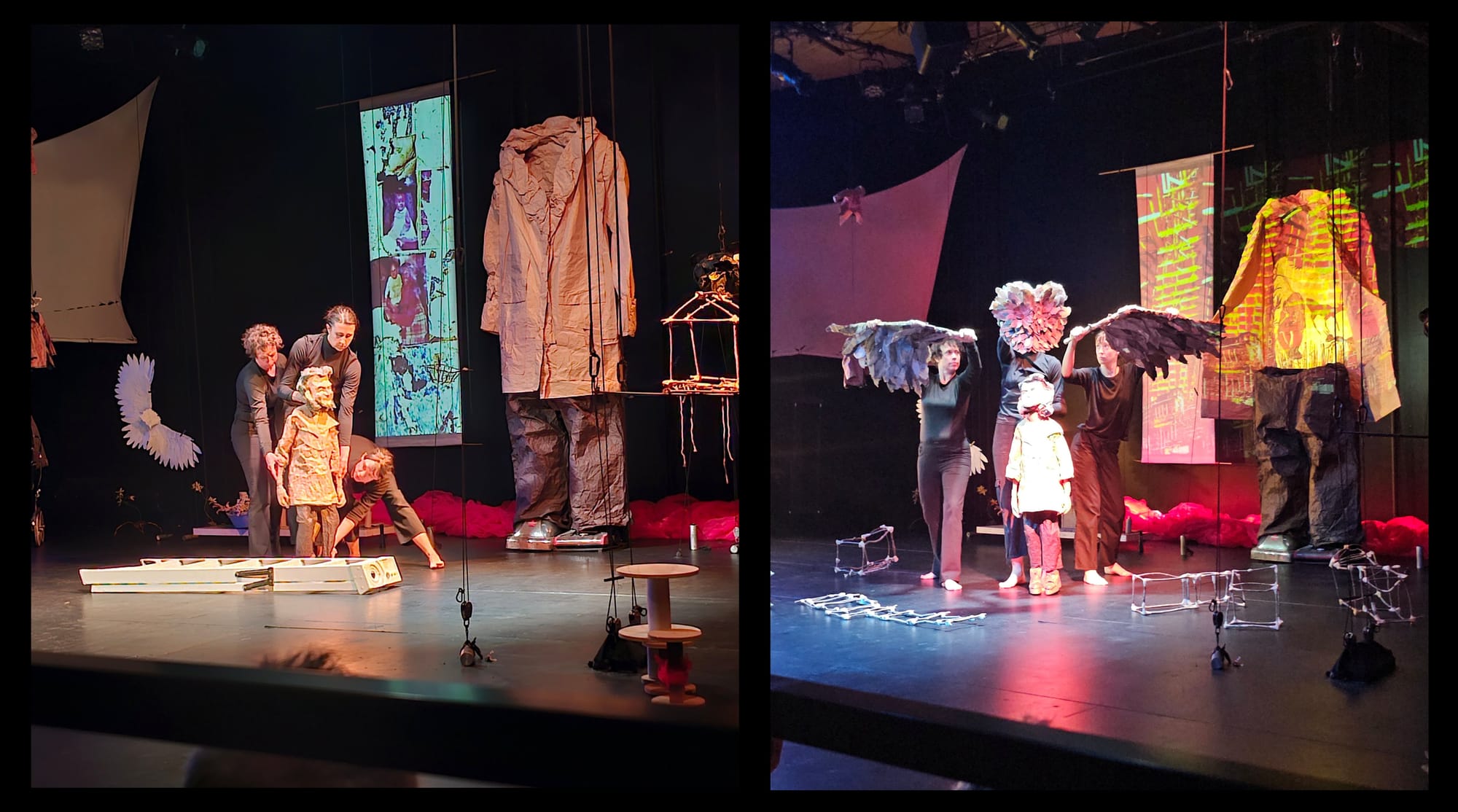
There were three onstage dancers who lent great skill. Their performance offered authenticity to the puppets and props surrounding them; I observed sighs, slight breathing, caring caresses between the puppets. The actual objects on stage had a bare abstract nature and were continually repurposed and added to other props to form different objects altogether. Small wooden blocks that formed building structures turned into people.
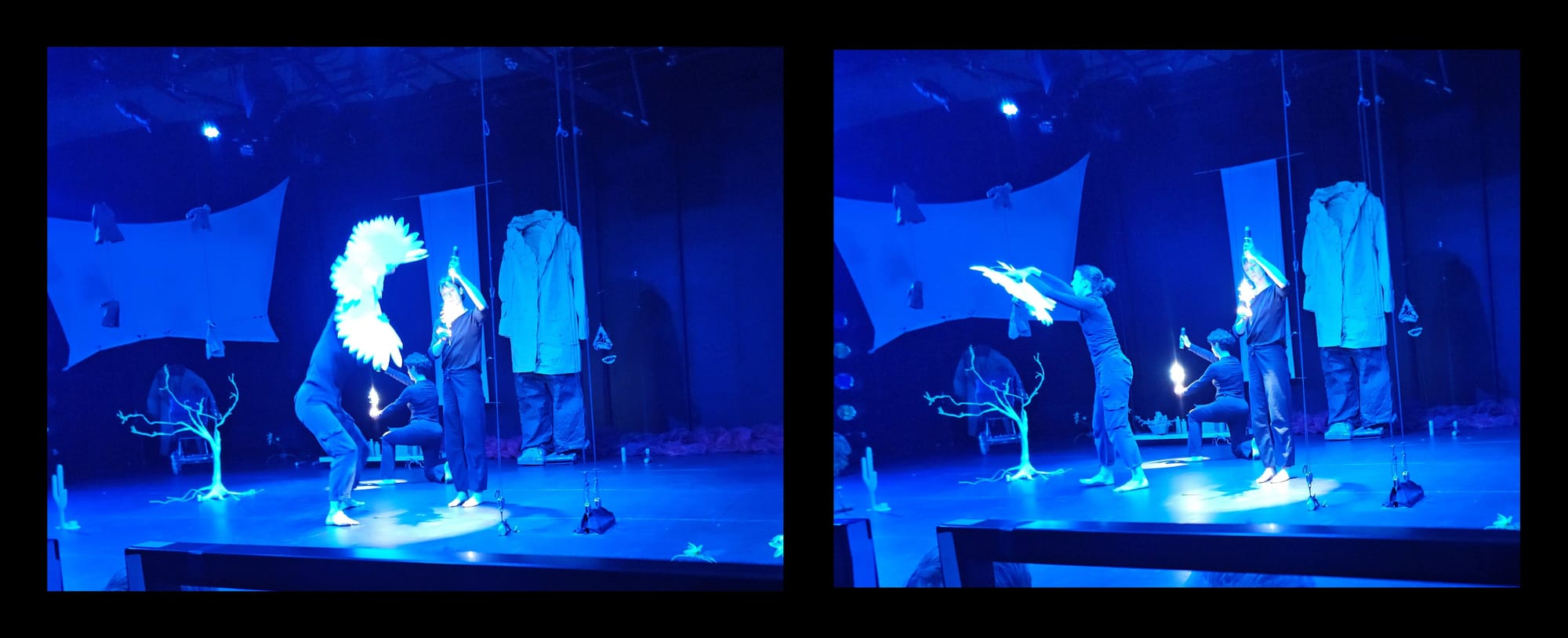
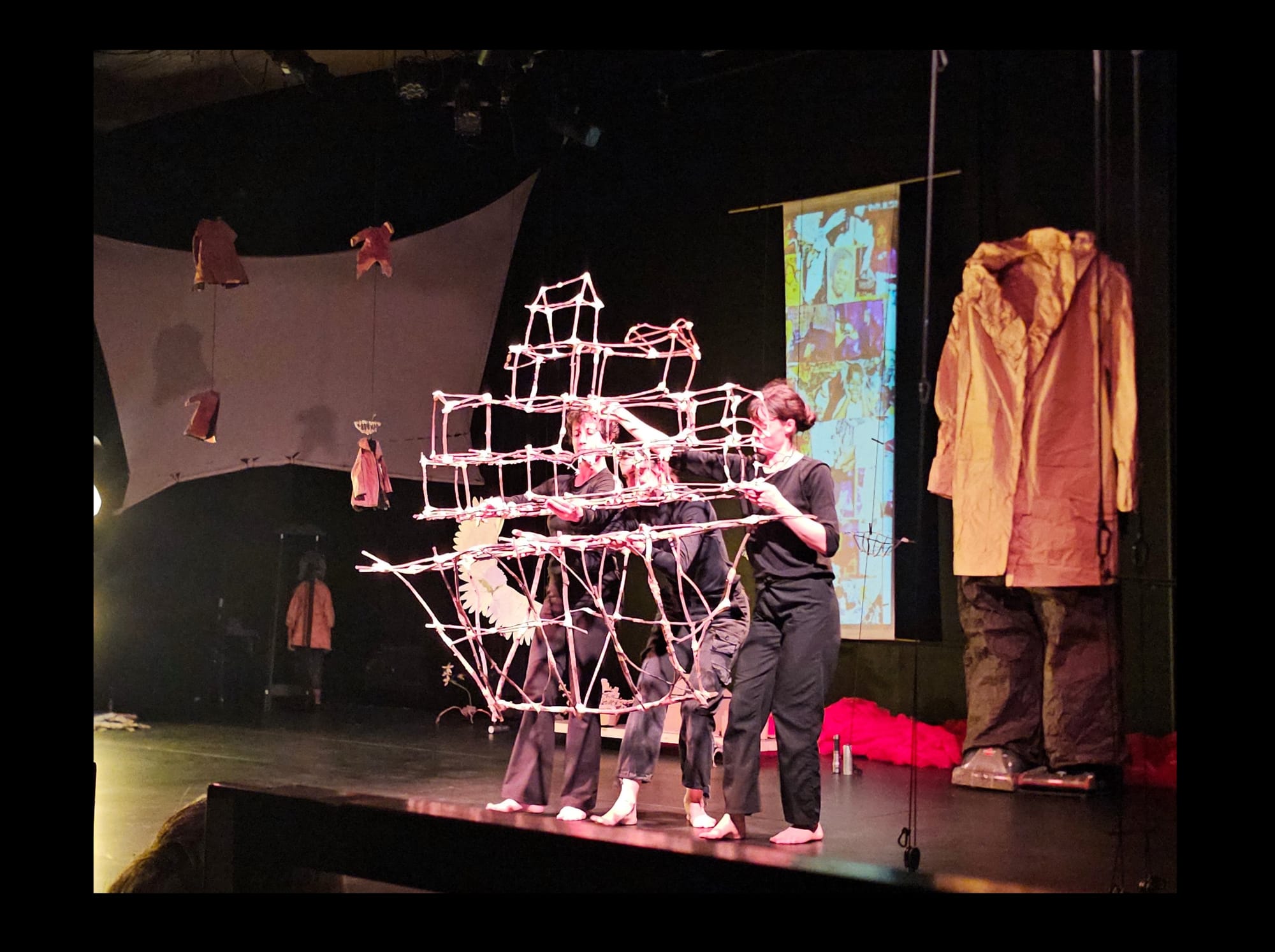
Among my favorite structures on stage was the large abstract construction representing the ark itself. It was lowered from high above the stage and as the narrative progressed, more pieces were slowly added to it to form what looked like an outline of a ghost ship. Near the end of the performance, this apparition-like structure was moved across the stage by the dancers and then deconstructed and scattered. Kea the puppet was given wings, and a feathery heart was haloed above her in what seemed to represent the moment Kea passed away. Her life passed from a reality to mythology; she was converted from a person to a symbol.
The construction of an ark resonates in an era of destabilization. One could hardly believe a real person made such a fantastically large object as a kind of spiritual offering in response to the political climate and housing insecurity of Kea's time.
The offering of a boat carrying us through a storm still feels prescient. The myth-like character of Kea the person becomes real to us because the problems Kea was directly confronting even after changes in decades and shifting political climates are still very much with us. Today we face increasing homelessness and political indifference. We see the spiritual offering of an ark and wish that it could materialize into reality, offering us real structure to stand on.