
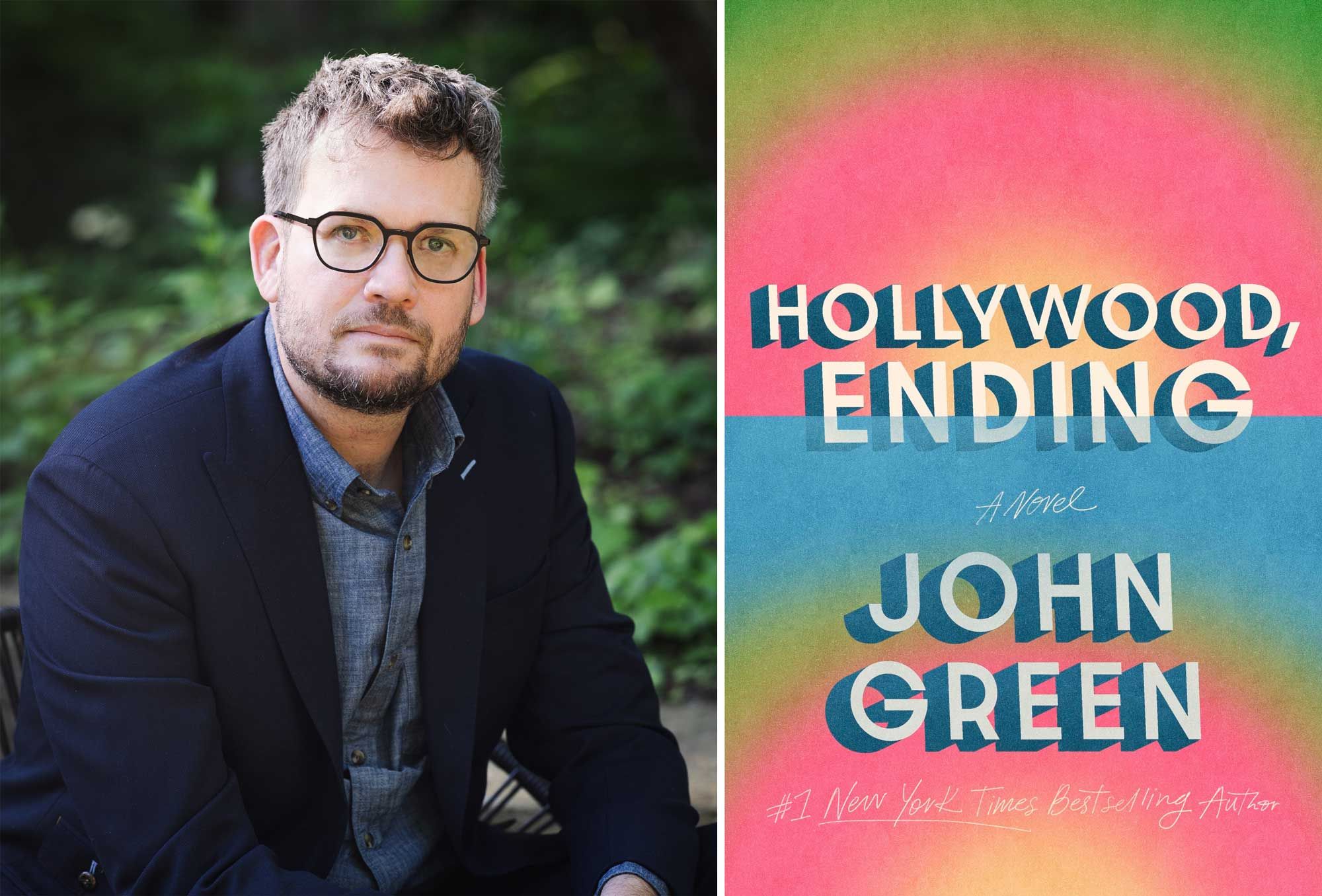
“Hollywood, Ending”
By John Green
Dutton Books
Celebrated YA author John Green’s first foray into “adult” novels, “Hollywood, Ending,” feels like a kind of older sibling to his previous work in that it still, though focused on young twentysomethings, traffics in Green’s distinct warmth and wit while also packing a profound emotional punch.
Yes, the two main characters in “Hollywood” may be a little older and more worldly than Green’s past protagonists — you see them figuring out how to carry their baggage as adults, instead of watching them accumulate it — but the novel will likely affect you for the same reason you cried over “The Fault in Our Stars”: it’s moving to witness two people loving each other through their respective blind spots and damage.
For Juniper, a former Nickelodeon child star, the damage came from a divorced, alcoholic, now-deceased mother who made Juniper feel as though professional success was the only way she’d ever earn love. Meanwhile, for Indianapolis native and newcomer Kai — working on his first film with Juniper and megastar Matthew Malone — the pain stems from (possible spoiler alert ahead) having been groomed and molested for two years by a male high school English teacher, against whom he eventually testified in court.
The production team of the movie Juniper and Kai are making, “Andy Warhol Never Gets Old,” about the final weeks of the iconic American artist’s life, tries to keep Kai’s traumatic past locked away. But as the film and Kai’s performance as Warhol’s intern at Interview magazine generate buzz and Oscar talk, the media catches wind of his past — leaving Kai with no choice but to talk publicly about his biggest source of shame and discomfort.
Before that happens, though, Kai develops a close but chaste relationship with Juniper, who likes (but can’t quite decipher) her co-star. Early on, when she prods him to share his darkest moment with her, he tells her, “There is this thing that people do. … Where they think if they show each other their most horrible horrors or whatever, then they are close. Then they are friends. You tell me about your mother, and I tell you about the trial, and then we are bonded. But it’s not really a way to know someone, just to see their goriest wounds. It’s like a shortcut. I don’t want to take a shortcut with you.”
Green doesn’t take shortcuts with his characters, either, sensitively articulating the fraught, complicated relationship Kai has to sex and to his sexuality as a result of his past abuse. At a party he attends late in the novel, he thinks about how what he really wants to do is cuddle with Juniper and watch a movie — their go-to hang activity: “Maybe I also want more than that, but I can’t process the wanting more, can’t allow myself to want it, because what if she doesn’t want to be imagined that way? Isn’t it a kind of violation to think about someone as they don’t wish to be thought about?” He recalls how his abuser used to tell him “that he thought about me constantly, that he loved remembering what we did together and imagining what we might do, and I didn’t like him thinking about me.”
Some of the movies Kai and Juniper watch together are rom-coms, and at one point, the two discuss how there always has to be a thing, an obstacle, that prevents the couple from being together. The pain, guilt, and insecurity this pair carries is their “thing,” of course. As we follow them through Hollywood’s grueling movie promotion machine — a junket with scores of journalists asking variations of the same questions (and getting the same media-training-approved answers), plus photo shoots, talk-backs, premieres (on two different continents), and roundtables — Kai and Juniper reach a moment of reckoning, when they each have to decide what truly matters. For as Juniper notes early on, “I do not want to want to be loved by strangers, but I do not want to want most of what I want.”
“Hollywood, Ending” captures this complex moment of growth in its characters with charm, care, and impressive authorial skill while also offering a sobering peek behind Tinseltown’s glittery curtain.
Juniper, when she finds herself crying over a flawed movie, thinks, “Maybe a movie is good if it lets us feel things that are otherwise hard to feel. As cheesy as the movie is, it reminds me that love really does have power — maybe never as much power as it should, but enough to help us survive what we must survive. Movies can give us a window into a deeper self, that way-down place that hurts so bad we can only glimpse it in fragments.”
John Green novels can often do that, too, I find — which is why I make a point of never missing one.
Follow Midbrow Detroit on social media:
Bluesky, Facebook, Instagram, Threads, TikTok, X.


