
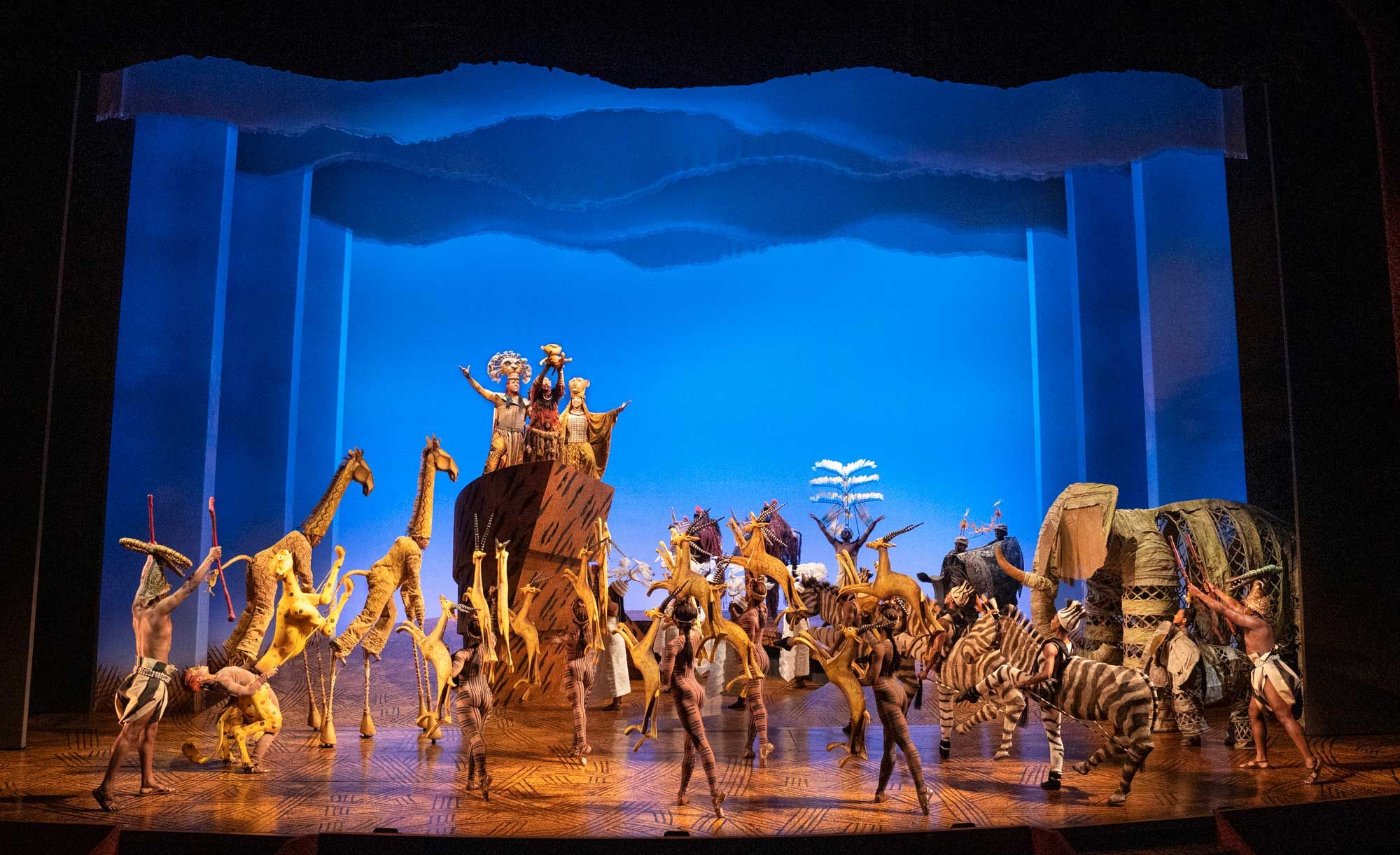
Disney’s The Lion King
Detroit Opera House, Detroit
Through April 5
I learned how to use a VCR in the ’90s because of The Lion King. It was my favorite movie as a child, and my mom got so fed up with having to come into my room and rewind the tape for me, that she taught me how to do it myself. She also didn’t want to watch it with me anymore. When I say I would watch it on repeat, I’m not exaggerating.
As a child, I never understood why she would cry at the opening scene and song, “The Circle of Life.” But as an adult, I have become my mother —reduced to a pile of soggy, crumbled paper when I hear it. So I already knew that Disney’s The Lion King at the Detroit Opera House was going to be a complete water works festival for me. The Lion King returned to Detroit on Thursday, March 12 and will run until Sunday, April 5.
The Lion King is considered North America’s longest-running and most-attended Broadway tour, after more than 23 years. The last time the production came to Detroit was in 2022. The last time I saw it was in Toronto when I was 12 years old.
The show includes modern-day updates like a funked-up dance break during Scar’s “Be Prepared,” and Timon dressing in drag and doing the Charleston to distract the hyenas so Simba and Nala can sneak back into Pride Rock.
Everything about this production is extraordinary — the powerful singing; inclusion of indigenous African languages like Zulu, Swahili, and Xhosa; intricate masks and puppetry all add to the magic of this show. I sat, mouth agape, when the majestic giraffes — actors on stilts inside costumes reaching up to 18-feet high — strode across the stage.
Rafiki is my favorite character in the musical. Reimagined as a woman — because women are the creators of life and wisdom keepers across cultures — she is wise, kooky and hilarious.
My only small complaint is that sometimes I struggled to hear the actors. I am slightly hard of hearing (thanks to attending metal concerts without earplugs in my unhinged twenties), and sometimes it was difficult to hear the dialogue between characters, especially when there was music playing. It seemed like the microphones needed to be turned up.
I want to cry just thinking about this beautifully staged celebration of African culture. Its impact is that profound. In fact, I am still crying tears of joy as I write this review, sheer happiness fluttering in my heart.
Some of the most magical moments in the productions are when the ensemble members fill the stage and aisles. I could feel the exuberance radiating from their voices as I sat in my seat, elevating me, and the whole house to a state of wonder and appreciation for the simple joy of being alive and sharing the moment together.
In Act II, when the ensemble came down the orchestra aisles waving their bird puppets that soared above our seats, I shared a beaming smile with one of the puppeteers who was as excited for me to be there as I was.
As my mother and I left the opera floor, we ran into a Black family with a young daughter who was so excited to display how much she loved the play to anyone and everyone walking by. The twinkle in both our eyes met as she jumped for joy. When my mother asked her if she liked the play, we both threw our arms out to say yes with an excitement that could hardly be contained. In her I saw myself, as she may have seen herself in young Nala onstage, and the sheer representation of the African diaspora made me the happiest I’ve been in a long time.
The production hits differently as an adult. Not only is it a wondrous coming of age tale, it’s a reminder that everything is connected. All life has value. And more than that, we cannot escape our destiny, and our ancestors try at every turn to redirect us when we’ve gone astray.
Even the grass is alive, with actors with sheets of blades strapped to their heads and bodies dancing gracefully on the stage. Everything has its place, and must be respected.
The world becomes thrown off balance when we lose sight of that. As the rich elite hoard wealth, decimate the Earth for profit, and continue to show us how disposable we are to them, Scar’s takeover feels like a cautionary tale now more than ever.
The Lion King is at the Detroit Opera House through Sunday, April 5. For more information and tickets, see detroitopera.org.
Published in conjunction with Detroit Metro Times.


