
“Hudson's Holidays”
Detroit Historical Museum
Detroit
Through Jan. 4, 2026
Ask older Metro Detroiters about their childhoods growing up in the city, and inevitably their faces will light up when they talk about visiting Hudson’s downtown department store. Established in 1881, the J.L. Hudson Company moved in 1891 to its iconic 25-story structure – the world’s tallest department store until 1961 – filling an entire city block between Woodward and Gratiot avenues.
As the city’s population declined, the flagship downtown store closed shop in 1983. The building was demolished in 1998 – an event I distinctly remembering watching on TV with my family during my childhood.
Every year at holiday time, visitors have the opportunity to relieve their Hudson’s memories – or learn about the legendary store – with the Hudson’s Holidays exhibit at the Detroit Historical Museum. Located inside the museum’s central Allesee Gallery of Culture, the exhibit follows the origin, growth and decline of the store including a focus on its beloved holiday traditions.
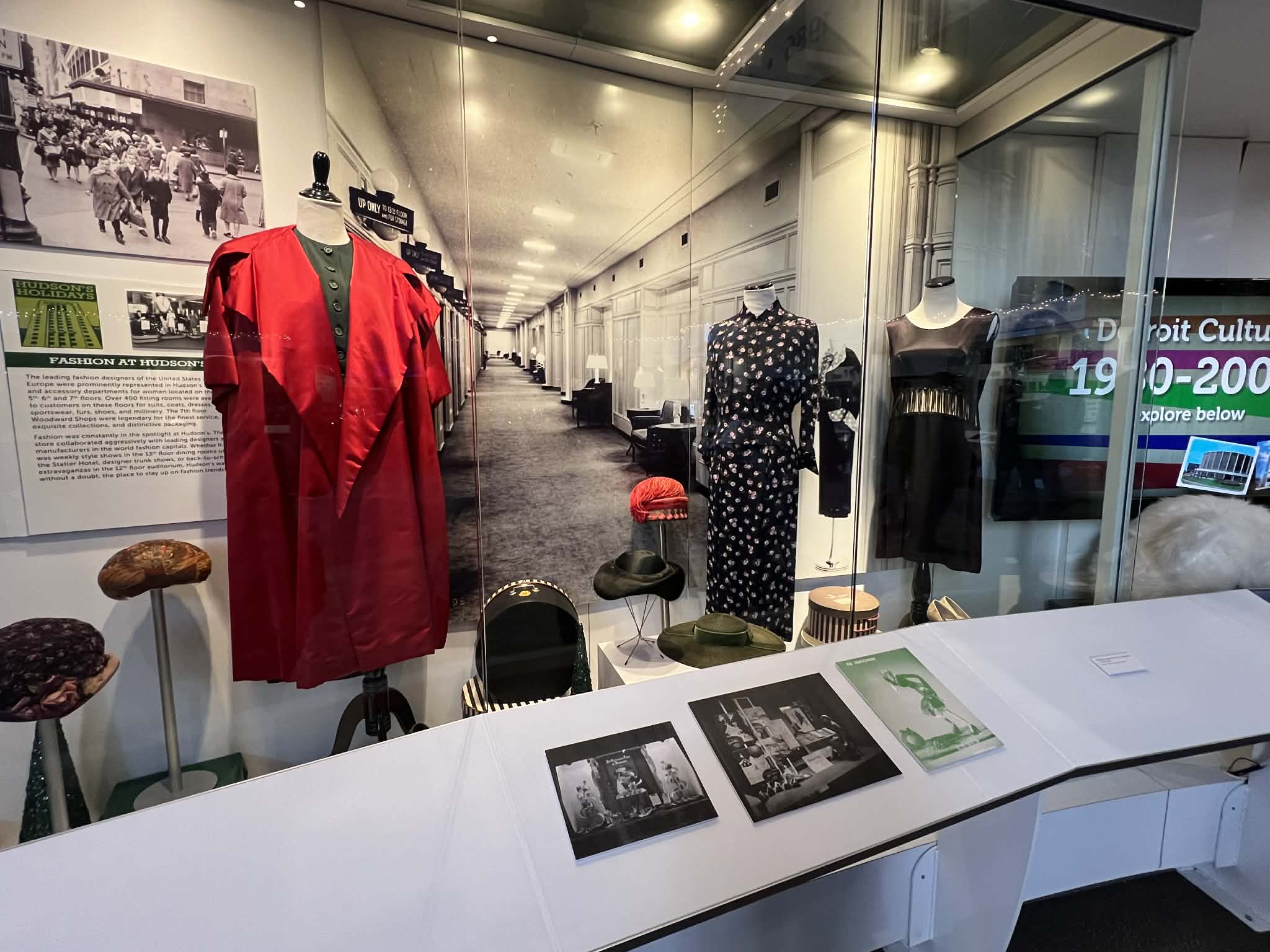
An overall highlight of the exhibit was just capturing the full grandeur of Hudson’s – which had offerings on a scale that rarely, if ever, are found in today’s department stores. At its peak in the 1950s, Hudon’s employed 12,000 associates, serving 100,000 customers a day. It featured 400 fitting rooms, 51 passenger elevators – complete with friendly elevator hostesses – plus its 7-story, 1500-pound American flag that was displayed outside of the building every Flag Day and took 55 people to handle.
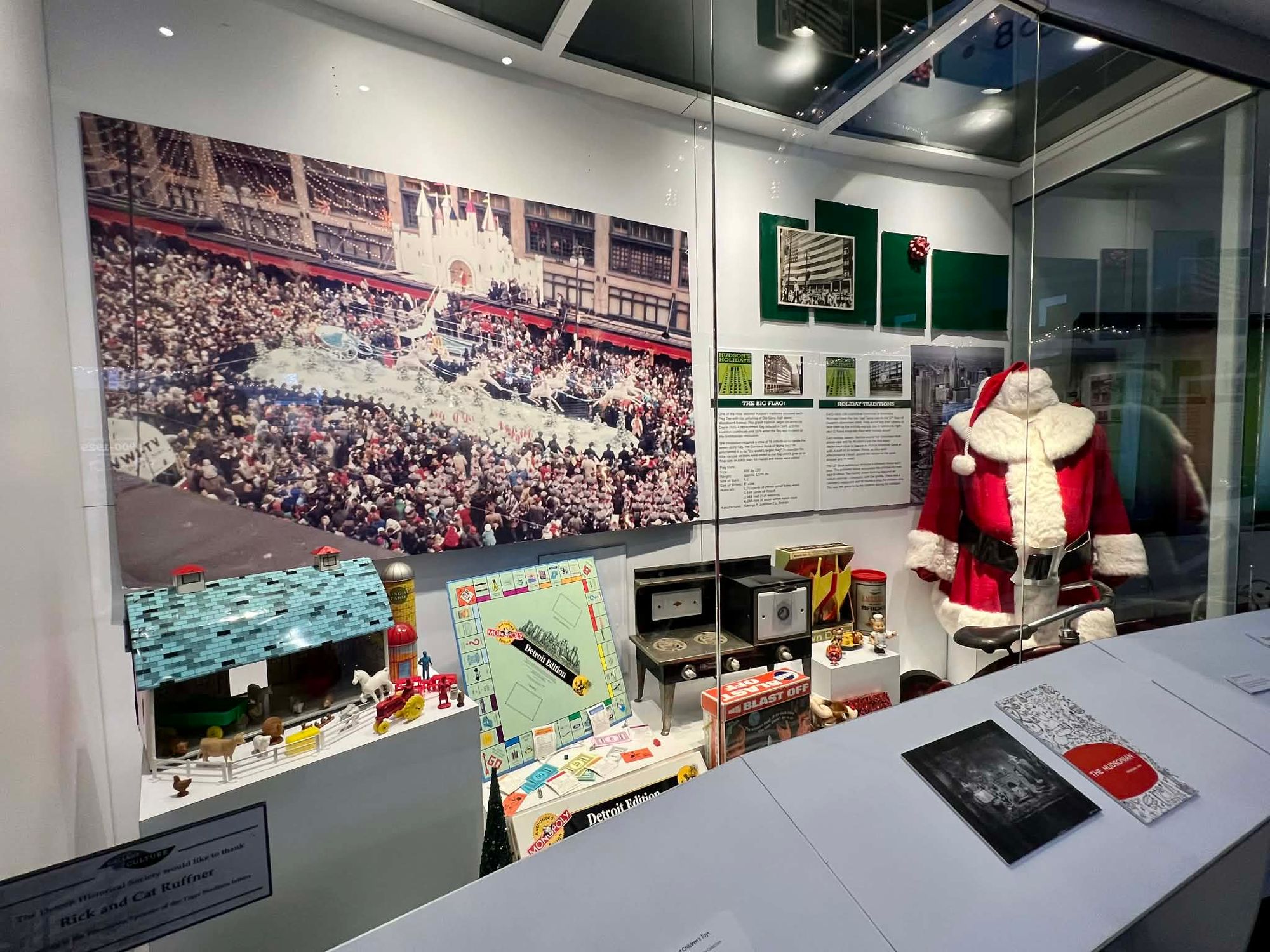
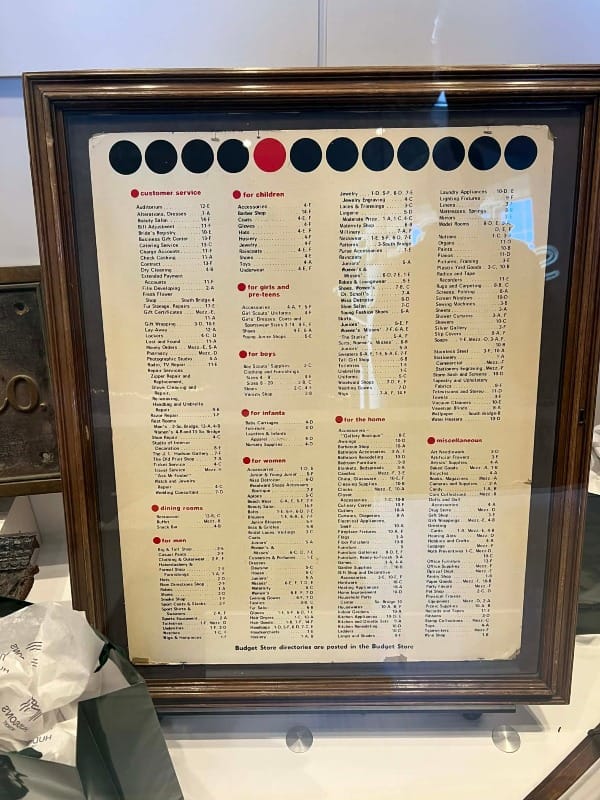
The exhibit featured an array of black-and-white photos of the store, plus displays that included toys and fashion that were available at the retailer. It also included old signage, like a map of the store’s departments and salon offerings – women’s haircuts started at $10 – plus old copies of the store’s “Hudsonian Magazine.”
Food was an important part of the Hudson’s experience. The store served 10,000 meals to the public daily. The exhibit had a list of the restaurants, snack bars, cafeterias and other dining options available, noting its signature offerings of blueberry muffins, chicken pot pie, Canadian Cheese Soup, and the Maurice Salad, which was invented at Hudson’s.
The holiday sections were another highlight. One of the displays I enjoyed most was learning about the origins of Detroit’s America’s Thanksgiving Parade, which Hudson’s started in 1924 – the same year as Macy’s Thanksgiving Day Parade – designed by their display department. When it began, Hudson’s parade featured three divisions of nine floats each, led by horse-drawn milk trucks.
Its Christmastime Santaland on the 12th floor – home to the “real” Santa – was legendary. It included a Black Santa option, which was a first for a major retailer, according to the exhibit. The floor featured a different theme each year, with an enchanted forest leading up to the Santa visit. Another part of the store had an indoor carnival, complete with live ponies and a children-only shopping center.
The final section of the exhibit had a display of the store’s promotional, signature Santa Bears, which changed every year. But since the bears campaign started in 1985 – two years after the downtown store closed – the section seemed somewhat out of place in the larger exhibit of the historic, Detroit-specific location. The exhibit concluded with a QR code where people could share their Hudson’s memories online, and the museum gave away free blueprint posters of Hudson’s to museum-goers, which was a nice touch.

When I hear stories about Hudson’s from my mother and other former Detroiters of her generation, I feel a little sad I never got to experience it for myself or even see the building in person. The Hudson’s Holiday exhibit was a nice way to get an inside glimpse of that experience and facts and figures likely unknown to those who shared their memories.
The “holiday” part of the exhibit was a bit of a misnomer, since it was about the store as a whole, beyond Christmastime. After the elaborate Christmas displays, it would be cool to actually see one focused on the holidays specifically, especially if it were possible to recreate one of the historic window displays or the Santaland where museumgoers could walk through it themselves in an immersive experience.
Hudson’s played a significant role in Detroit’s history. With the recent opening of the new Hudson’s skyscraper downtown, it’s important to remember the foundation on which the modern-day structure was built. As Hudson’s fades from living memory, exhibits like these keep the story alive.


