
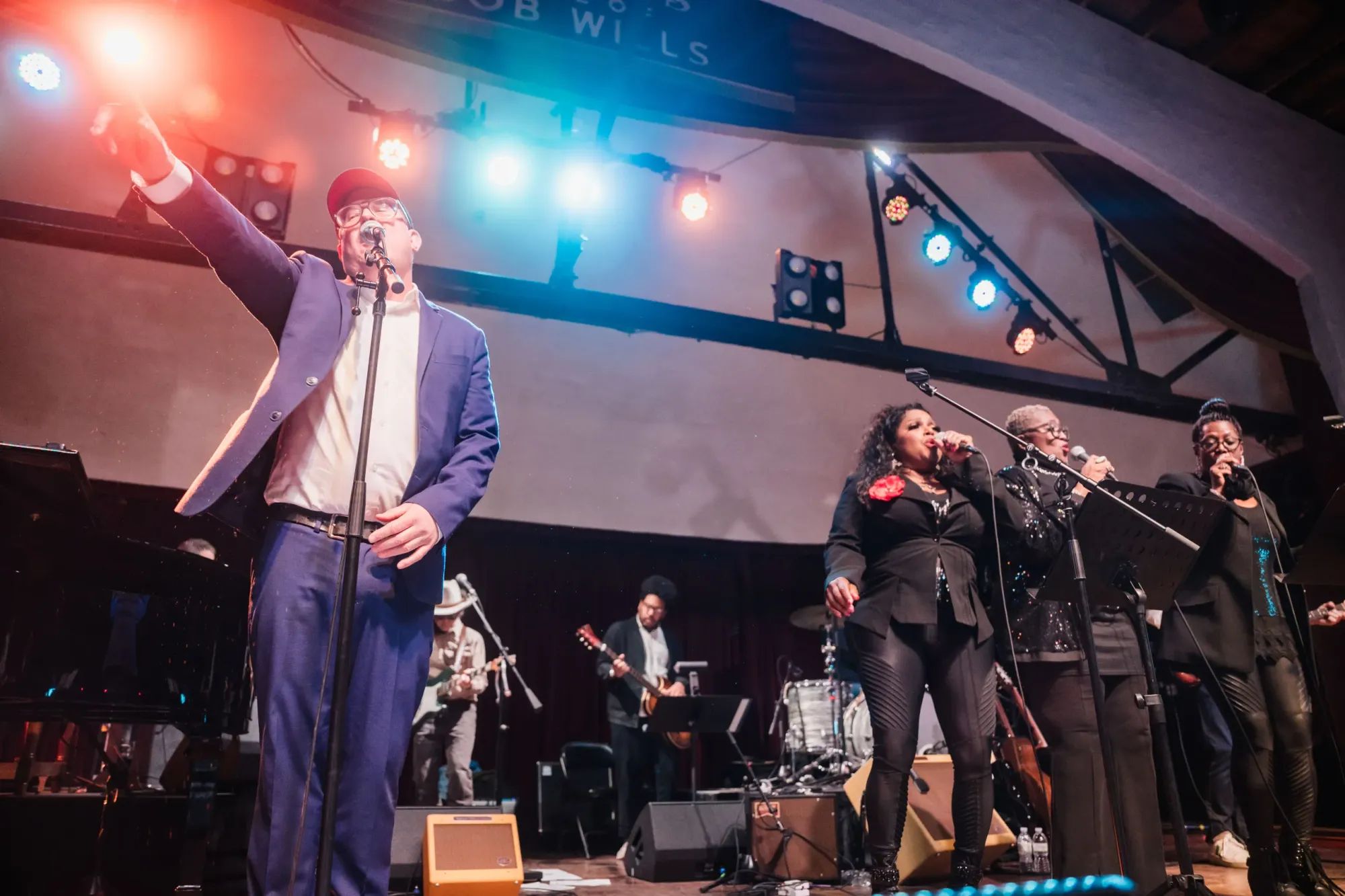
Not to get all old-guy rock critic on you, but even within Bob Dylan’s massive and lauded discography, Blonde on Blonde stands apart.
The last release in his monumental three-album mid-1960s run, Blonde marries a modernist literary sensibility with “that thin, wild mercury” sound Dylan achieved by retreating from New York City to record in a confined space in Nashville with a fresh crew of musicians recruited by the album’s producer, Bob Johnston. Dylan’s then-manager was hostile to the choice, which didn’t exactly follow the conventional wisdom of the time.
But that is part of the mystique of Dylan. He’s always been unafraid to zig where others zag. Whether or not you buy into the Dylan mythology—which The Daily Show host Jordan Klepper was keen to remind us of Friday night in his role as emcee at “Sooner Or Later: Celebrating the 60th Anniversary of Blonde on Blonde”—the zigging is what his fans love about him.
I’ve always found Blonde on Blonde exhilarating. In my life listening to Dylan, it’s been my favorite record of his for the longest. Even as I age, I come back to it pleased to find new footholds, new ways to appreciate it. On this round of listens, for whatever reason, I’ve found myself enjoying the urban landscape and Dylan’s class resentment in these profoundly sad songs: the “warehouse eyes” of the narrator of “Sad-Eyed Lady of the Lowlands.” The spurned lover in “Temporary Like Achilles” who is “helpless like a rich man’s child.” The mysterious empty lot near the “D” train in “Visions of Johanna.” Shakespeare and Achilles, by turns, hanging out in the alley. Even now, 60 years after its release, it’s tough to say whether the lyricism or the musicianship is the best part of the record, or even to what extent the two are separable.
These concerts the Bob Dylan Center started putting on at Cain’s last year with its 50th anniversary celebration of Blood on the Tracks are what these discussions are all about. I hope they keep putting them on, and potentially find ways to open them up to wider audiences than just members of the Center. (Both the Blonde on Blonde and Blood on the Tracks concerts sold out before the Center could open up sales to the general public.)
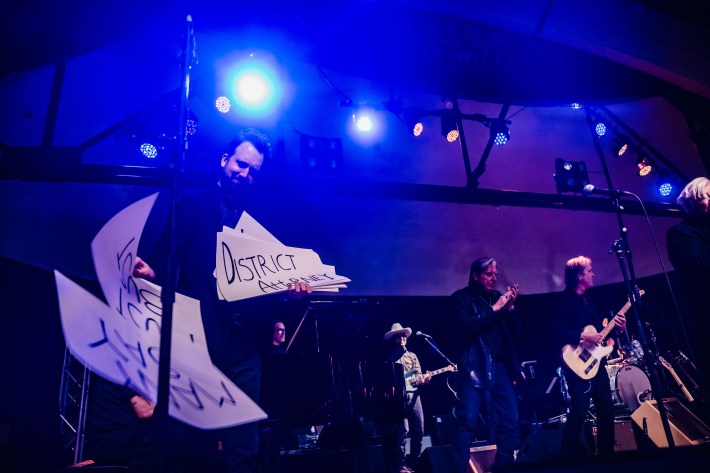
But the format of the show may make additional productions impossible. These concerts are, I have to stress, fantastic and singular. Each performance has a one-time-only exclusivity to it. Every song on the record is performed by the same house band, accompanied by a unique lead singer, for which the Center is able to recruit A-list talent. Once the record’s concluded, they take a set break and come back with a full second set of Dylan covers that range across his catalogue.
This presents a challenge for the critic, who is left with a task that’s a little like reviewing the wind. Unlike an art exhibition that’s up for a month or a touring band playing more or less the same songs on a night-to-night basis, these Dylan album anniversary concerts happen precisely once. Each individual song’s performance is, in a way, its own exclusive event, performed and then gone, unlikely ever to be duplicated by precisely the same personnel.
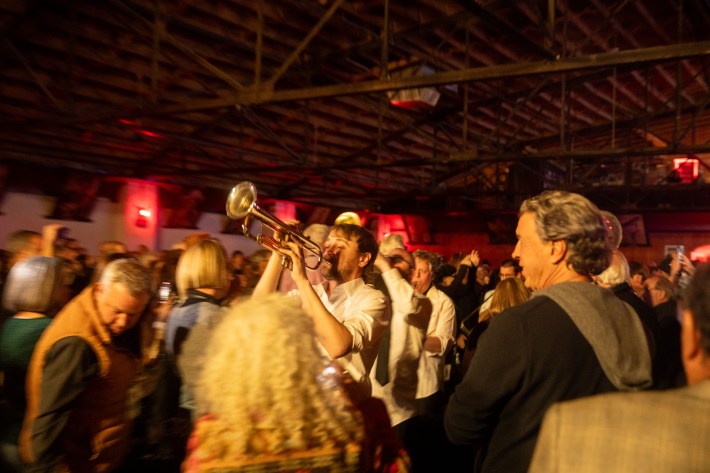
So what stood out Friday night? Members of Tulsa’s beloved King Cabbage Brass Band opened the show by marching in from the back of the room playing the sagging, drunken horns on “Rainy Day Women #12 & 35” supporting a rowdy, joyful performance by the blues and R&B artist Fantastic Negrito. It was the musical equivalent of stamping a text message with a zillion exclamation points.
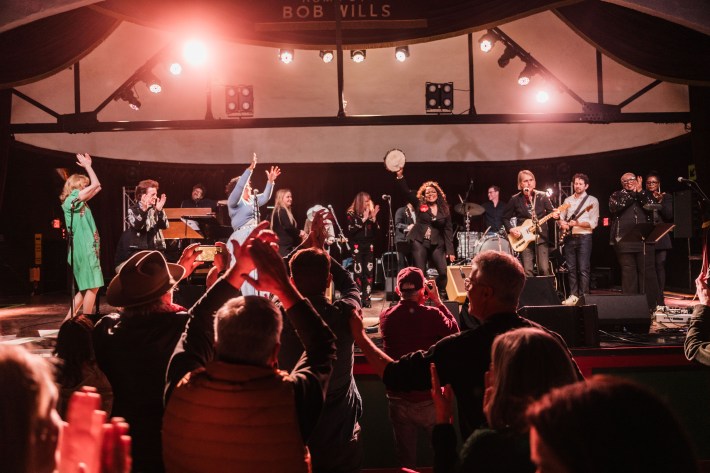
An honest-to-god gospel group, The McCrary Sisters, smoothed out “Pledging My Time”’s herky-jerk blues timing with some beautiful harmonies. They’d pop back up throughout the night to guide us through Dylan’s Christian era, which included a triumphant finale in “Gotta Serve Somebody.”
The respectable, modern countrypolitan gentlemen of The Cactus Blossoms rendered us a version of “Visions of Johanna” that dignified the song’s lyricism. Here I’ll admit I got a little giddy. Ever since I first heard it as a teenager, the line “in this room the heat pipes just coughed” has always set a certain mood and sense of place that brings the rest of the song to life for me.
Hamilton Leithauser came onstage for “One Of Us Must Know (Sooner or Later).” A small complaint: while Leithauser is the perfect singer for this song, this performance felt overly restrained compared to what’s on Blonde on Blonde, not to mention his work with The Walkmen. (If you’re unfamiliar, watch this.) The band opted for some gentle mandolin plucking in place of the original song’s wild, piercing organ solos, which left me a little cold, though they did get the soft-loud dynamics right.
The other representative from the early 2000s indie-rock delegation for the evening was Craig Finn, whose own work with The Hold Steady creates an allusive, small-town mythos that “Stuck Inside of Mobile with the Memphis Blues Again” would’ve fit perfectly into. Shakespeare talking to French girls walked so that Charlemagne could run … in his sweatpants.
Nellie McKay gave us a scratchy, spunky, fun “Temporary Like Achilles,” a song I’ve always liked but that Dylan apparently has never played live? I find that shocking given how much fun McKay had with it.
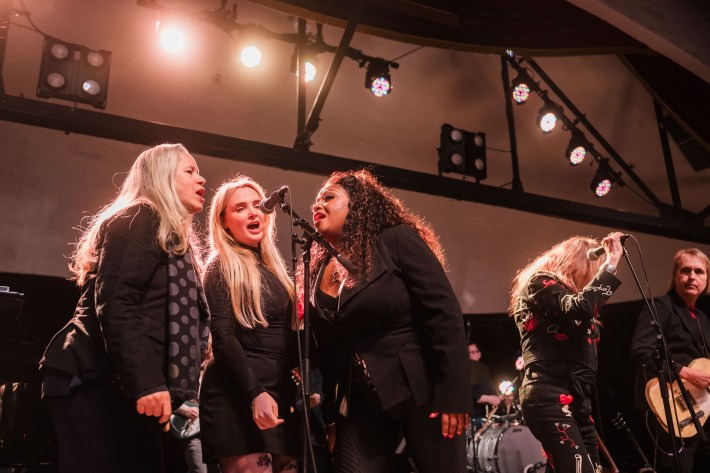
But the pièce de résistance was Natalie Merchant’s exquisite “Sad-Eyed Lady of the Lowlands,” a song she commanded fully from end to end. The players onstage with her, which included The Cactus Blossoms on backup vocals, each seemed to straighten up whenever Merchant gave him her full attention, which would shift from player to player as the song rose and fell with its hymnic chorus.
The anniversary record finished, everything loosened up a little bit and Doug Keith and his band were released to rove about Dylan’s discography. For me the peak of the second set was The McCrary Sisters’ three-song run in the middle, which featured the three of them leading on “What Good Am I” before they backed up Merchant on “Ring Them Bells” and Finn on “Where Are You Tonight? (Journey Through Dark Heat).” New interpretations of a single album aside, excavating hidden gems from albums like Oh Mercy and Street-Legal is what nights like “Sooner or Later” oughta be about.
Speaking of which, the Dylan Center seems to be inspiring this kind of behavior just by existing. Last year when GenZ rock wunderkind MJ Lenderman stopped at Cain’s, he played “Something There Is About You,” a choice of cover that sent me deep into Planet Waves, a Dylan record that I had previously overlooked. The future of Dylan appreciation looks bright to me.


