
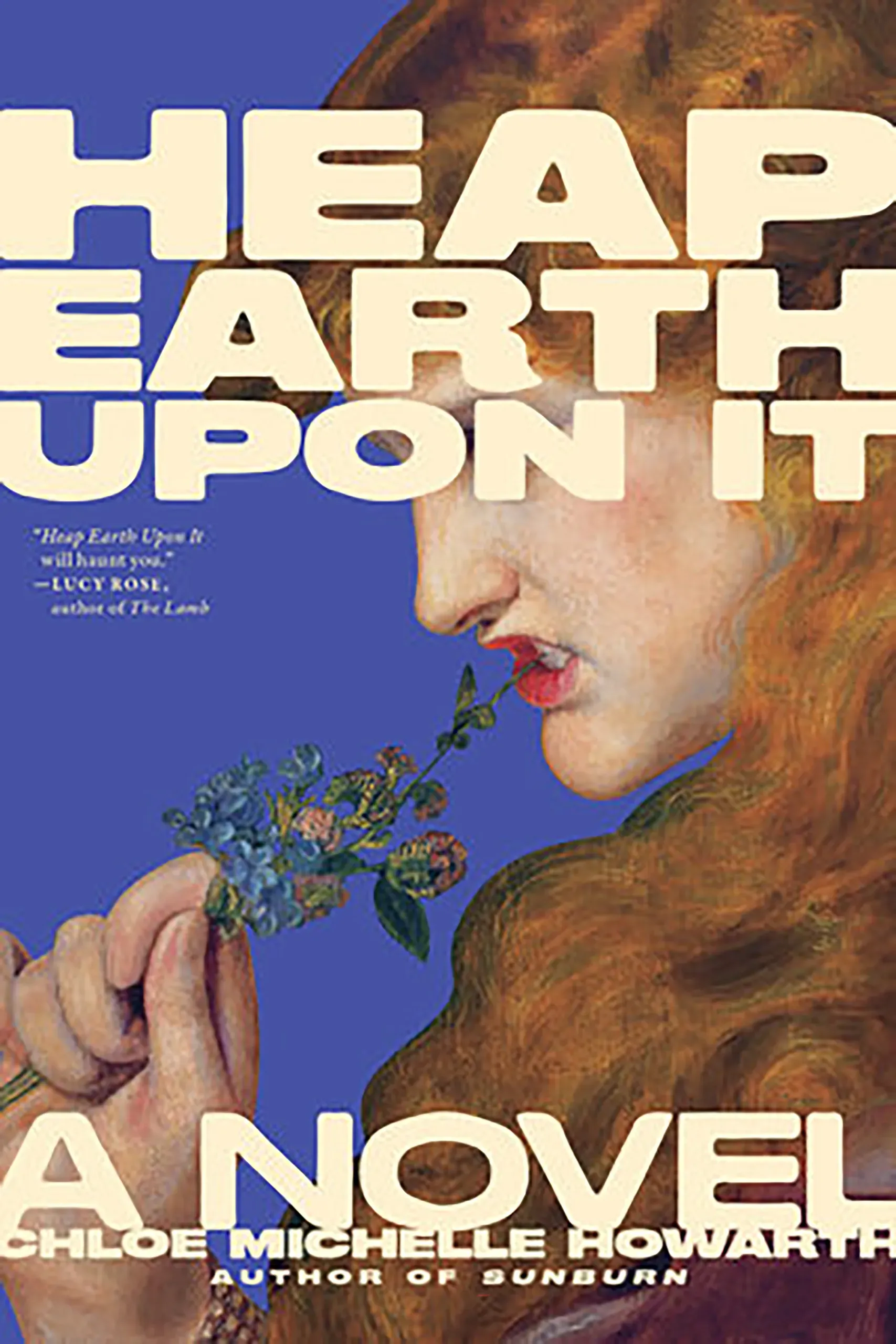
Heap Earth Upon It
By Chloe Mitchell Howarth
Melville House
Heap Earth Upon It erupts from its first moments.
“Often I wake to the sort of scream that permeates soil and rattles the coffins and fossils it passes by,” thinks Jack O’Leary in the prologue. The hoary line sets the tone for a novel in which grief and memory seep from every syllable.
Chloe Mitchell Howarth’s writing is so physical you can grasp it within your hands. Her style renders the characters’ interiority so vividly readers can feel the dread that saturates their waking moments. The ground underneath them feels as if it will give way at any moment.
The O’Leary siblings – Tom, Jack, Anna and Peggy – arrive in Ballycrea, Ireland, in 1965. The town immediately pegs them as odd because they arrive on a pony instead of in a car. Also, no one has heard of the town, Milton, they claim to have come from.
Peggy is the baby of the family. She doesn’t share the same father as her brothers and sister. Her origins are indelibly tied to tragedy and are a source of contention. Tom, the eldest, assumes a patriarchal role with desperate intensity. As authoritarian as Tom is, however, he longs for approval and to be under the thumb of Bill, a longtime Ballycrea resident. Bill provides him with a job, making Tom’s fealty that much more complete. Tom makes all the decisions for his siblings and forges their way in town, clearing a path so that they are welcomed with open arms.
Mainly, he doesn’t want anyone to stumble and reveal the family secret.
Jack lives under a shroud of grief that obscures his path and makes him appear aimless. His late partner, Lillian, died under murky circumstances. Though he lies low in town, he and Tom both know (much to Tom’s resentment) that Jack is more of the natural charmer. Their tension simmers beneath the surface throughout the novel, another unspoken fracture in an already delicate unit. Jack chafes against Tom’s authority and lives a wary life alongside his sister Anna but his tenderness towards Peggy reveals his heart.
The most unsettling character is Anna. She has full-on conversations with her dead parents and nonexistent friends. She seems almost feral in her detachment from the real world. She doesn’t seem to have much love for Peggy, or even her siblings for that matter. We learn that she has a hard time making friends, and it’s no wonder. Amidst forging a friendship with Bill’s wife Betty, Anna develops an obsessive crush.
“Tiny, lucky little purple lines that get to lie down across her face every day,” Anna thinks of the veins in Betty’s cheeks. She seems to want to inhabit her body, or to consume her.
All the while the O’Learys attempt to create new lives, their secret lingers behind every interaction and thought. Their handling of their secret shapes not only how the town perceives them, but how they perceive one another. The novel hints that the secret involves Lillian throughout, but we have to breathlessly wait until the end to learn the truth. Anna, Tom and Jack speak incessantly to Lillian, filtering every observation and desire through her. Somehow, while dead she is still vital to the living.
Heap is an atmospheric tale in which much of the action takes place in the characters’ heads. It is a psychological excavation of longing and shame that will make you consider the fragile performances that hold families and individual selves together. Rather than offering resolution, it lingers in ambiguity. Readers will have to make their peace with uncertainty.


