
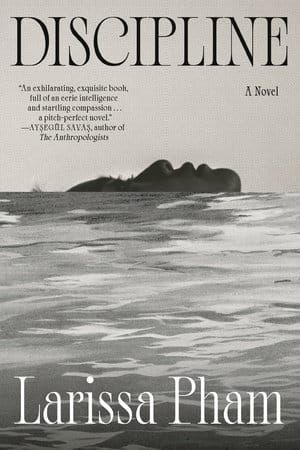
Discipline
By Larissa Pham
Random House
An older professor pursues a much younger student. This story has been told before. But in Discipline, a debut novel from Larissa Pham, the student in question writes a revenge fantasy about the relationship, and the professor sends her a series of messages letting her know that he’s read the book, and it’s not how he remembered it.
The protagonist, Christine, is a former painter and grad student. After an entanglement with a professor at her school, she drops out, writes a thinly veiled account about what happened with an alternate ending and then publishes it. Discipline has a meta quality to it. It’s a book about an artist who wrote a book about her experience. Christine describes passages of her book at length, so parts of Discipline feel like reading her novel.
In the wake of Me Too, a lot of ink has been spilled on stories of abuse or sexual misconduct, whether it be affairs, abuse of power or age gap relationships. As a public, we eat it up. It’s like we relish in watching someone’s life fall apart even as we condemn them. But Pham resists the temptation to dive into the salacious details. Even by the end of the book, we don’t know much about the professor who is simply known to us as “the old painter” for most of the novel. We don’t really know much about the relationship, if you can call it that. At the beginning of the book, Christine has just started her MFA program and her friends have moved across the country. The old painter pays attention to her and invites her out to fancy dinners and drinks, isolating her further.
“Without my realizing it, my life had become small,” Christine narrates in the book. “He was the one thing that promised to make it larger.”
During winter break, he asks her to leave campus with him. She takes the train to meet him. They sleep together. Then, he ices her out upon their return. Christine quits painting and drops out. That’s the gist of it, and the whole story is mediated to readers with intentional distance. We’re never in the moment with Christine; we just hear how she’s processed after the fact. We never see them interact during their relationship. Even details like place names are redacted.
Those who are used to the salacious details of abusers like Dan Schneider or Harvey Weinstein might find this a little underwhelming. Just one lonely guy, a consensual sexual encounter, immaturity in the aftermath. Some early readers have commented that it doesn’t make sense why Christine’s world seems to have stopped after this. Perhaps they even find the ending underwhelming.
“Is it so wrong to want to see blood on the pavement after idling in several miles of traffic?” one Goodreads reviewer writes regarding the ending in which Christine makes a series of seemingly bizarre choices.
But I believe this misses the point. People want stories with clear heroes and villains. They want people like the old painter to be irredeemably evil, perhaps because they can’t confront the capacity for evil within themselves. But reality is not that simple. We are the heroes in our own stories, but the villain in someone else’s. We love other people, and that love doesn’t always evaporate when something bad happens.
Discipline is not a novel about an abusive or inappropriate relationship, and it doesn’t unfold that way. It’s about one woman who doesn’t know how to move on and heal after one. As a society, we’re really bad at helping people through that. The system can be more punitive or less punitive, but it can’t undo what was done. It doesn’t change what happened, and it’s not particularly good at providing accountability. Maybe that’s why Christine takes it into her own hands.
Discipline is a novel that only grows richer the more you sit with it, from the image on the cover to the conversations that Christine has with people along the way. It’s not a thriller in the traditional sense, but the suspense is there.


