“Highways and Valleys – Two American Love Stories”
Detroit Opera
Dec. 13
Opera, like classical music, is always fighting for relevance. While vinyl and bookstores have benefited from the pendulum swinging from digital to analog, the opera hasn’t always enjoyed the same pivot from audiences.
Detroit Opera has fought the good fight to engage audiences locally under the guidance of artistic director Yuval Sharon.
One solid punch in that fight has been adjusting to the demographics they serve in a predominantly Black city by serving up predominantly Black casts and stories on the stage. The other is changing the way we perceive operas, through how they’re presented and, with this latest presentation, how much time it takes to tell a story.
“Highways and Valleys” accomplishes both of these goals by presenting two one-act operas back-to-back, both directed by Kaneza Schaal, who masterfully handles the telling of two Black American love stories set against the evolving backdrop of America emerging from the Great Depression and World War II.
The 25-minute intermission is almost as long as the first opera “Down in the Valley,” which clocks in at a speedy 35 minutes.
When an opera is cut down to 35 minutes, the drama is extreme. That’s a great thing for audiences who may be intimidated by making it through an opera (or what they perceive opera to be).
Here, there’s no time wasted whisking you off to the world of Kurt Weill’s “Down in the Valley,” which is billed as a “folk opera in one act.” It’s far from simplistic, however, as Weill uses “Down in the Valley” as an operatic rebuttal to the populist idea of “folk” floated around when it was first staged as a radio opera in 1948. (Its radio history is woven into the production even before the curtains open.)
“Down in the Valley” offers up a more racially complex telling, helped along by a massive cast creating a hypnotic chorus throughout. The production design from Christopher Myers, inspired by African American quilting traditions, is stunning.
So is the music. These are original compositions connected with traditional American folk songs to tell a story of love, tragedy and loss, following the tale of a teenage boy convicted of murder. Naomi Graber, a scholar of Weill’s work, wrote that the composer added more complex elements to the music as a way to ask the audience to “think more deeply about the apparently simple story.”
In just 35 minutes, “Down in the Valley” makes for a tough act to follow. The second one-act opera of the night – “Highway 1, USA” by William Grant Still, dubbed the “Dean of African American composers” – comes close.
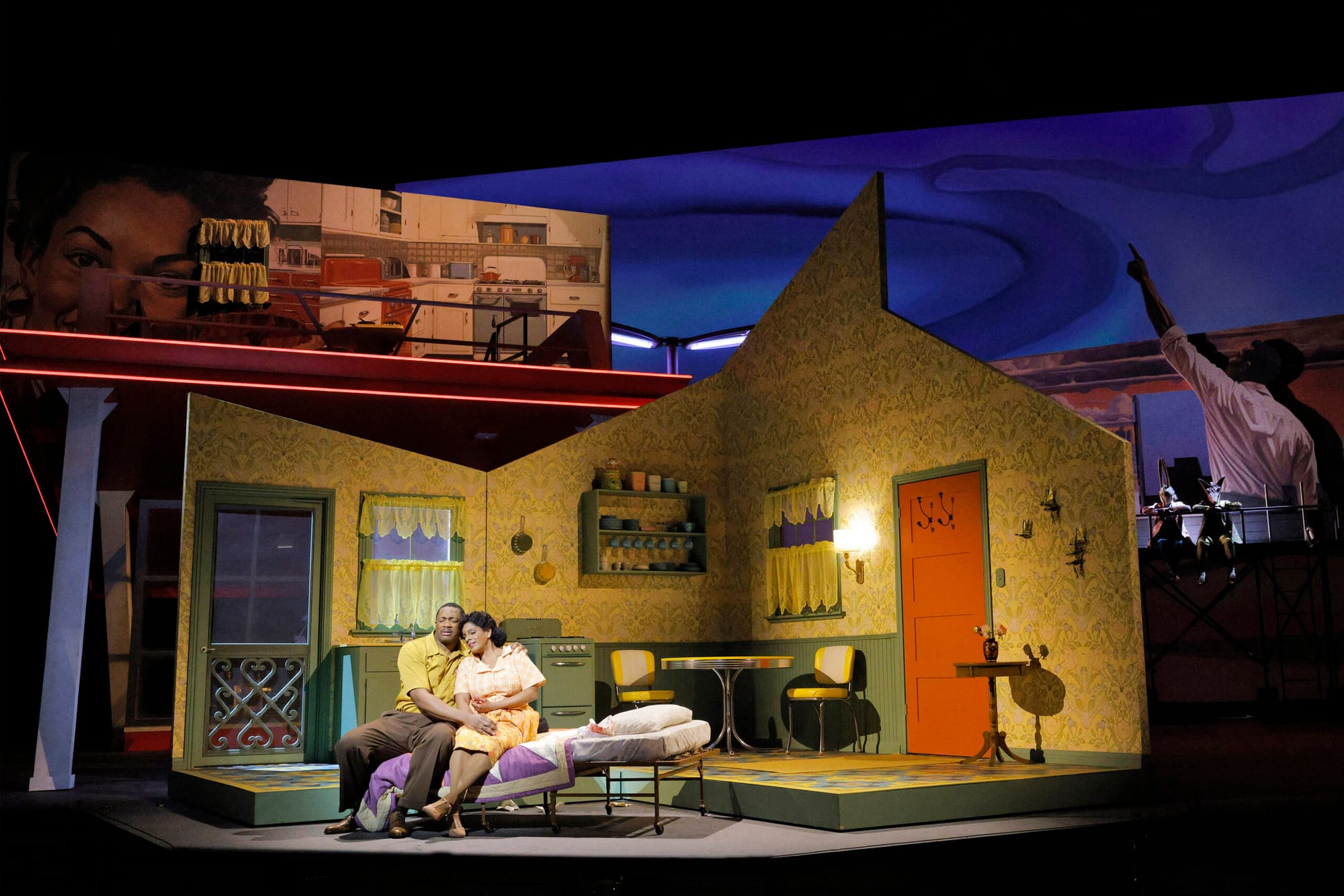
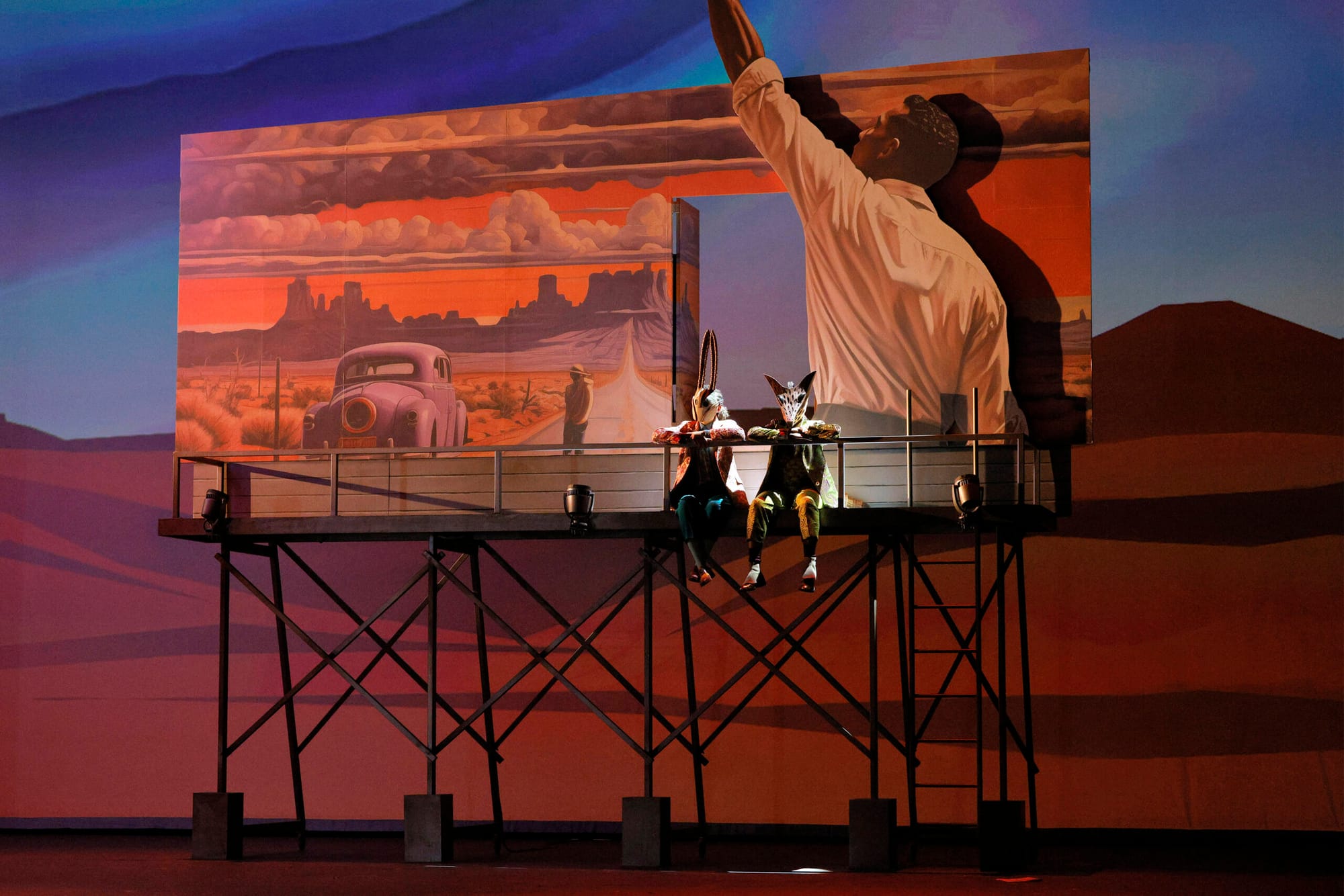
The production design of Myers stuns here again, with the retro-futuristic neon of a gas station and gorgeous illustrated billboards juxtaposed with floating modular stage pieces that show off a modest blue collar home.
Inside that home, battling ideas of what the American Dream means for a Black family unfolds. The modest home belongs to Bob and Mary, a married couple who run the gas station and are dealing with Bob’s younger brother Nate and his perception of the American Dream -- less work, more thought and leisure.
The music of Still is wonderfully cinematic and brought to life via Detroit Opera music director Roberto Kalb, who also conducted the orchestra for “Down in the Valley.” In fact, a lot of the cast and chorus do dual roles throughout these one-act operas.
I adore this format of shorter operas presented together, both as an artistic approach to honoring the work itself and one that’s considering the attention span of the audience as well. In 2025 at the Detroit Opera, you have to do both – and they’re doing it exceedingly well without sacrificing quality.