
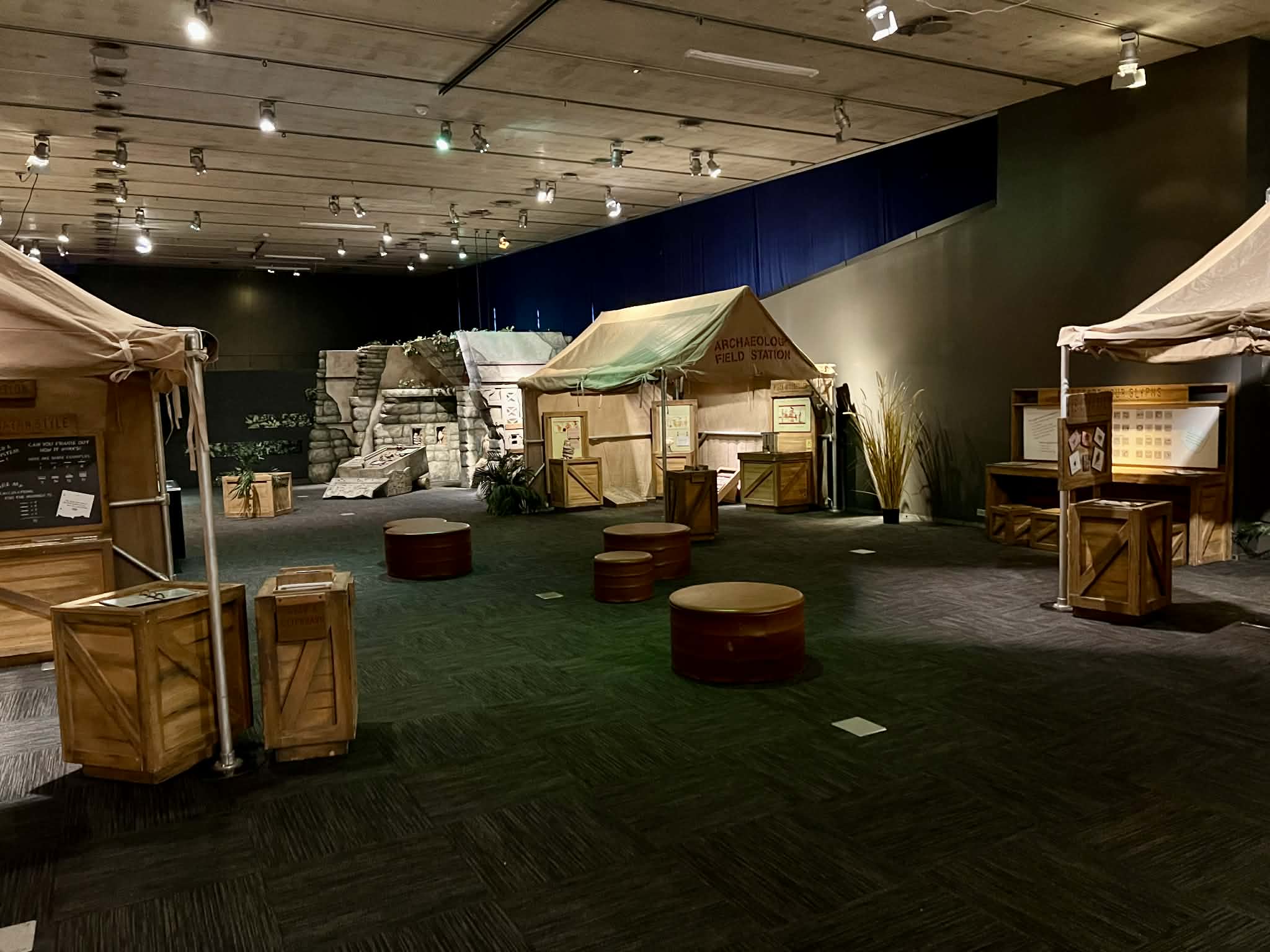
"Mystery of the Mayan Medallion”
Cranbrook Institute of Science
Bloomfield Hills, Mich.
Until June 7
A couple of years ago, I took a weeklong trip to Mexico’s Yucatan Peninsula for a short escape from the Michigan winter. What had meant to be a few days of sun and beach turned into a fascinating cultural experience as I visited ruins, took tours and learned about the region’s ancient Mayan culture. The Cranbrook Institute of Science has brought some of that culture to Metro Detroit with their latest touring exhibit “Mystery of the Mayan Medallion,” and it is incredible.
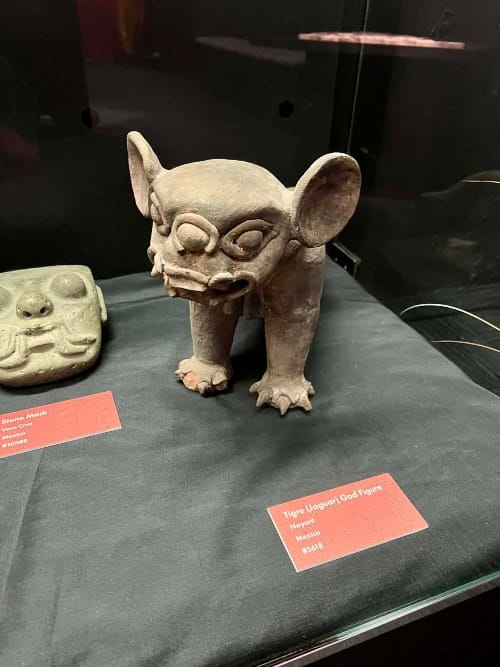
The exhibit opens with a display of Mesoamerican artifacts from Cranbrook’s permanent collection, like ceremonial masks and figures, including an adorable jaguar deity figure that looked almost exactly like Stitch from “Lilo & Stitch.” It includes games similar to those played during Mayan times including patolli, which is like Sorry! or Parcheesi, and a small nerf version of pok-ta-pok. The latter was a ceremonial game I had found particularly fascinating during my trip to Mexico; it was nice to learn about it again and see what it might have looked like in the accompanying video.
The main portion of the exhibit is an interactive adventure. Participants study Mayan culture and collect clues to learn the identity and fate of a Mayan king before solving the mystery of the whereabout of his missing jade medallion. The exhibit is divided into a series of field stations that explore different parts of Mayan culture and the overall region with interactive activities.
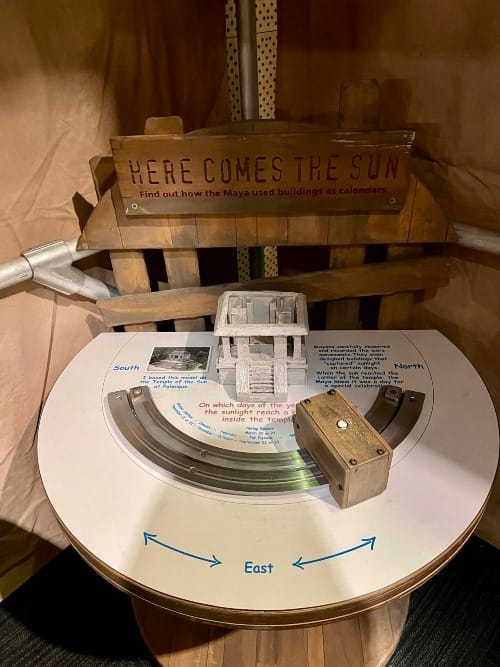
One tent talked about the Mayan calendar and numerical system. It featured a miniature temple and a rotating light that showed how the sun was used to mark time. Next to it was an explanation of Mayan numbers, which included challenges to identify numbers in hieroglyphs, which was surprisingly simple. The botany and biology station had giant insects and skulls of animals from the region on display as well as a section that let you smell different Mayan plants, like achiote, cacao and allspice, which I thought was a nice touch.
Other parts of the exhibit included ancient temple ruins and a sarcophagus with activities to help you notice details within the hieroglyphs and identify their meaning. Decoding the hieroglyphs eventually leads you to the final task, where you select the accurate combination of hieroglyphs to locate the medallion.
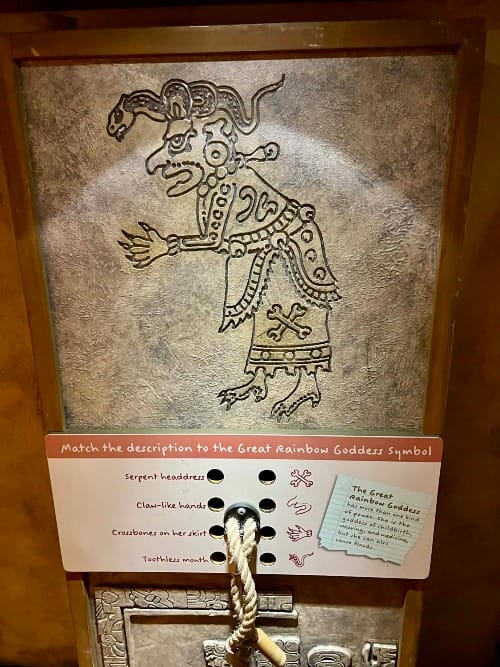
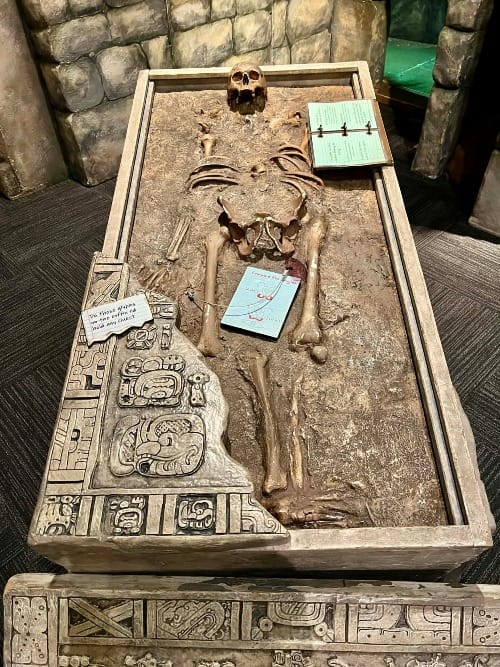
Although the exhibit is geared at children, I found it engaging and educational as an adult. Concepts I’d struggled to understand while visiting actual ruins became clearer with simple visuals and explanations. Hieroglyphs I’d seen at a distance now had more meaning with activities that gave you details to find and identify while looking at replicas up close. While I did get a little confused finding some clues toward the end, the process was still fun.
It’d be easy to say that Cranbrook’s latest exhibit features ancient artifacts for adults and the interactive mystery for kids, but – clue worksheet in hand – I enjoyed everything. Sometimes bite-sized portions of information paired with a game is the best way to learn.


