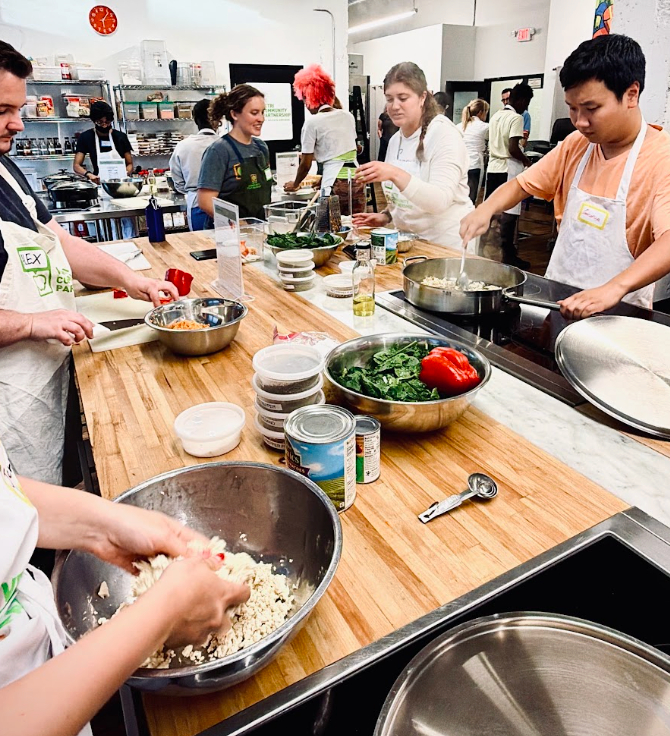
Cooking Class with Vetri Community Partnership
915 Spring Garden St.
Philadelphia
Oct. 3, 2026
In my hand was a red rubber spoon, and to my left, a bottle of olive oil. Rather than following the recipe to a T, I thought: “Let me add just a tiny bit more, as I am not a fan of burned cuisine.”
It’s not uncommon for my cultural roots to shine through when cooking. My cooking mates, who were white, preferred a little less oil in the pot, and while I politely obliged, I still thought a bit more was needed to moisten the pan. Perhaps I was wrong in this case, as everyone takes certain liberties when cooking, whether cultural or technical. Is there really a right or wrong way?
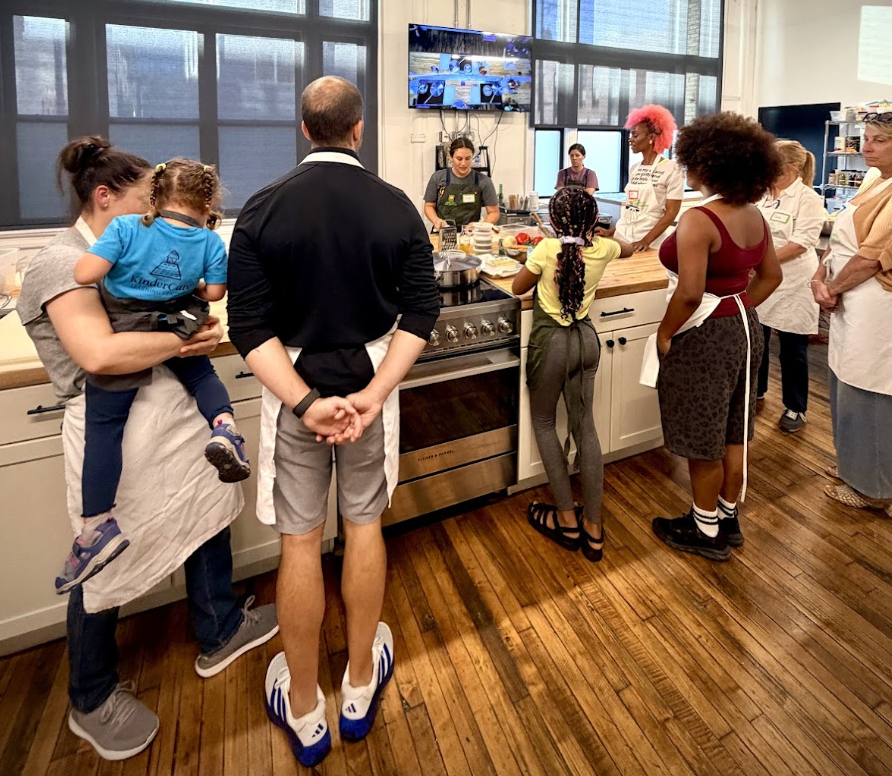
That question came up during Tuesday night cooking class, which I attend every other week in the Callowhill neighborhood courtesy of Vetri Community Partnership. That’s a nonprofit providing cooking and nutrition classes to groups of all ages in Philadelphia and Camden. You can sign up here (the biweekly Tuesday event I attend is from 5:30 to 7:30).
Teacher Kelsey DeCerchio, a nutritional educator who’s worked with Vetri for 10 years, shared the following philosophy: “Any time you’re cooking, you’re getting better.” The mission of the class is to teach people basic cooking skills and the rules around the kitchen (even though some of us like to veer off course) while also lessening the fear around navigating common kitchen machinery (more on that later).
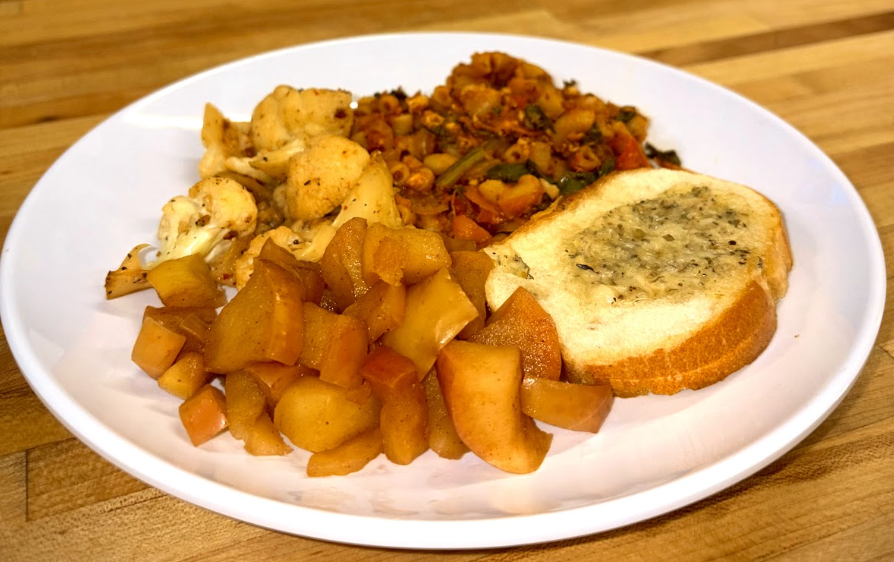
The meal on the docket for last week’s class was the following:
- Tofu skillet pasta
- Spicy garlic cauliflower
- Kale salad with white bean vinaigrette
- Garlic toast
- Cinnamon apples and crunchy granola
Why the selection here? Assistant teacher Erin Mraz described it as a “meal for back-to-school vibes.” Each class has about 15 to 20 participants, spanning from kids to seniors. Kelsey, leading the class in her whimsical yet effective fashion, teaches alongside around four other community educators (like Mraz) who assist beginners and make sure everyone stays safe while attempting new skills, such as a knife cutting technique called a “rocket chop,” which we all practiced last week.
Per routine, we began class with a knife tutorial to make sure we didn’t end up “chopped” ourselves. Mraz showed us the bridge cut, a bare claw, and, of course, the rocket chop (check them out on Youtube if you need a demonstration). Next thing you know, I was feeling like some sort of fruit ninja.
Next, we transitioned to stations (after washing our hands, of course). There were six stations for each part of our meal (cinnamon apple prep, tofu prep, kale salad prep, garlic toast prep, cauliflower prep and crunchy granola prep).
I chose tofu prep, joined by my frequent collaborator Jennifer Ferd, a UPenn PhD graduate and researcher who started dragging me along to class with her back in February. She’s a great cook who began attending the class for the community component.
Over at tofu duty, we were joined by Alex Stetiz, a newcomer with no cooking experience. Our first step on the list was to press the tofu. With what, though? A frying pan! A new hack.
Next, we were to mince the garlic. Alex didn’t know how — Jenn jumped in to teach: “Hey, Alex, I can show you a different way to mince the garlic,” to which Alex happily responded, “Yes, please."
As the class quickly progressed, I looked around to see apples getting cut, tomatoes spliced, and lots of laughter and bustling conversation heard over the background tunes of Spanish ‘80th pop synth.
Back at our station, our pan was sizzling with tofu, tomatoes, carrots, and garlic; our team members occasionally took turns stirring the pot, and next to me there was another type of stirring happening with an odd machine. I tapped my friend Joe and asked him what it was: an immersion blender! That’s a blending tool used to puree ingredients. He let me give it a try before adding: “Don’t lift the blender, or it's gonna splatter everywhere; it’ll be a mess!”
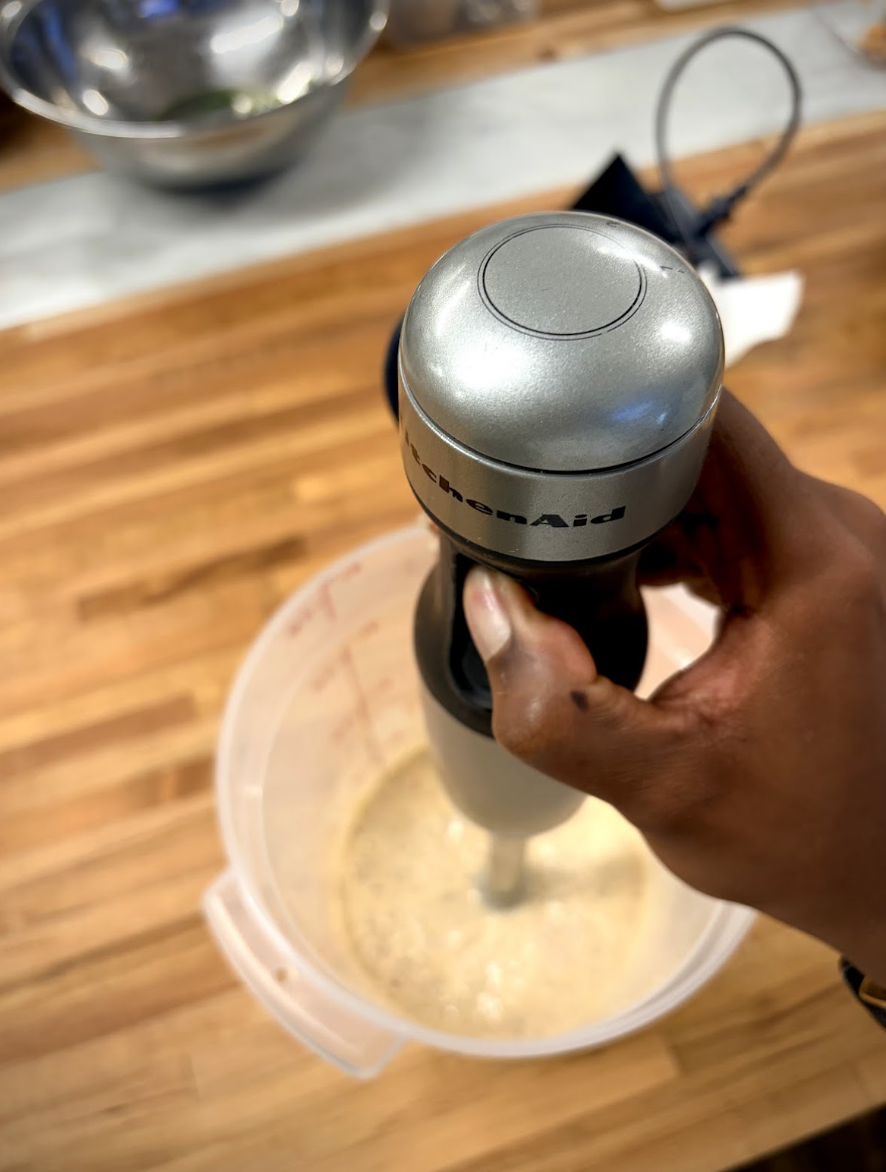
Copy, Joe, no splattering. Just stirring. Blending.
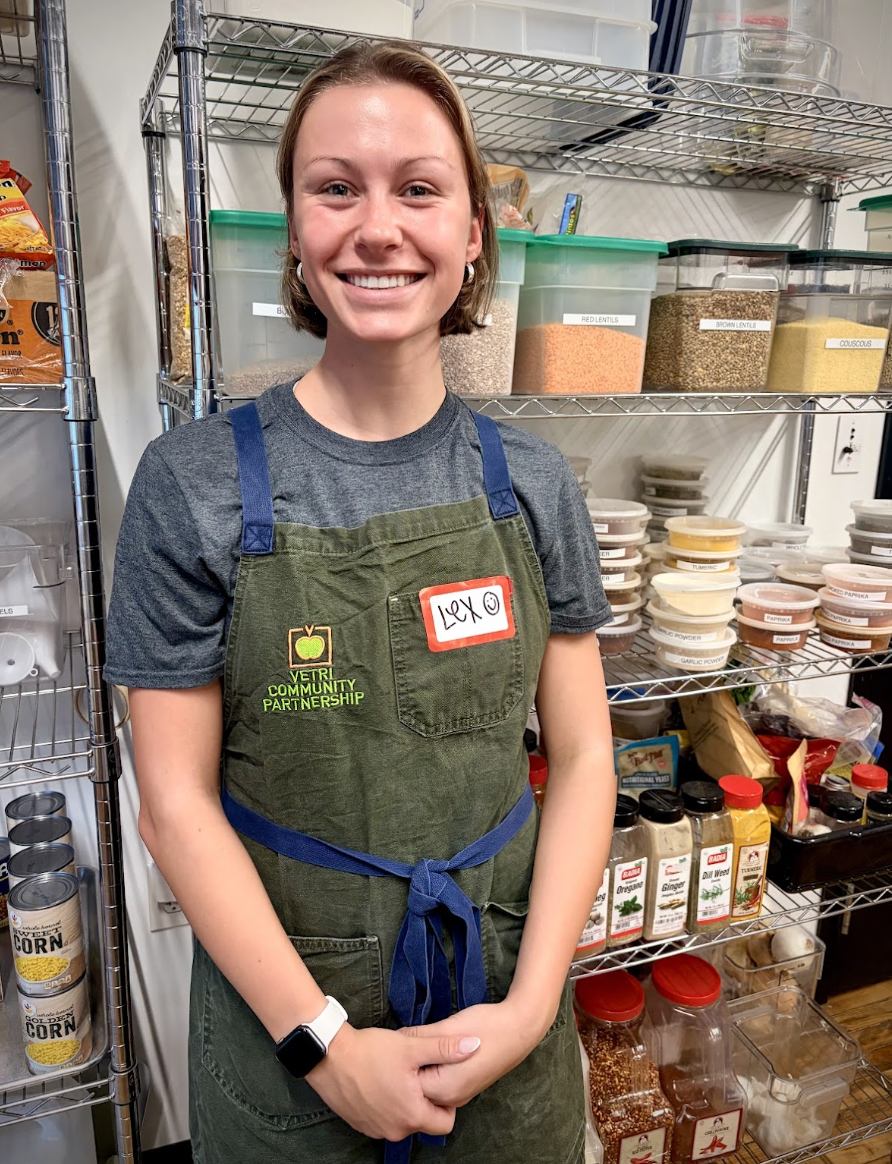
We were met with a smile from Alexandria Martinucci, a Vetri Community Educator who comes from a family that hails from the upper echelons of the hospitality industry in the Bay Area.
Alexandria said her favorite thing about the class is seeing different people from different cultural backgrounds come together and also clash over the right way to cook.
This came up not just through the question of how to oil the pan, but how to season the food in accordance with recipe rules. While my tofu crew followed the recipe precisely, I noticed another duo of African American gentlemen across from us cooking tofu their own way. Curious about our shared background and Alexandria's recent commentary, I asked, “Did you add some additional seasoning?” It’s safe to say my spidey senses were correct. It seems Alexandria's position was correct too, as our tofu station, run by a Russian, two white people, and myself took a more relaxed approach to the seasoning.
As all the stations finished their creations, we gathered together and stood in line one-by-one to eat.
We shared in a group toast before digging into meals. This time around, I cleared my plate — a Vetri partnership cooking class first for me!
In past classes, my plate has held what was left over from my meager appetite, but lately my appetite seems to be growing — not only for the food on my plate, but also for the cultural collaboration that happens during meal preparation. Everyone has different “ways” of doing things, and while the class does teach basic skills, we all seem to teach each other in some way, too.
Before I place my food in the dirty plates bin, I look around, delighted, reflecting on Kelsey’s earlier sentiments to me: “It’s nice to see people come together”