

Boston Tea Party
Avon Public Library
Avon
Dec. 9, 2025
Now, what was I going to choose as my second lecture in the double feature? I decided to go with my own version of Barbenheimer, going from the seriousness of borders and battles in Elizabeth Hines’ excellent presentation on European colonies to something light and sweet.
As it turns out, the history of tea is anything but light and sweet. Danielle Beaudette, who owns a tea shop in New Hampshire and is a certified tea specialist, took us through a whirlwind tour of the origins of tea, and the social and cultural revolutions the unassuming tea leaf has ushered in over the last 5,000 years.
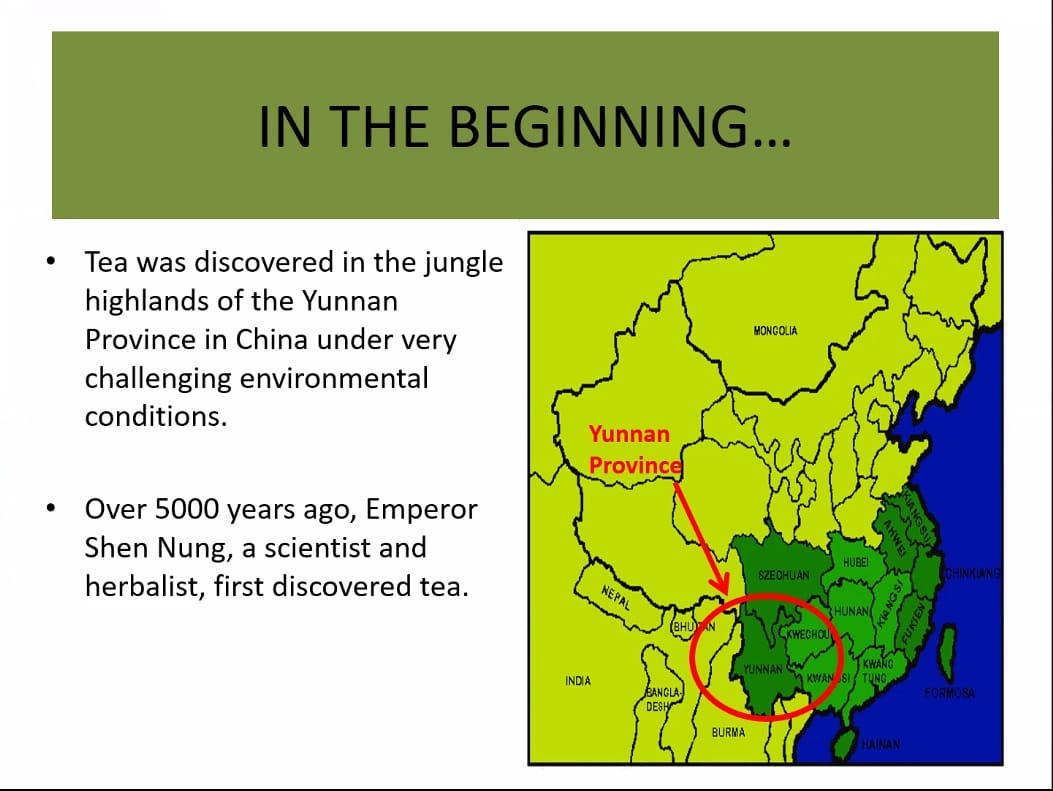
Beaudette shared the legend of the discovery of tea, which states that the mythical Chinese ruler Shennong was traveling through Yunnan province. He stopped to boil some water, and while the water boiled, some leaves fell into it. He enjoyed the aroma, and after sipping the concoction he received a jolt of energy from the tea’s caffeine. He ordered his entourage to start harvesting tea on the spot.
Tea eventually made its way to the West, where its high price made it a status symbol for wealthy elites who could afford it. Tea was advertised primarily as a medicinal drink, and said to cure drowsiness, epilepsy, gallstones, migraines, paralysis, and other ailments. Tea made it to England in 1662, thanks to Catherine of Braganza, the wife of King Charles II, who grew up drinking tea in Portugal.
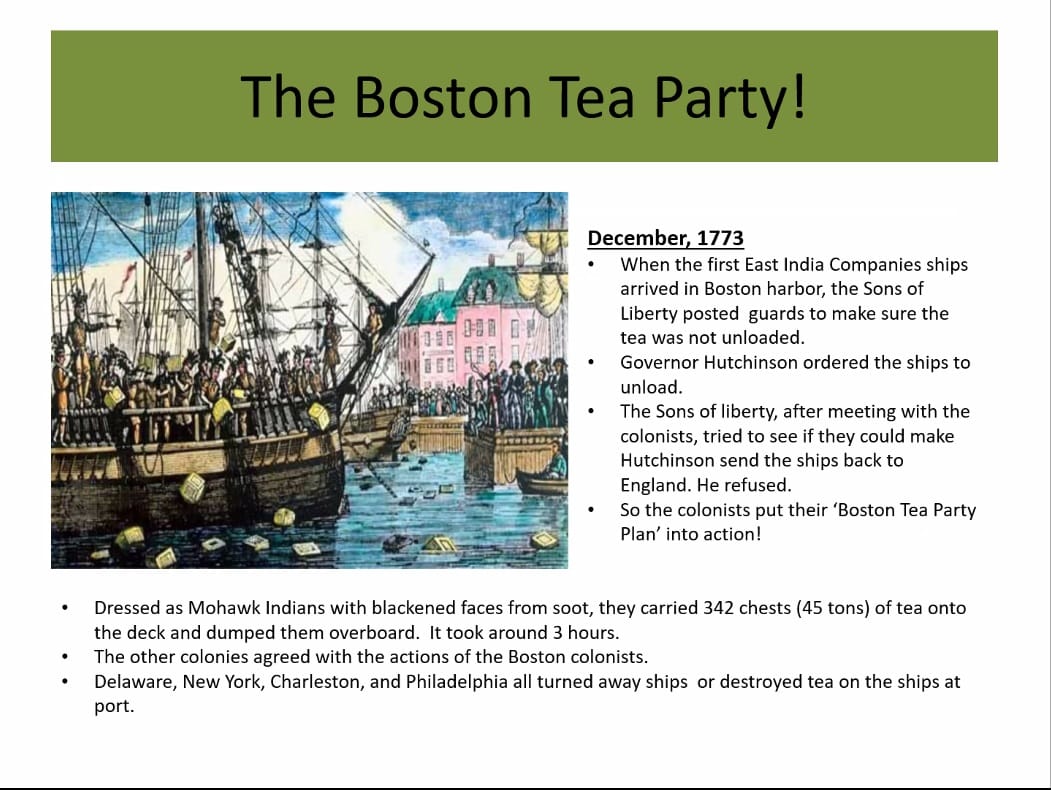
Every New Englander worth their sea legs knows about the Boston Tea Party. Beaudette went into fascinating detail about the specifics of the colonists’ plan and the result of the tea party. She noted that all the tea thrown over into Boston Harbor didn’t sink initially. The shipments contained black tea, which is oxidized and dried out before being used in tea, making it heavier. Those tea chests sank immediately. But green tea, which is lighter and nonoxidized, floats in water. The colonists had to manually sink the green tea chests.
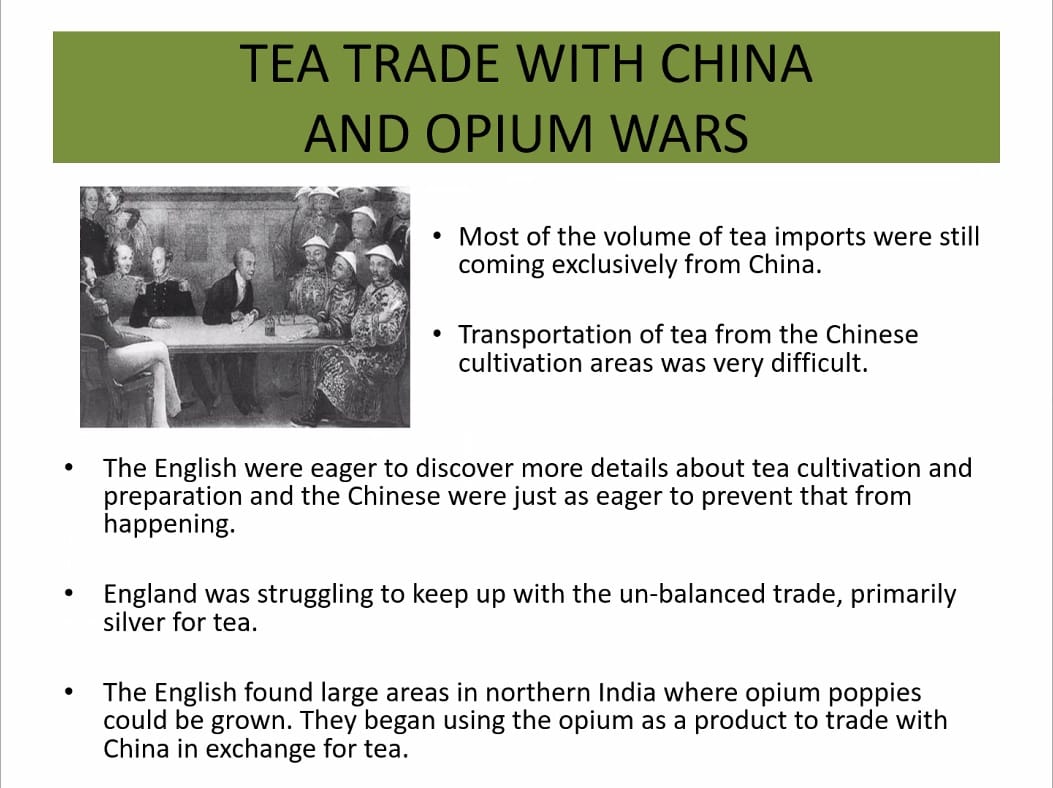
Beaudette explained though that the formation of the United States of America isn’t the only world-historic event that was galvanized by tea. After the British colonization of India, the English gained access to India’s opium production and began to trade opium with the Chinese in exchange for tea. Chinese attempts to resist the flood of opium into the country led to the Opium Wars, the opening salvo in what the Chinese would eventually call the “century of humiliation.”
It’s always interesting to learn what moves the world in such major ways, and I would have never imagined that tea was at the center of revolutions and wars in both the East and the West. Beaudette lets her love for tea infuse her storytelling. She can tell you the difference between modern breakfast tea and its predecessors, which antioxidants in tea are most beneficial (it’s epigallocatechin gallate, in case you were wondering), and that tea sold in Canada has an expiration date while tea sold in the United States doesn’t, even though commercial tea in bags expires in about a year in both places.
Learning about tea was the perfect end to my lecture double-header, and it made me incredibly thankful for the opportunity to learn so much from such brilliant people, for free, without leaving the comfort of my home. We really live in an era of miracles, and none so great as the chance to have our curiosity sated.
NEXT
Jamil goes to see the Christmas trees at the Wadsworth, for real this time.


