Please Don’t Slow Me Down
Space 1308
1308 Broadway Ave.
Oakland
Nov. 15, 2025
Melina Cohen-Bramwell’s Benji has been having a hard time for a long time. One day manic, the next depressed, he has been fumbling his way into adulthood isolated in his mother’s basement, surrounded by his own thoughts, and fundamentally wondering how, or if, he might come to terms with who he is and maybe, just maybe, even start to like himself.

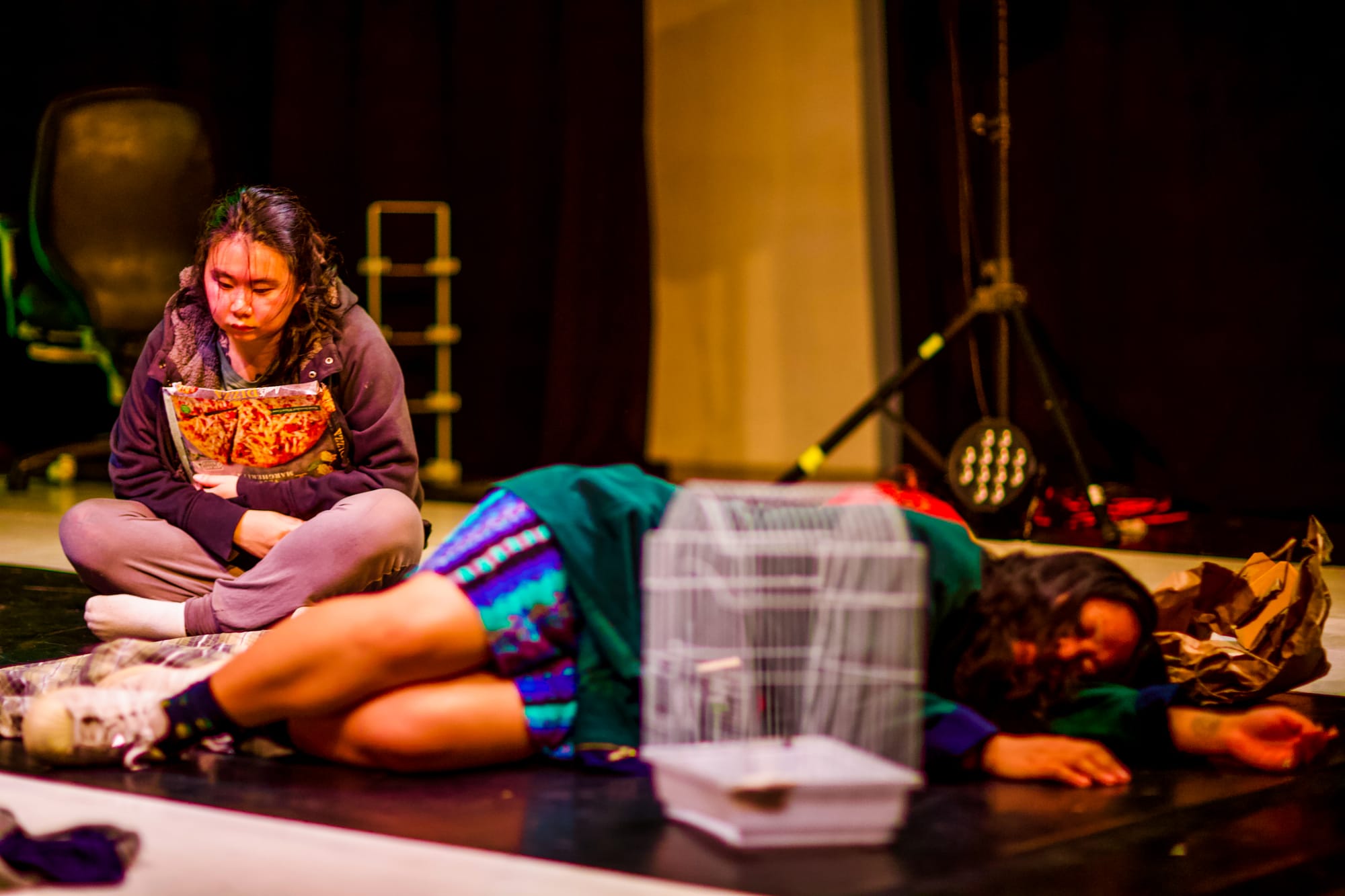
Cohen-Bramwell’s new play Please Don’t Slow Me Down, which concluded its month-long world premiere run at Space 1308 last month, follows the aforementioned self-destructive bipolar 30-year-old Benji (played by Dom Refuerzo), from burnout and therapy to an unexpected rave (at his old school, no less), and furthermore unexpected healing and acceptance found through the kind words of a stranger. For this performance singer Tristan Marcelle opened with a solo set, and topically relevant visual art from Jo Williams was on view against one wall.

The hour-long runtime, single-night premise, and simple sets ensured the audience could engage and empathize with Benji from the get, kept the story moving at a steady but unrushed pace, and did feel fresh, albeit a bit ham-fisted and exaggeratedly obvious. His best friend was a bird — we never learn just how Andy passed — and Benji, the human, is not sure he wants to continue on as is. His therapist thinks he should take his meds. His mania? Not so much. Cue the (search for) drugs and connection at a rave.
I mean….relatable. Benji is stuck.
Ensemble actors Michelle Zheng, Peter Malmquist, and Myles Bell all carried their bit parts galore, with a particularly notable scene from Zheng as ravetok therapist and displays of athleticism from Malmquist.

As the title suggests (pulled from The Strokes’ 2003 hit “Replitia”), Benji’s Mania—personified by Elenor Irene Paul, also responsible for the absolutely batshit costuming—was all gas no brakes, and her full-throttle approach paid off in full. At turns delightful and abhorrent, charming and encouraging, but always, always self-destructive, she stole each scene, star-eye shining.
Contrary to the heaviness and wild chaos intrinsic to the subject matter, the whole shebang comes together quite well and with much more wholesomeness and heart than it may sound. The predictability of Benji’s predicament and potential growth, a realistic glimmer of hope offered, not false promises. Self acceptance is a journey, and the show leaves the audience confident that Benji is at least on his way there.