
Grupo Sumak de Philadelphia and emospacebird
The Fallser Club
3721 Midvale Ave.
Philadelphia
June 19, 2026
There aren’t many acts that could get me to drive through the gated-off, gridlock FIFA Fan Fest area on a World Cup match night for their gig, but Grupo Sumak is most definitely one of them. Having watched their work from afar (see: Instagram), I knew it would be high energy, warm, and the right way to spend a Friday night.
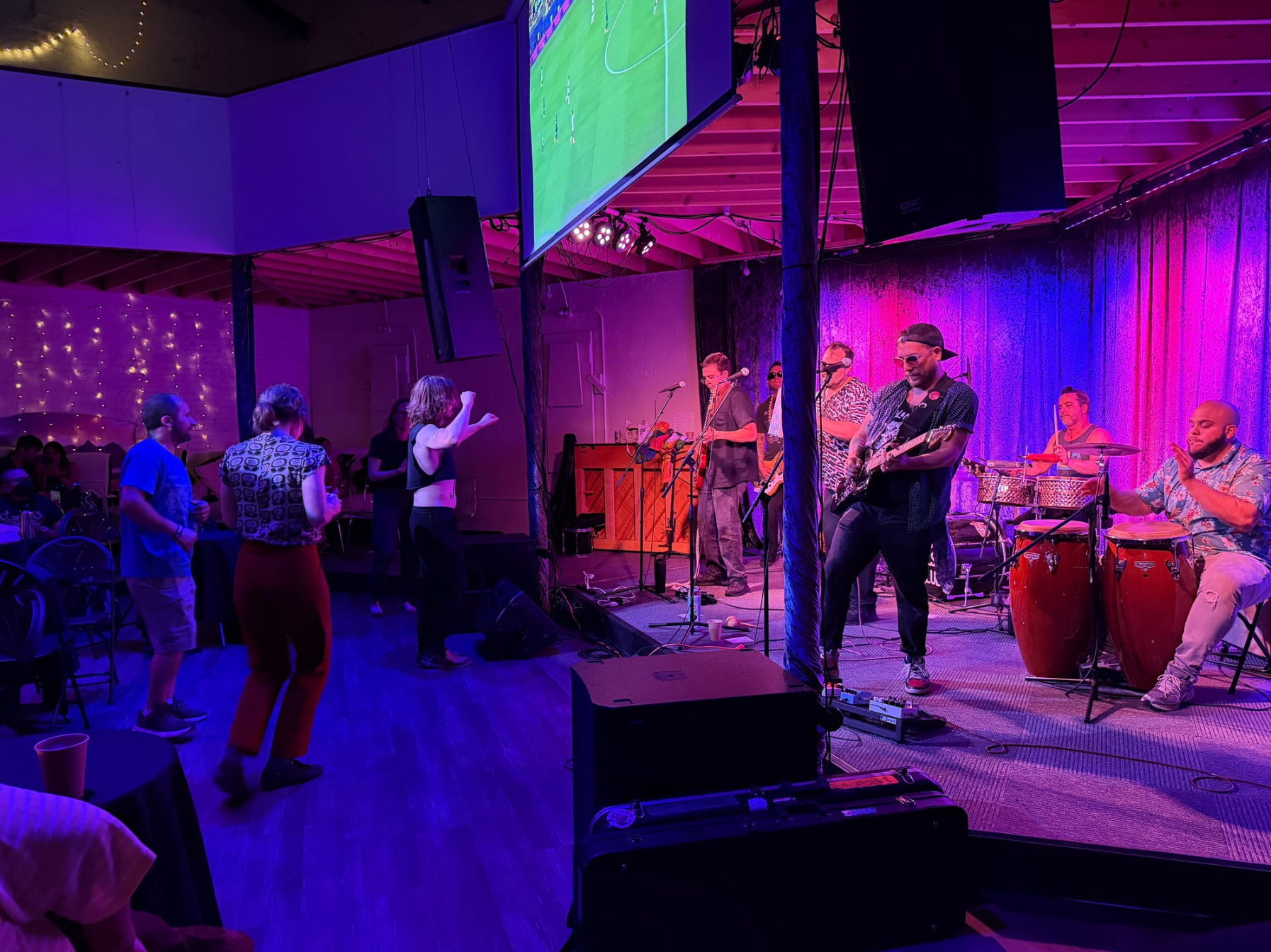
The Fallser Club feels like one of those places that could be in the suburbs, but is right in the heart of East Falls’ main strip. It's cozy, familiar, and accessible. They have volunteers running the ticket sales table, free popcorn for all, and regulars that come out regardless of who’s playing. It felt like the ideal spot to watch a couple of local bands, and it didn’t hurt that they had the Brazil vs. Haiti match projected onto the area above the stage.
Everything about the night just kind of went hand-in-hand in a special way. Throughout the day, I’d been talking with folks about the significance of this specific World Cup match being played in our city on Juneteenth. In short: Brazil has the largest population of people of African descent outside of Africa, and after fighting France for independence in the 1800s, Haiti became the first sovereign Black nation. Juneteenth commemorates the end of slavery in the U.S, and Philadelphia is actively celebrating the 250th anniversary of the signing of the Declaration of Independence.
There's more nuance and pain and joy wrapped up into all of that than we can get into here, but this match being played on this specific day while listening to groovy, soulful tunes from emospacebird and cumbia from Grupo Sumak in a city that frankly wouldn't even be half as spectacular without its many diverse communities felt weighty and like absolute kismet.
Emospacebird (whose real name is Erin) began promptly at 8:30, opening with Piece O’ Pie off of their 2025 album RAZZMATAZZ. The song pairs a spoken word intro with a psychedelic vibe, and describes a scene where a man is telling someone that he’s been waiting his whole life, and will continue to wait, for a piece of the pie. Much of emospacebird’s set focused more on skillful guitar noodling and riffing, but when the lyrics hit, they really hit. My favorite song of their set was My oH sO JUmblEd bRaiN, which felt frantic and deeply relatable.
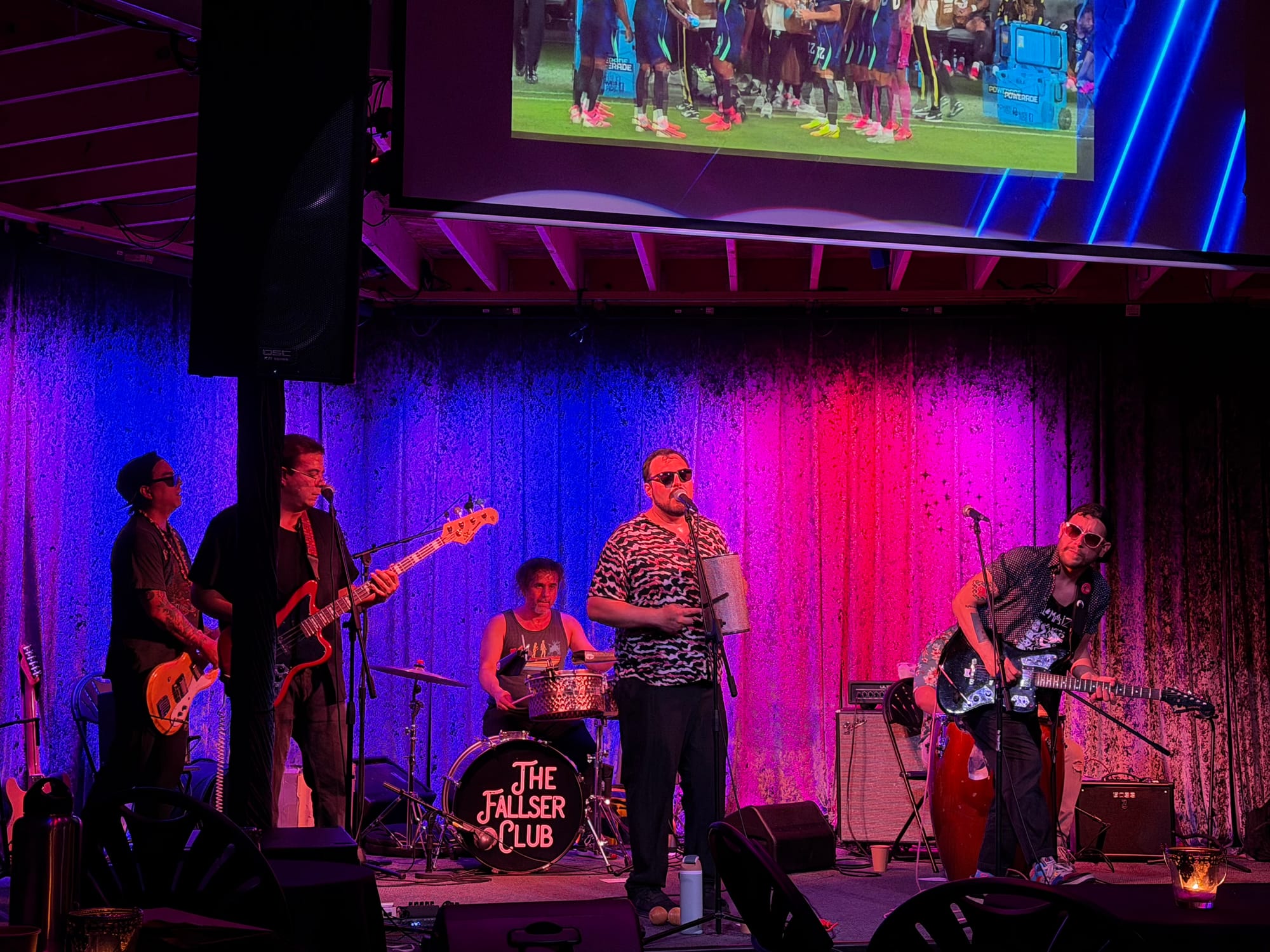
About an hour and three goals for Brazil later, Grupo Sumak took the stage and immediately started playing that good, nostalgic cumbia. That cumbia that brings you back to your tío’s backyard, your family screaming at each other over the music (with love, of course). The band proudly tells their audience both online and in person that their music is “psicodelia tropical inmigrante,” allowing us to better understand where the spirit of their exuberant sound comes from.
Grupo Sumak is made up of Simón Martinez Abadía, Wander Torres, Tomás Monarrez, Gary Galapagos, Daniel Acevedo Alfaro, and Manuel Morales. For each member, this group is not their only musical endeavor. Most of the members also play in other bands – De Tierra Caliente, Buuchi, Mariposas Galácticas, and Guachinangos, respectively. The way it was explained to me was that if you put Latin musicians in the city into two overlapping circles, Grupo Sumak is made up of the middle of the Venn diagram.
It’s not an exaggeration to say that the band’s singer, Manuel Morales, has a jaw-dropping voice. Looking around, I wasn’t the only one impressed; his voice expertly filled the room and the band’s combination of bass, guitar, timbales, and congas had the crowd moving in time with the beat. Several times, I had to remind myself to adjust where I was looking on stage, because each member of the 6-piece appeared to be completely at one with their instrument.
The Fallser Club was in motion throughout their set; lovers and friends danced, laughing as they bopped around. People seated at tables swayed and took photos, wanting to remember this early summer evening when our city was more lively than ever.
What has stuck with me is what Daniel Acevedo Alfaro – one of the band's guitarists – said before keeping the crowd moving the rest of the night: “These are rhythms that have traveled hundreds and thousands of years from Africa to all of Latin America, then [North] America,” he said of salsa, merengue, cumbia, and bachata. “All of these beautiful rhythms live in us and our stories.”


