
Gone But Not Forgotten: Black Cemeteries of West Baton Rouge
West Baton Rouge Museum
Port Allen
Through March 8
How would you feel if you lived next to a cemetery? Due to superstition and general cultural stigma in the U.S., it’s probably not your first choice. In fact, according to Realtor.com, the median price of properties in a zipcode with a cemetery is over 12 percent lower than in neighboring areas. But many in West Baton Rouge Parish may be living closer to a cemetery than they know. The parish is home to many lost or endangered cemeteries, some of which have disappeared without a trace.
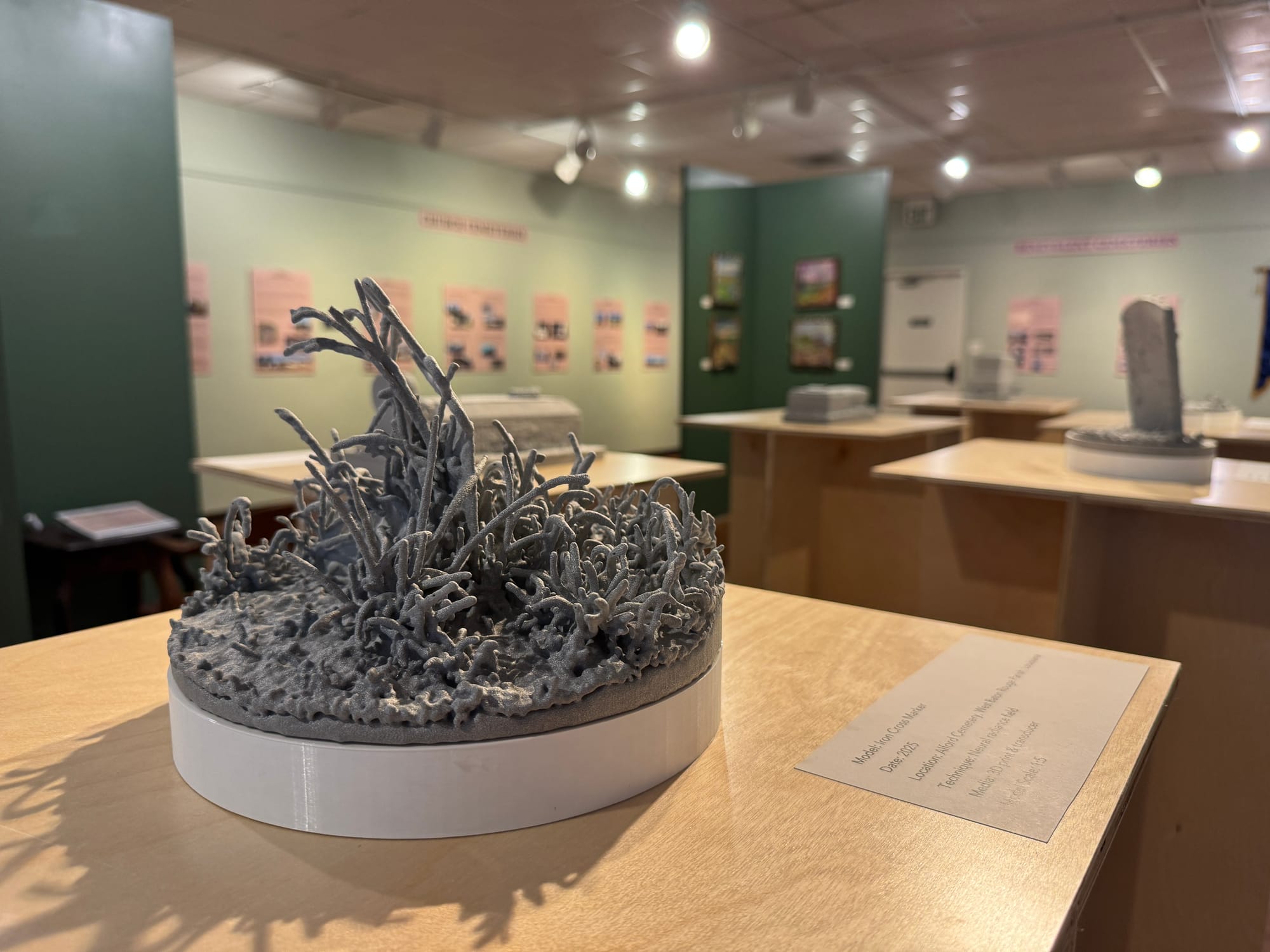
In “Gone But Not Forgotten: Black Cemeteries of West Baton Rouge,” the West Baton Rouge Museum showcases work by Debbie Martin, LSU researchers and local artists documenting these burial sites and tells the stories behind them through art, photos, digital renderings and written panels.
"This project is about giving voice to the voiceless,” said Debbie Martin, genealogist and cemetery mapper, according to the museum’s website. “Every name, every unmarked grave, every stone touched by the sun carries the weight of a history we must never forget.”
Especially in a time before birth or death certificates were required, a headstone could be the only evidence that someone ever existed. But for many enslaved persons who died on plantations, graves were likely unmarked and on non-ideal plots of land. As industrial development and climate change permanently altered the landscape in Southern Louisiana, these burial sites along the Mississippi River have come under threat.
The exhibit features aerial photography of the burial sites across time and documents when they became unrecognizable. Panels on the wall recognize the work of Benevolent Societies, which were community organizations that banded together to provide services like healthcare and burial services for Black Americans who were barred from accessing those services in the Jim Crow South.
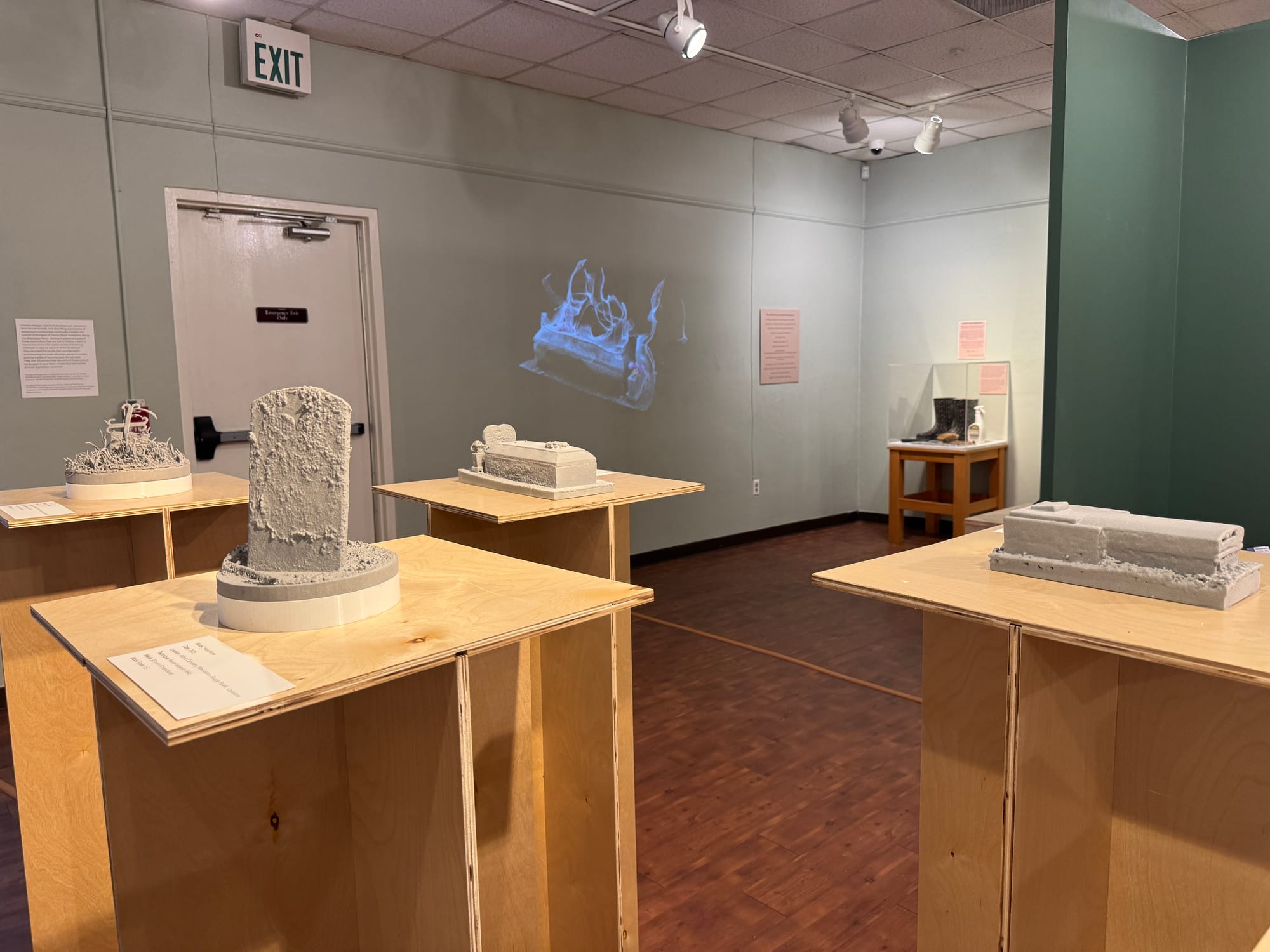
The most striking work was by a research team at LSU who went to physically document the currently endangered grave sites. Walking into the small gallery, people are met with a soundscape the team created. They spent hours collecting sounds from the cemeteries as they currently exist: the rustle of the leaves, the sound of cicadas in the air, the crackle of burning sugar cane, the birds in the trees. Layered on top of each other, the soundscape they created likely sounds louder and richer than any of the individual cemeteries would be on a typical day, but the sounds echo through the space.
The team also created 3D printed models of different headstones and a digital projection of the burial markers forming out of sand and swirling into abstract shapes again. Taken together, the West Baton Rouge museum has transformed their small gallery space into something like hallowed ground, honoring those who have or may very soon be lost to history.


