
Bitchin’ Bajas
Solar Myth
1131 S Broad St.
Philadelphia
Dec. 12, 2025
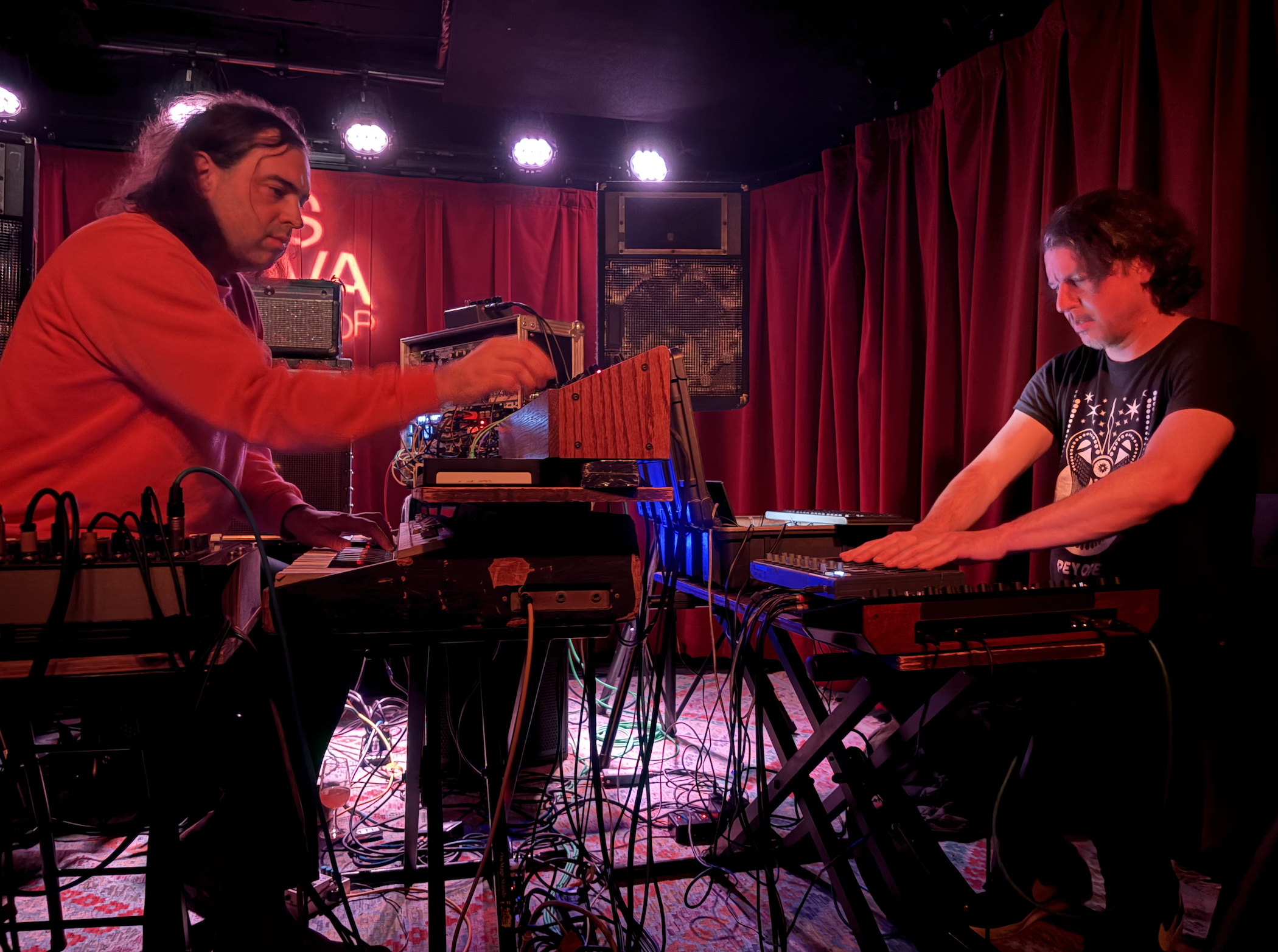
Bitchin’ Bajas are no strangers to the Solar Myth stage now, and the relationship between the band and venue has been fruitful, as Solar Myth’s proven a blessing to the broader jazz and experimental music community since opening three years back, a Boot & Saddle rebrand. (May that great neon sign out front never be replaced.) I’ve only seen the band once, sharing the bill with the legendary Will Oldham years ago at Union Transfer when they were touring behind their collaborative album, Epic Jammers and Fortunate Little Ditties; that show was a stunner, deeply immersive, a headtrip. The Bajas have been reliably prolific and busy over the last few years as a recording unit and have a secure reputation for being great live; shoutouts to Beau Gordon, running sound, for the transparent and supportive mix. The band packed the standing-room floor out with bundled-up onlookers, shifting their weight and chatting until the lights slightly dimmed and Cooper Crain, Rob Frye and Dan Quinlivan walked through the crowd to take the stage.
Once settled in at their stations, Quinlivan, seated at stage left, looked out and spoke softly, off-mic, without even slightly raising voice: “How’s it going? Thanks for coming. We’re a band. We sound sort of like this.”
Then, after a long pause:
“Technically, we sound exactly like this.”
Then it was off to the races. The trio played an hour-plus set as a concentrated love affair with sound and rhythm, composition and improvisation, interplay and development – it was all there in spades. A lot of the joy of listening to this music is the way it rewards a sort of choose-your-own-adventure sense of presence; a composition might begin with fast arpeggiating synths, envelopes opening and closing, in a mixolydian mode, and the pattern might be so mesmerizing you don’t even notice the introduction of pitch-shifting flutes, and by the time you do, a four-on-the-floor bass pulse starts pounding and shocks your senses. Crain and Quinlivan especially were almost constantly remixing themselves, turning knobs, windows of frequency widening and contracting, bringing subterranean textures to the forefront and shifting the perspective; a 5/4 ostinato in the bass might only surface for a moment before then dissolving into low drones. So much is subtly changing sonically, edifying your close attention: Crain expertly modifies the drum sequencer on the fly to completely flip the beat while someone else is changing some other parameter, the volumes always riding. If one thing is static, it isn’t for long, and other sounds revolve around it. We were treated to too many great timbres to summarize, grooves of prismatic sweeping filters on the synths, pentatonic glides across the white keys, flute trills and krautrock beats, live remixing and knob-fiddling, layers surfacing and receding, like a tour through a vibrant ecosystem of sound.
Frye switched between flute, saxophone and the Akai EWI-4000s (EWI means “electronic wind instrument”; picture a Jetsons-looking battery-powered flute), keeping the flavors constantly fresh – dare I say, Bajas Fresh? – especially during the fourth piece, a danceable track where Frye’s Akai produced frequent, giddy glissandi that reminded me of the late, great Hermeto Pascoal’s Música da Lagoa. As serious and heady as the music could be, a lighthearted, playful and rule-breaking spirit prevailed: the enduring image, for me, was Quinlivan, playing shakers and bells for a song, mostly by his legs, then raising them right by his ears, shaking, rattling and wiggling, arms jiggling, eyes shut, lost in mischievous pleasure.


