
August Sander
People of the 20th Century
Yale University Art Gallery
New Haven
Through June 28
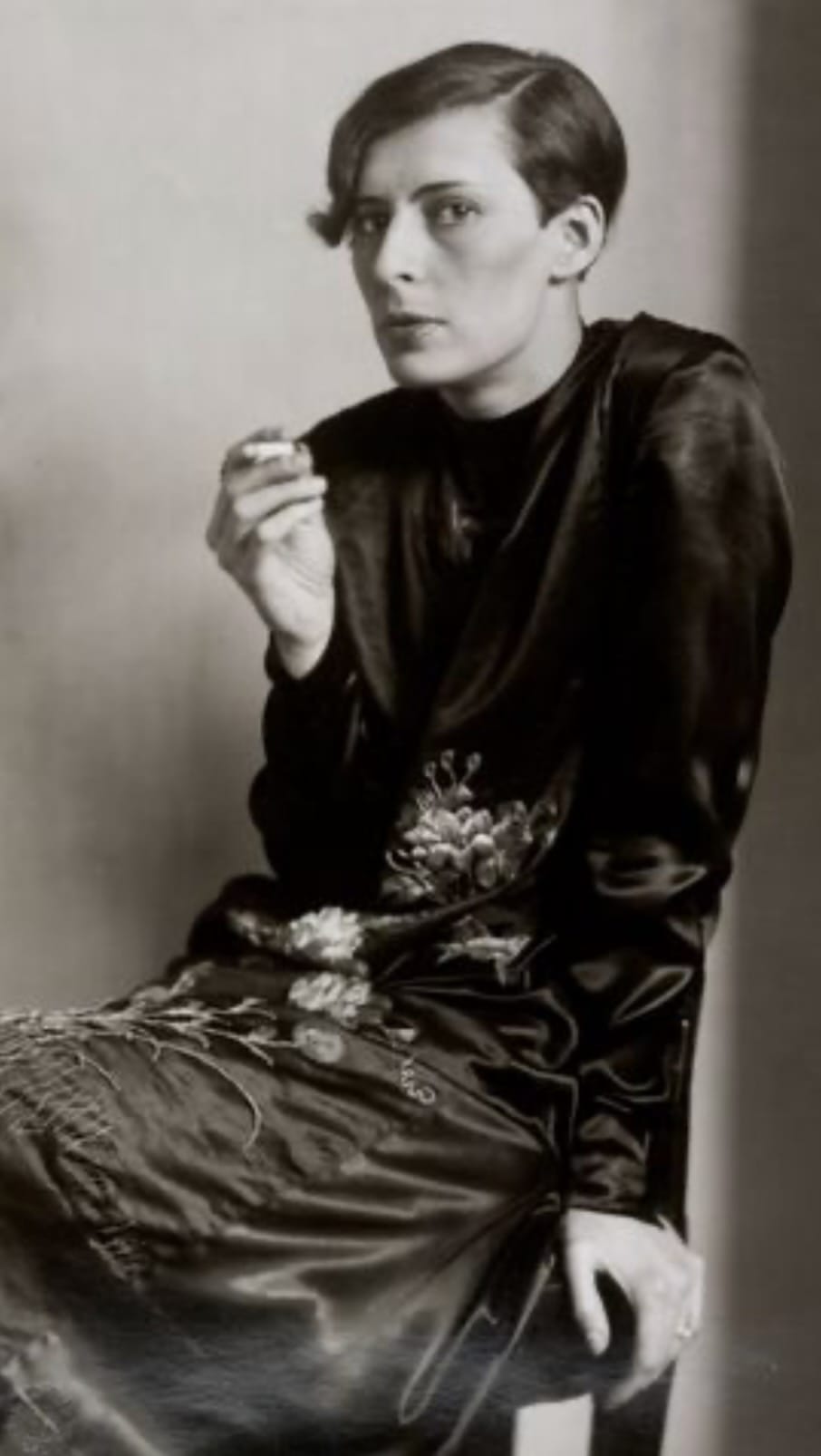
The photograph gives only the title of her occupation — secretary at a radio station — but the image makes clear that the woman is not defined by her job. Her personality leaps from every detail, from her haircut and her aggressive sense of style to her body language, the way she holds her cigarette, the way she's perched in her chair, that glint in her eye.
She asserts her humanity, yes. But as every amateur photographer knows (and these days, almost everyone with a phone is an amateur photographers), capturing that humanity isn't easy. Yet August Sander does it again and again, across hundreds and hundreds of photographs. It was his life's work, and he just happened to be doing it during one of the most tumultuous times in history.
The result—Sander's landmark, luminous People of the Twentieth Century—is now enjoying a long run at Yale University Art Gallery, from now until June 28. It is a stone-cold gift to the public that this astonishing exhibition is open to the public for free, for so long. Prepare to spend more time than you anticipated moving slowly from face to face. Prepare also, quite possibly, to be moved to tears.
As an accompanying note states, Sander (1876-1964) "is one of the most influential photographers of the modern era. For his ambitious and groundbreaking series," he took pictures of "individuals from all classes, occupations, and backgrounds, arranging them into a taxonomy of archetypal groups: 'The Farmer, 'The Skilled Tradesman,' 'The Woman,' 'Classes and Professions,' 'The Artists,' 'The City,' and 'The Last People.'" The categories give his work a sense of completion, that in some way he managed, over the years, to capture an entire society.
It wasn't a dispassionate exercise. First, as the note points out, the taxonomy groups are "more flexible than they first appear, with several types and people featured across groupings, defying neat classification."
Second, and more important, "Sander captured Germany's changing cultural landscape in the first half of the twentieth century. Influenced by the avant-garde Cologne Progressive and New Objectivity art movements, which encouraged an empirical representational style free of idealization, Sander's carefully observed formal portraits reveal a nation rooted in tradition yet shaped by war and urban growth. Each image depicts both a type and an individual, emphasizing the tension between social roles and personal identity. His inclusion of marginalized groups, including people with disabilities and the unemployed, reflected his belief in the value of each member of humanity. In 1936 the National Socialist regime destroyed an early version of his work; nevertheless, Sander continued to photograph during and after World War II, adding portraits of foreign workers, persecuted German Jews, political prisoners (with images smuggled out of jail by his son Erich), and uniformed Nazis."
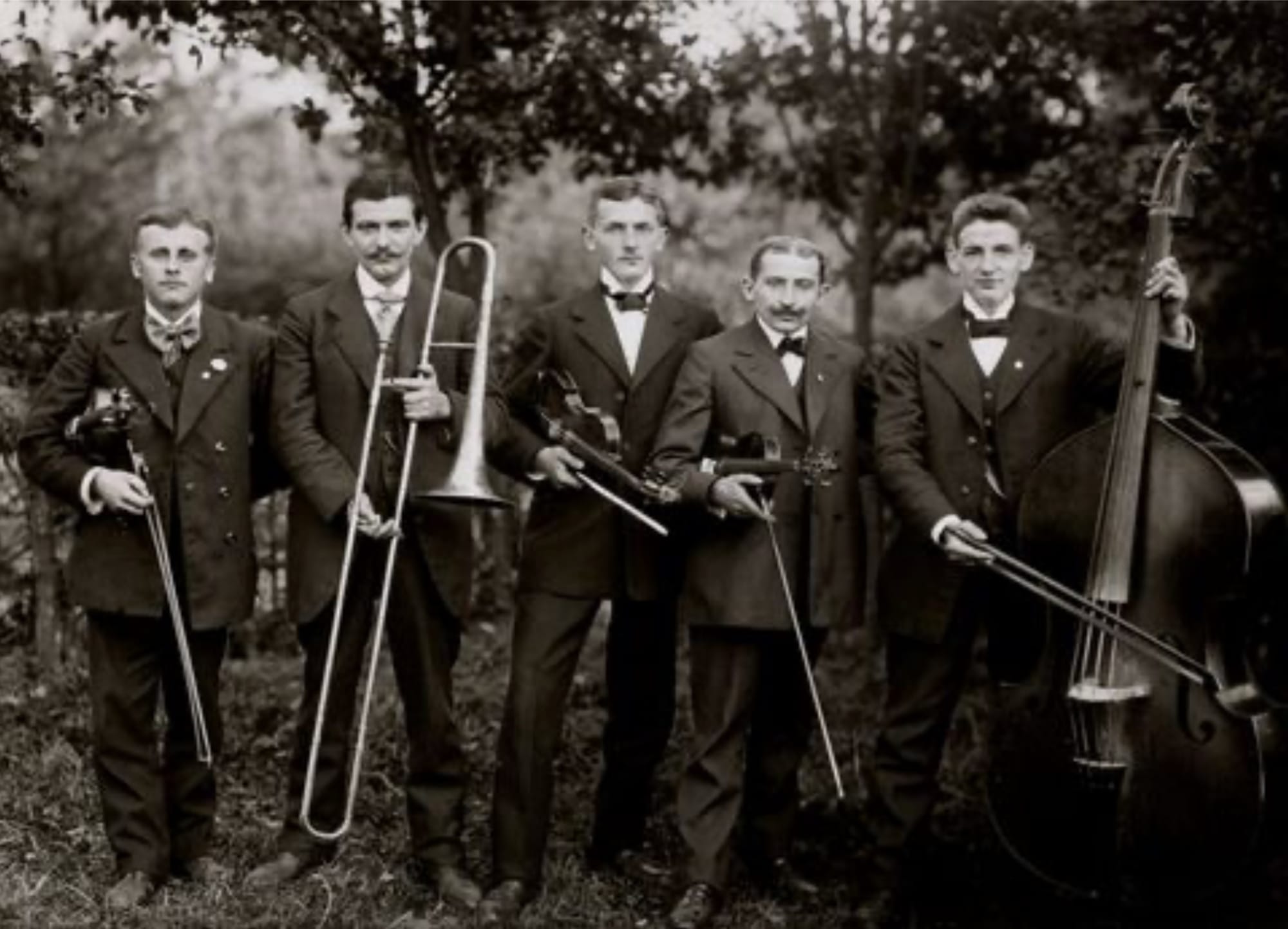
The tension between Sander the photographer and Sander the human being is palpable in every single image. He had a mission to record, which took him all over the country and the countryside. That mission is clear in the stateliness of the titles and the way (most of the time) he gets everyone to pose. But a fine-grained sense of detail always lets the subjective flood through the lens. The men in this country band have clearly posed for the picture, but their faces are animated. There's a whiff of mischief on the brow of the trombone player, an interesting smirk from the bassist. The violinist next to him seems possibly to be sizing Sander up as much as Sander is taking him in. Whatever Sander did to build trust, to put his subjects at ease, it worked.
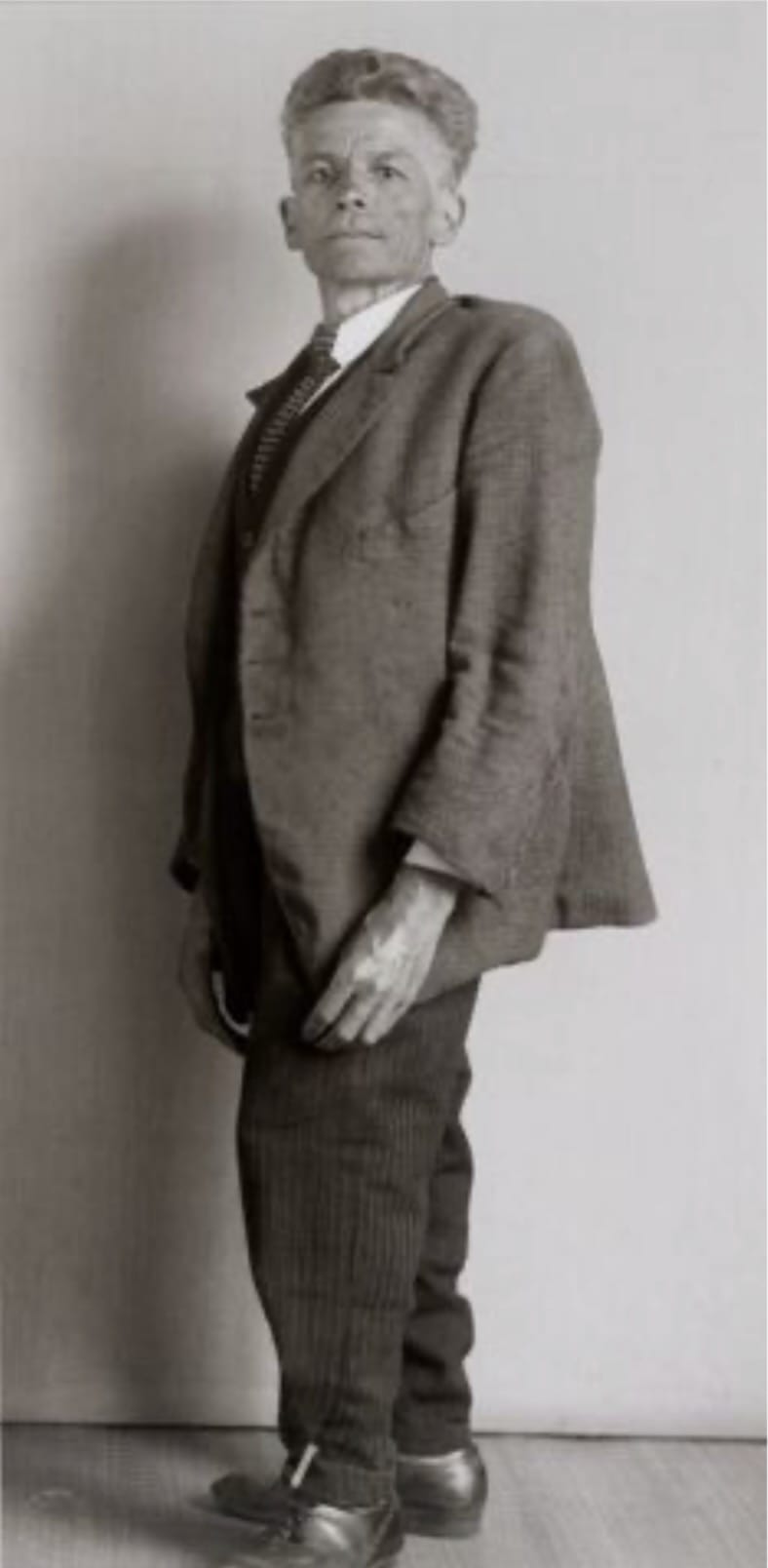
Sander's gift and insistence on showing the humanity in every subject quickly become deeply moving. Among the city people he photographed was a beggar, but the one thing he isn't doing in Sander's image of him is begging. He's in a suit and tie, even if they're the wrong size. His hair is combed and arranged. He stands tall and looks us in the eye. So many of us are accustomed to walk right by panhandlers on the sidewalk without giving them a glance. Sander makes us stop and pay attention. He gives all of his subjects their dignity.
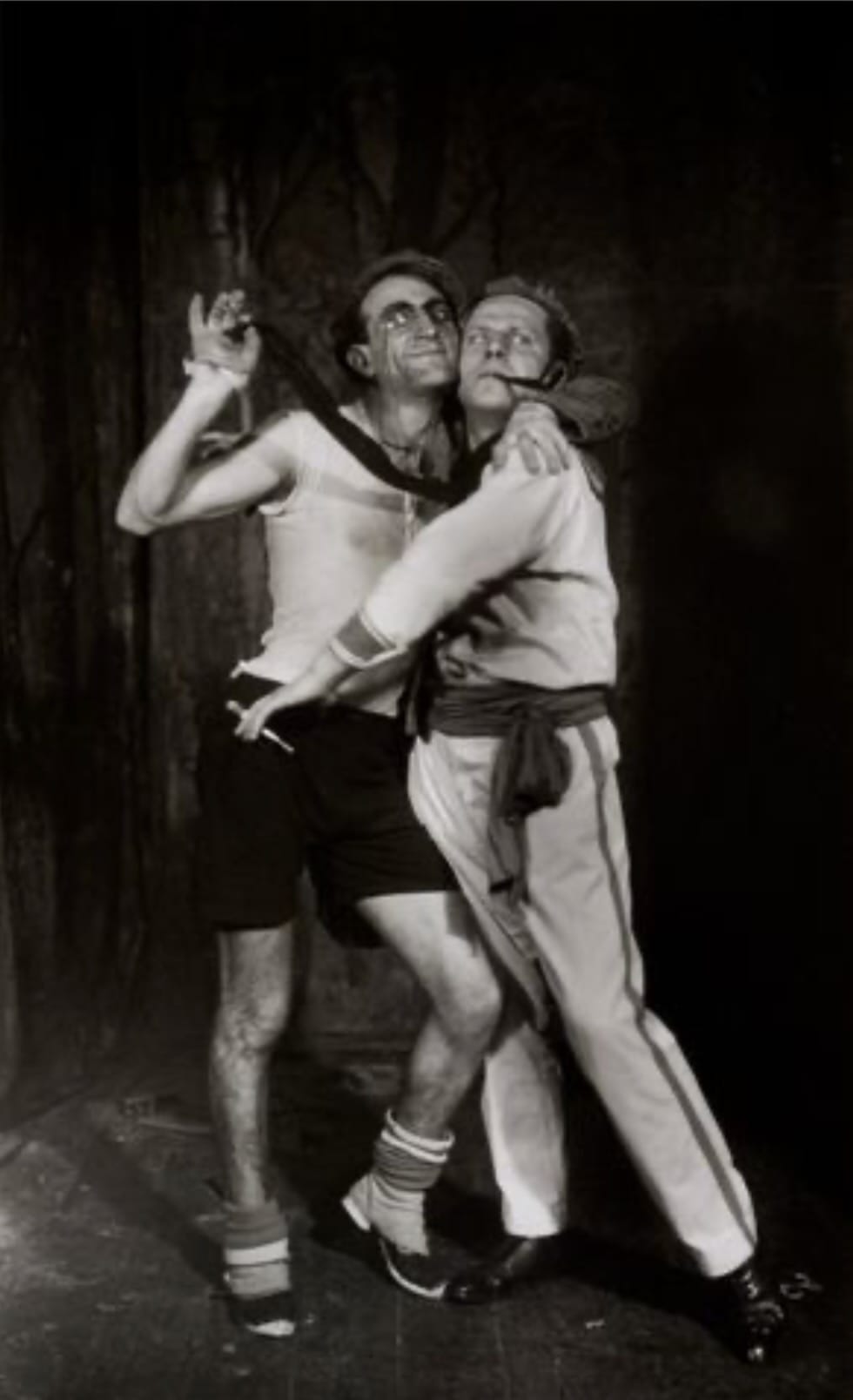
Sander the person shows his hand as the exhibition unfolds. It's clear where his sympathies lie, and who his people are. In a few photographs of artist gatherings, the ease the subjects have in front of the camera heavily suggest that Sander was there at least partially as a trusted guest, a friend. Those looking for evidence of the famed Berlin art scene between World War I and World War II—which many accounts suggest were in many ways still ahead of us in their permissiveness and celebration of alternative lifestyles—will find it in Sander's photographs, in the clothes people wear, the looks on their faces, the ways they hold themselves and one another.
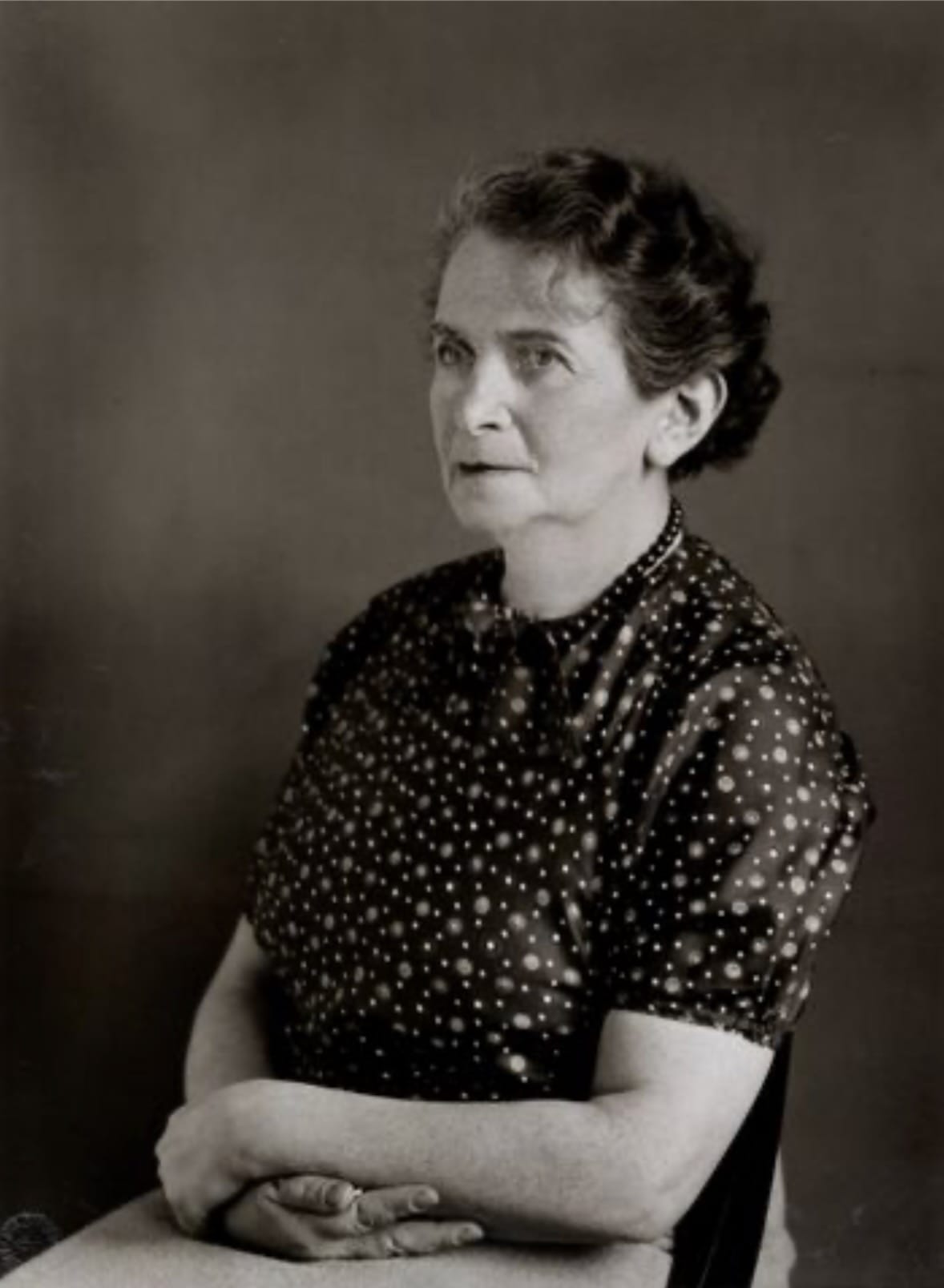
His eye drew him to the people on the margins—Roma musicians, the blind, people suffering from mental illness, the indigent, the sick. At times he gave his dispassionate titling an ironic, sarcastic, even angry twist. Margarete Oppenheim's portrait is given the title Victim of Persecution, stating it as beyond politics, an objective fact. He gives us a portrait of her with a complex expression on her face. We believe what has happened to her by the look in her eye, the set in her brow.
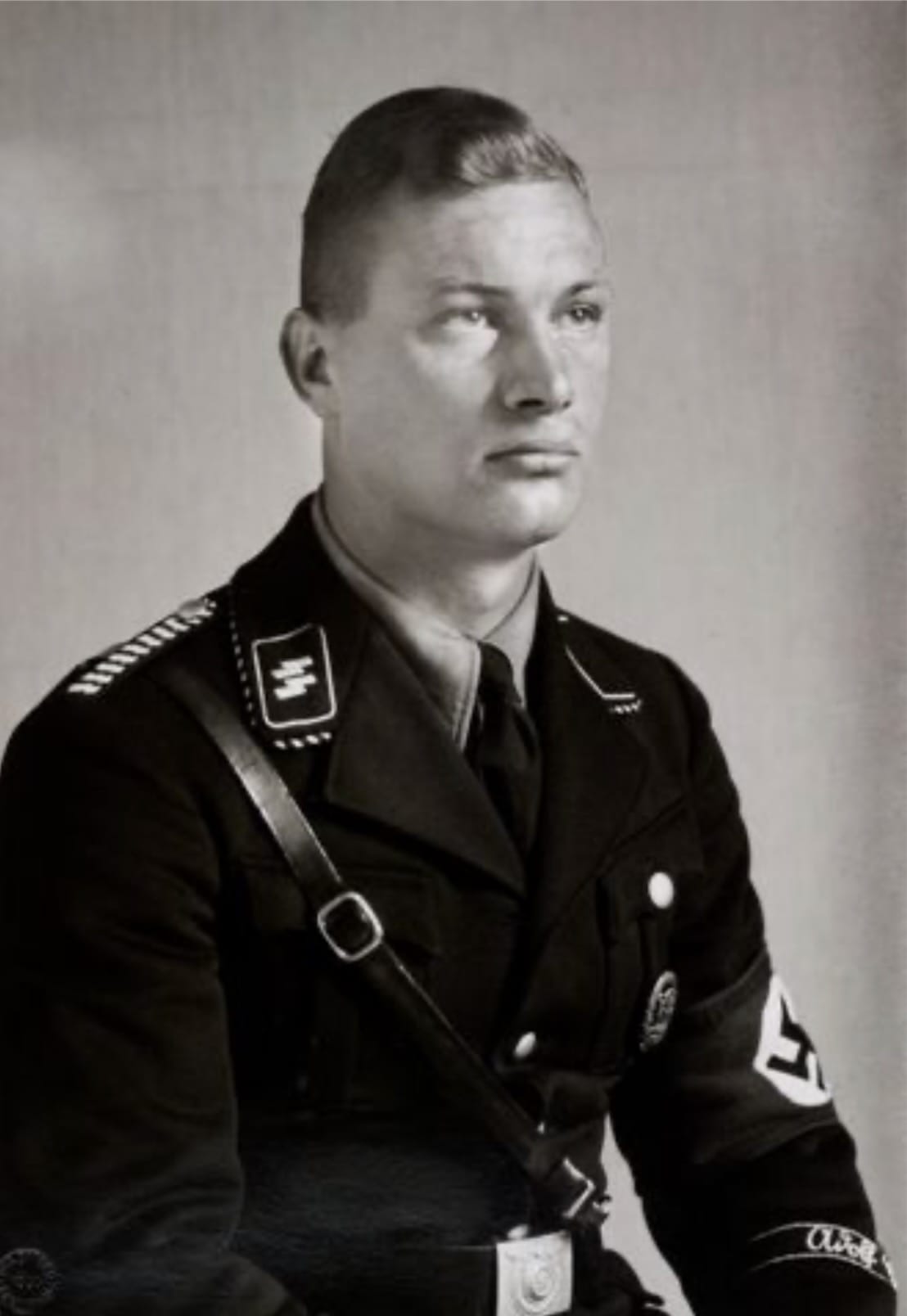
What was it like for Sander, then, to photograph members of the Nazi party — the ones doing the persecuting — with the same approach? It's easy to imagine the cognitive friction, Sander reminding himself to keep his head down and do his job, to record, record, record. In doing so, he lifts them up, asking us to regard them with the same humanity that we give everyone else in the exhibition. In our political times, in which the arts have become more adept at taking sides, it's a jarring moment, a reminder that the simple assignment to give everyone their dignity sometimes makes jagged cuts at cross purposes with politics, which requires doing some othering. A thought experiment makes the pain of these cuts more acute: what would a similar photography exhibition of the current United States look like? Sander's place in the pantheon of photography is firm enough to get major shows of his work into major museums. But time and distance also make it possible. Would the public tolerate a similar show of America now? One that features, say, ICE agents next to protestors, Klansmen next to civil rights leaders, all given the same treatment? This person matters. This person matters. They all deserve to be recorded, remembered. Would it work?
The question matters because some of the threads from image to image leave little doubt that Sander felt that tension himself. He knew what political landscape he was operating in, and what was at stake. He makes clear that the consequences got very personal. It wasn't just that the Nazis destroyed some of his work. Sander tells maybe his most personal story in three images of his son, Erich. The first time Erich appears in the exhibition, he's labeled by his current occupation, student of philosophy. In that image he looks sharp, clean, ready to take on the world. Take it on he did: in 1934 he was arrested for protesting the regime and sentenced to prison for high treason. The next image we see of Erich is labeled "political prisoner"; Erich himself took the picture (and many others, of other prisoners, which appear in the show) and managed to have them smuggled out of prison. Those two pictures tell a lively tale of resistance. But the next picture, from 1944, is of Erich's death mask; he died in prison of an untreated ailment.
The stark reminder that there was a person behind the lens, who suffered loss along with so many during that time, only makes People of the 20th Century more remarkable in its monumental intimacy. Each image is its own stunning portrait. Cumulatively, they have the power to leave the viewer in a daze, awestruck at the way someone with a clear eye and a loudly beating heart could show us how to connect with people from three generations ago—and in turn, when we leave the exhibition, how we can connect with everyone around us: ourselves and our friends and family, the people we cross paths with every day, or strangers on the street.


