
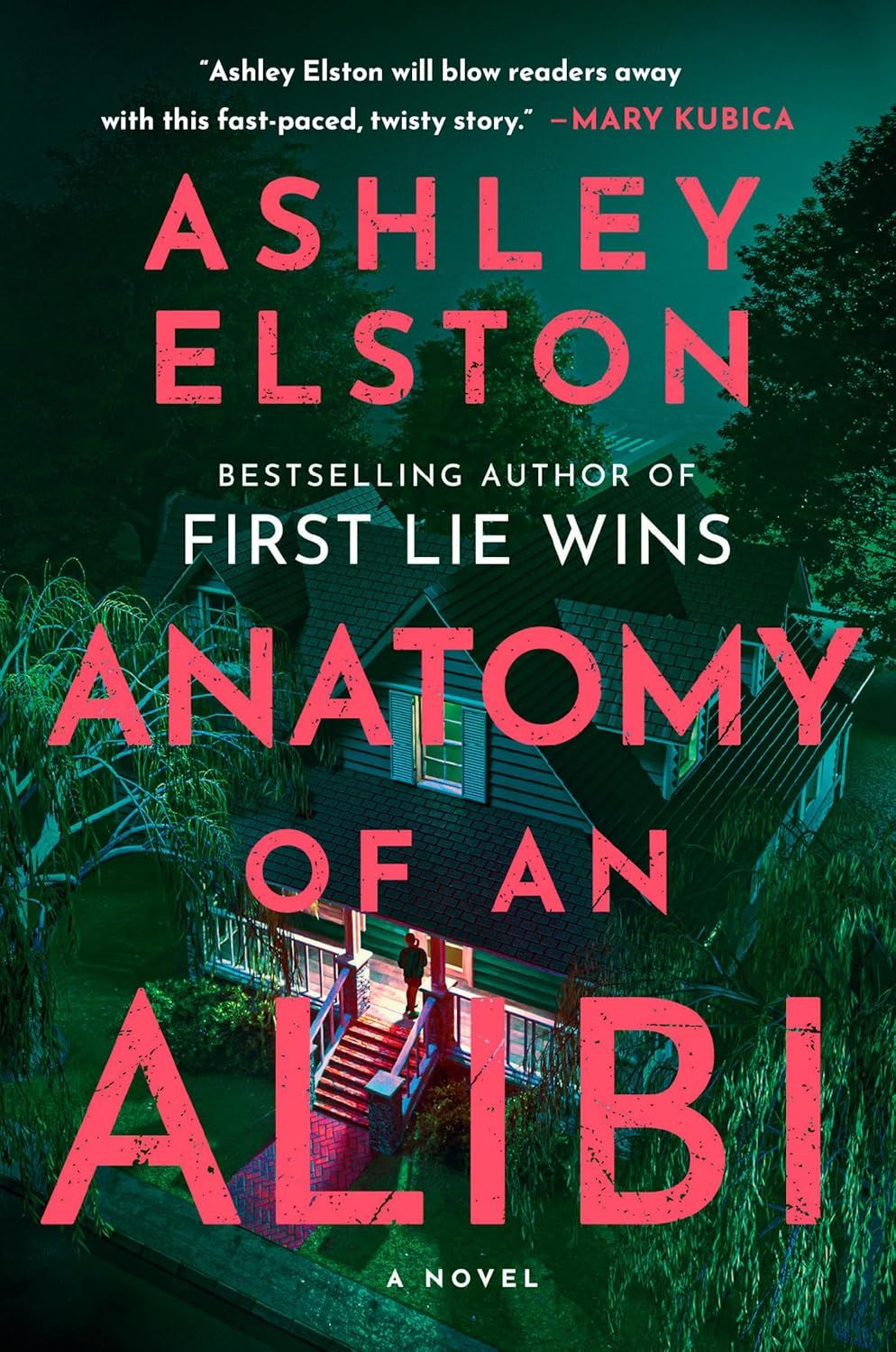
Anatomy of an Alibi
By Ashley Elston
Pamela Dorman Books/Viking
Where were you last Saturday, and can you prove it? These are the questions that haunt the protagonists of Ashley Elston’s newest novel, “Anatomy of an Alibi.” Aubrey and Camille are not friends – they don’t even really know each other. .But due to a series of circumstances, they devised a plan to switch places for 12 hours on Saturday, Oct. 10, so they could both search for answers to lingering questions. Something goes awry, and Camille comes home the next morning to find her husband, Ben, dead.
They both need an alibi, and now, only one of them has it.
“Anatomy of an Alibi,” set in Baton Rouge and the surrounding area, flips among the perspectives of four characters: Aubrey, Camille, Ben, and Ben’s partner at his law practice, Hank. It gives the reader perspective into a few days before the switch, the switch itself, and a decade before, when Aubrey’s parents are struck and killed in a tragic car accident. It is soon revealed that the incidents are somehow connected – something Aubrey was looking into during the switch. Each of the characters investigate each other and attempt to ascertain who they can trust while maintaining their own innocence.
“Anatomy of an Alibi,” is Ashley Elston’s second adult novel. Her last book, “First Lie Wins,” is a con artist thriller and New York Times bestseller. I found "First Lie" to be clever; it set my expectations high for this new book. But with the multiple points of view and lengthy cast of characters, it was hard to feel that the book had emotional stakes, even when the literal stakes for the characters were high. Even when the mystery is solved, it feels abrupt and slightly unsatisfying because of all the build-up. It felt less Whodunnit and more “Wait, who was that again?”
Camille in particular had an interesting relationship with her husband Ben that gets underutilized and underexplored in the book. I wish Elston had spent more time there.
In contrast, Elston writes specifically about Angola, Louisiana’s state penitentiary, from its rodeo/craft fair to specific visitation details (which at least according to cursory research online seem to check out). This gives the novel a sense of place. The descriptions of the prison come through the characters and feel authentic to their individual perspectives. So it’s not an activist’s take on the prison by any means. But given that she chose to fictionalize the name of the bar that kicks off the plot, it feels intentional. Angola sometimes feels tucked away from Baton Rouge, but the city is dependent on it as a source of labor in ways we don’t always acknowledge. Elston’s novel shines a light on that experience in a way that would be accessible to those who aren’t from around here and sparks more curiosity.


