
AI: Artistic Interpretations, Studio Art Quilt Associates
LSU Museum of Art
Baton Rouge
Through May 10
What can’t AI do? We’ve reached a point where it’s hard to distinguish between AI-generated content and work created by humans. Social media is full of AI videos. Fiber artists field requests to recreate AI generated images of impossible crochet pieces. Even those who remain stubbornly anti-AI are using it every day when they pick up their phones and use navigation tools or even Google. AI is everywhere. But the intersection of AI and art is tricky. Many people have an instinctive hatred of AI art, and once it’s revealed that AI was involved in generating the art, there’s backlash.
In AI: Artistic Interpretations, Studio Art Quilt Associates, 35 artists reflect on AI and its potential implication for their work through quilting. Each piece by artists is created using varying degrees of AI. The informational panels on the wall contain written reflections from the artists about the use of AI and art. The exhibit invites the audience to reflect on the relationship between creativity and technology through stations for people to respond to prompts and even try to create their own quilting patterns.
Quilting feels like one of the most AI-proof activities. Sewing is hard. It requires the meticulous cutting of intricate shapes out of fabric, a steady hand and an artistic eye. At least right now, AI cannot operate a sewing machine and piece together the fabric on one’s behalf without human intervention.
We see sewing machines as part of a slower way of life. It’s cottage core to make your own clothes and sustainable to fix things instead of giving into fast fashion. But when the sewing machine was invented, there was a backlash from seamstresses who feared that their jobs would be automated away. The machine could sew faster than any hand stitcher could. We see a similar backlash today, which makes the choice of quilting as a medium to have this conversation interesting.
While the answers from artists may vary, the exhibit operates a grey area of art and AI. Every piece of quilted art requires a human touch to bring it to life. Even if there are AI -generated images or the pattern was created through AI assistance, someone stitched every piece in this exhibit. Every informational panel is an argument for how AI can/should be used if at all, but every piece is also an argument of its own.
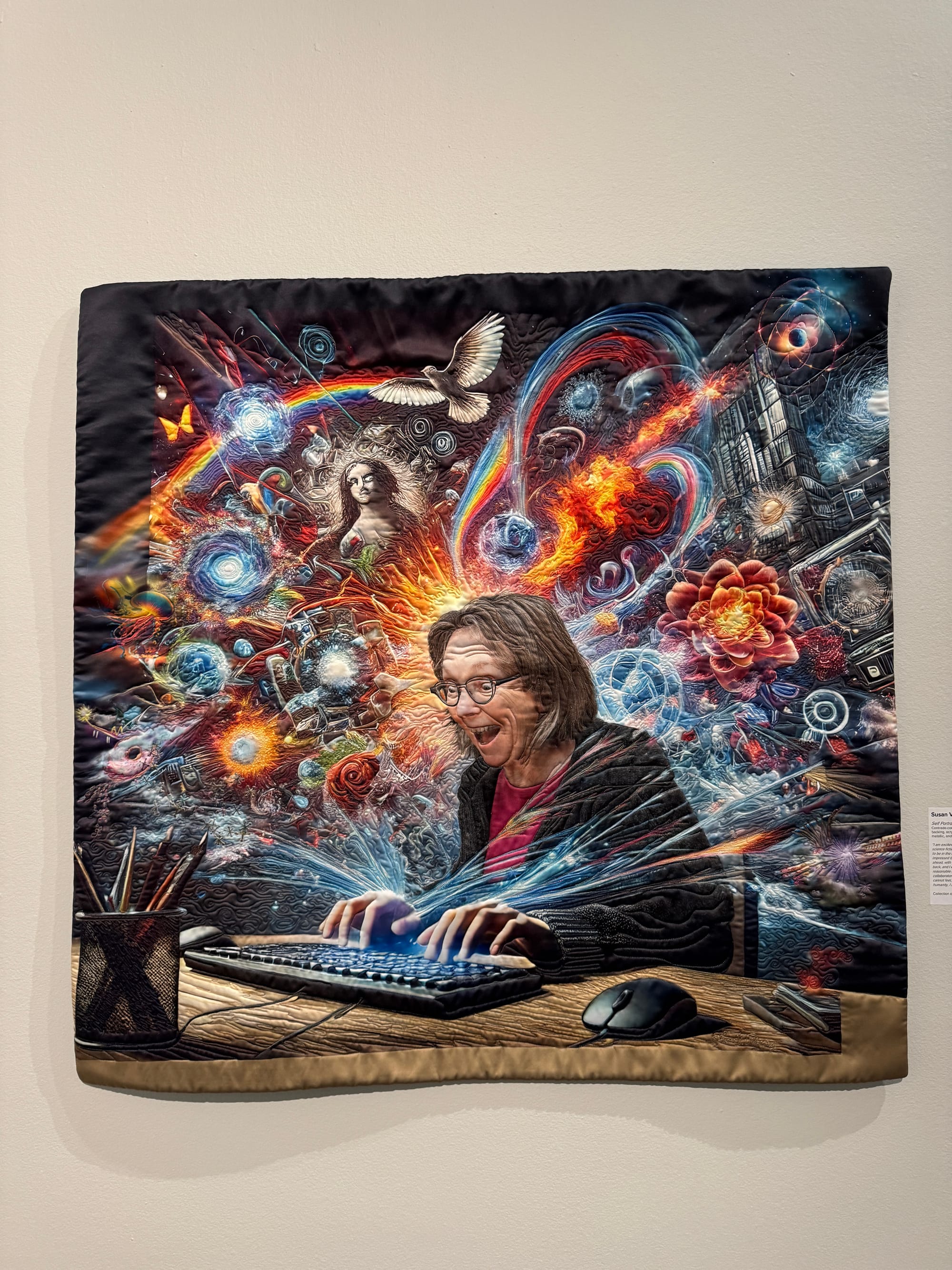
Artist Susan V Polansky is excited about AI. She wants to engage with it as a collaborator, all the while acknowledging the limitations of using it for art – the self is still required for “emotion and humanity.”
Polansky’s “Self Portrait” is one of the most obvious and conventional uses of AI. Despite the intricate stitching, it doesn’t feel like a quilt. AI may be a collaborator with a human at the wheel but it’s fundamentally changing the art.
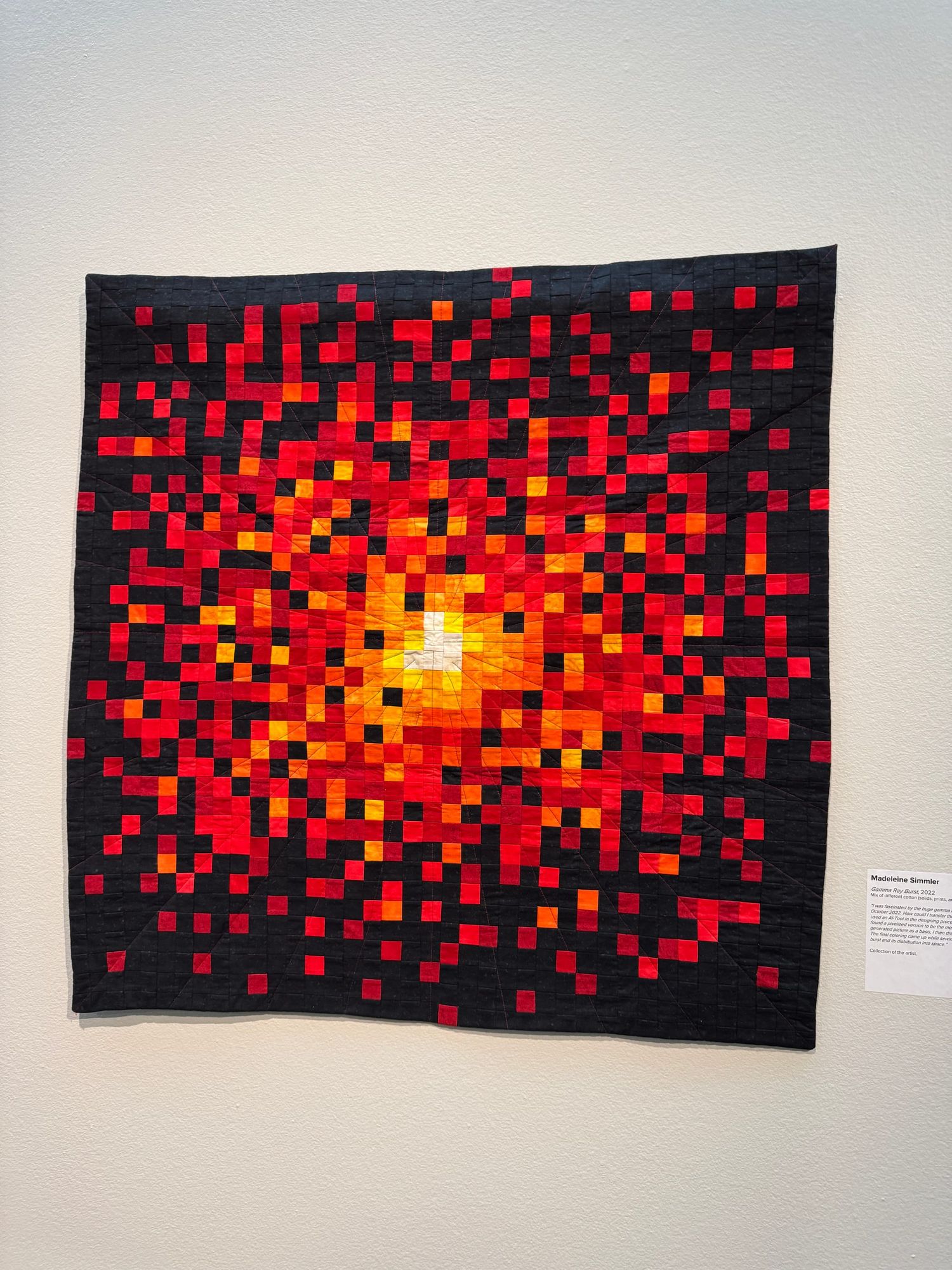
But the exhibit also shows that it doesn’t have to be this way. For example, Madeleine Simmier’s Gamma Ray Burst (2022) quilt was created by using an AI tool to design the most sewable depiction of a gamma ray burst that happened in October of 2022. The result is an explosion of reds, oranges and yellow that also corresponds to an event that really did happen. The AI made the quilt not just a cool rendering of this explosion in a distant galaxy but an accurate one. It adds value, and it’s interesting.
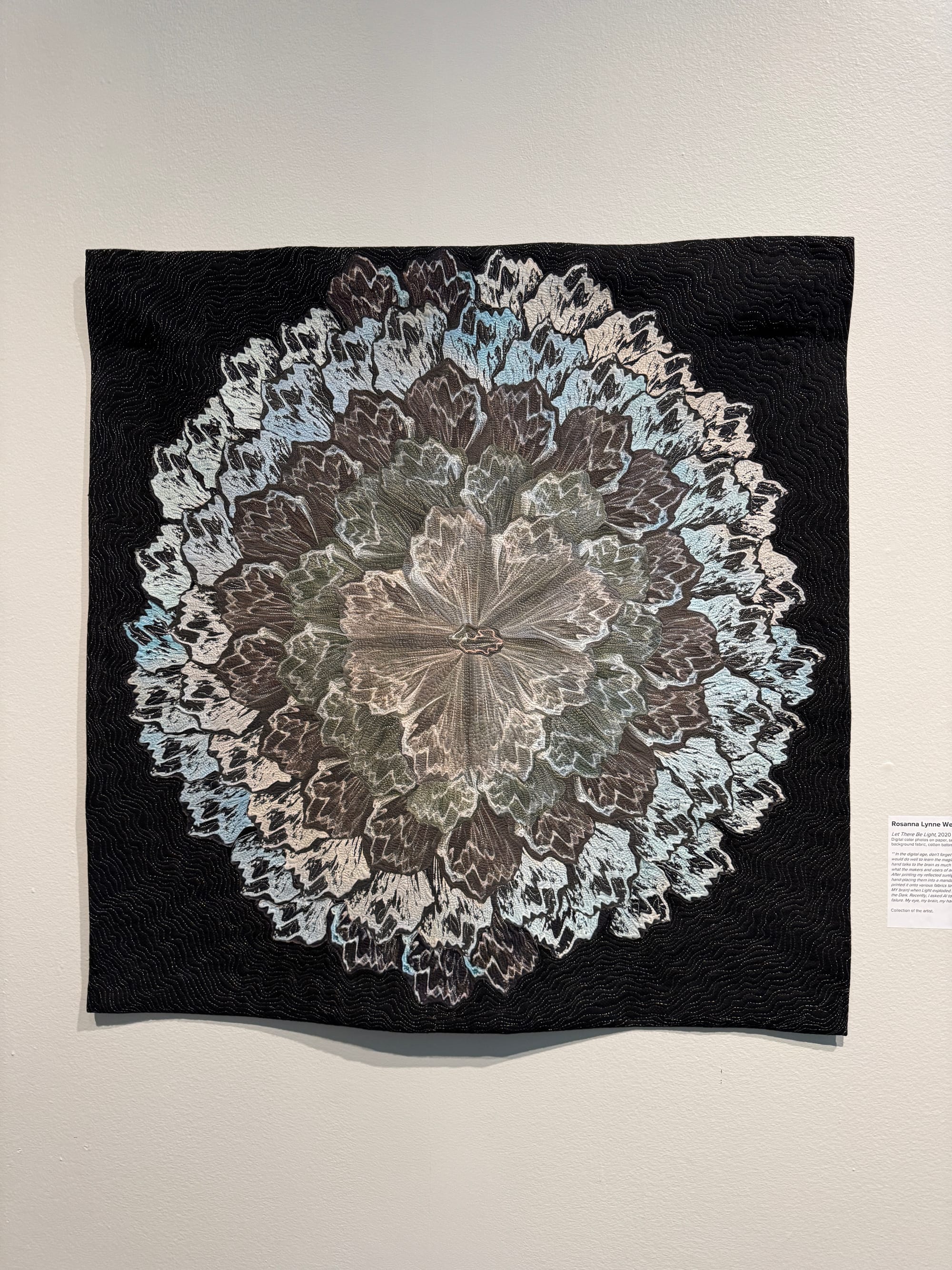
In contrast, “Let There Be Light” by Rosanna Lynne Welter was created by printing reflected sunlight photos and hand-placing them into a mandala, photographing them and printing them onto fabric. The artist asked AI to create a better image, but it failed to do so. The resulting quilt is a testament to the processes that AI can’t replace.
It’s not clear how much AI was used in some of these pieces. This makes sense. Given the backlash to AI art, I might not want to let on if I used AI in my process as an artist either. But this raises questions about credit and the ethics of disclosure: cCn you really claim to be the sole artist if your work relies on the work of thousands of other people to help generate? To what degree can AI be involved before you should acknowledge it? Some quilts use AI to digitize drawings the artist sketched by hand which renders the tool something like a scanner. Others rely on AI for the whole image or the whole pattern. That feels more murky. The LSU Museum of Art invites people to sit in that gray area and draw their own conclusions.


