
Theatre Tulsa x Kristen Simpson: "Lizzie"
Theatre Tulsa Studios
April 11, 2026
Self-produced theatre is having a moment in Tulsa. After the success of productions like Click: A Date Night Double Feature and The Dead Guy in the Pool in 2025, it looks like more and more artists are willing to put their creativity (and cash) behind a project that speaks to them on a personal level, hoping that it will equally resonate with the public.
Lizzie, self-produced by Kristen Simpson in collaboration with Theatre Tulsa, is one such project. After a tantalizing lead-up that included a year-long fundraising campaign, a one-night-only cabaret last July, and a preview performance at Tulsa Fringe Festival last September, the final product hit the stage in its entirety this past weekend.
I wasn’t the only one who’d had my eye on this show. The anticipation was palpable when I arrived at Theatre Tulsa Studios Saturday evening for a performance that sold out before the run began. Thinking I arrived early enough at 7:35 p.m. to get my pick of a seat for an 8 p.m. show, I was surprised to see the parking lot was already full. By the time I got my drink and briefly visited around, the house was practically packed, leaving me the seat front and directly center, just inches away from the stage.
Lizzie, which premiered in 2009 in New York City, is a punk-rock musical detailing the life of the infamous Lizzie Borden through the perspectives of four women close to the story: Lizzie, her sister Emma, her neighbor (and, in this story, lover) Alice, and the maid Bridget. The story opens in August 1892, a few days before the murders, and covers the incident, the fallout, the trial, and Lizzie’s eventual acquittal.
While the events in the house of Borden leading up to and during that fateful day are not entirely known, the speculations around it have become American folklore and provide the driving forces of the musical’s plot. Here, Lizzie is a victim of sexual abuse at the hand of her father, creating the impetus for her anger. After learning her stepmother is trying to write her out of her father’s will, her rage boils over and she takes matters into her own hands—literally, in the form of an axe, which she wields to kill both her stepmother and her father.
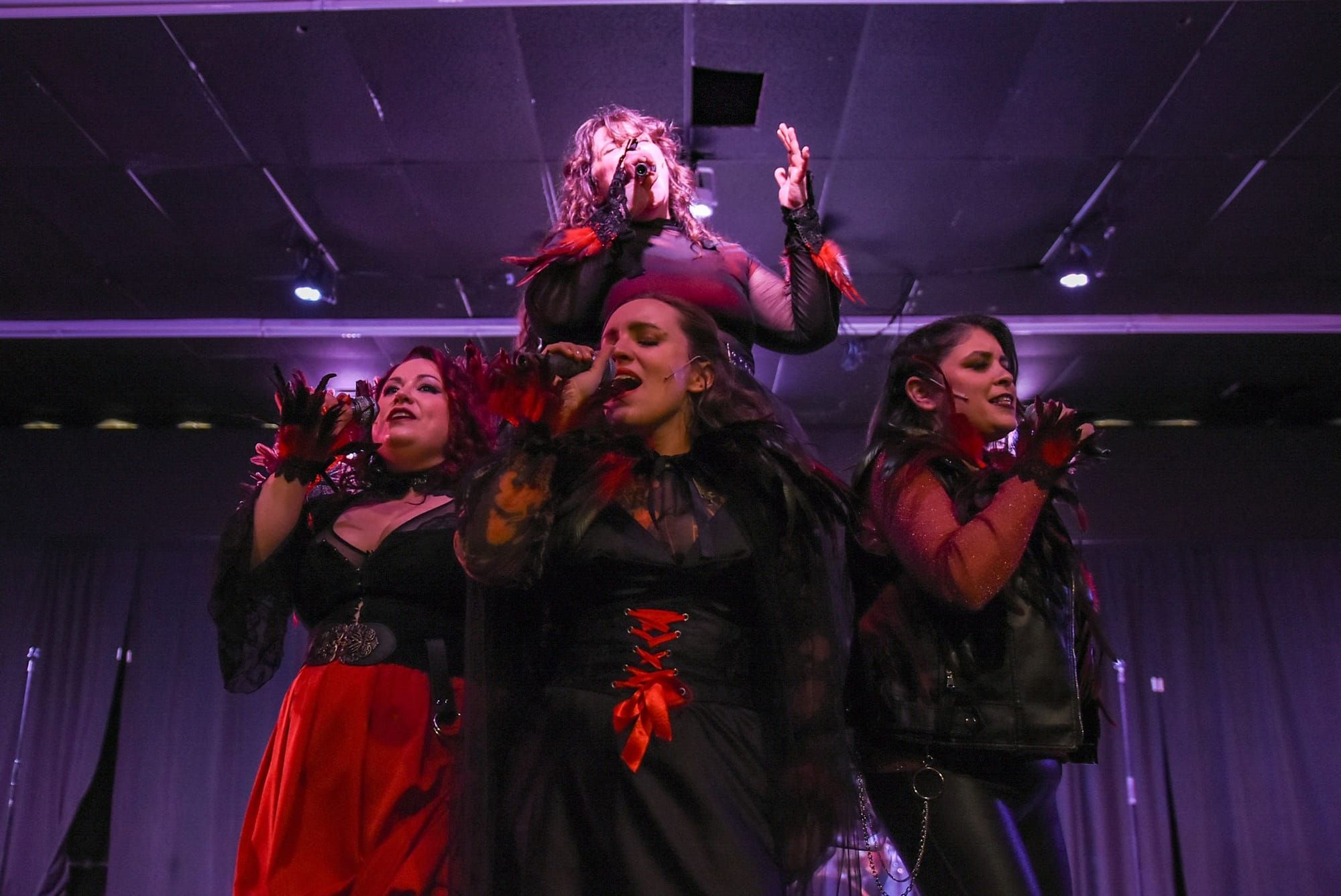
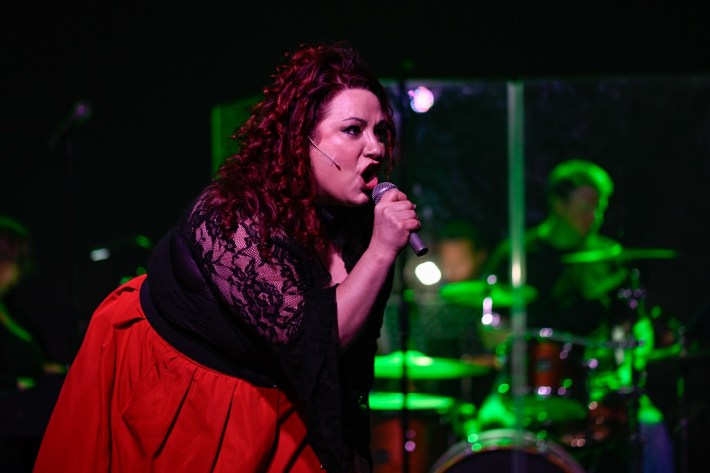
Because the plot of the musical hinges not on known fact but on speculation, it made sense for director Thomas Farnan-Williams to pull the piece out of its historical context and embrace a rock concert aesthetic for this production. Instead of evoking the time period, the costumes fashioned a punk-goth girl band, complete with red and black corsets, fishnets, chains, and leather with intentional accessories and styling that aligned with each character’s station and personality. Platforms created a long stage at the back of the space and a runway down the middle, placing audiences on three sides. With the addition of a live band in the back, I felt too formal sitting in my chair in the front row. In a space as intimate as Theatre Tulsa Studios, I felt like I should be standing and dancing along.
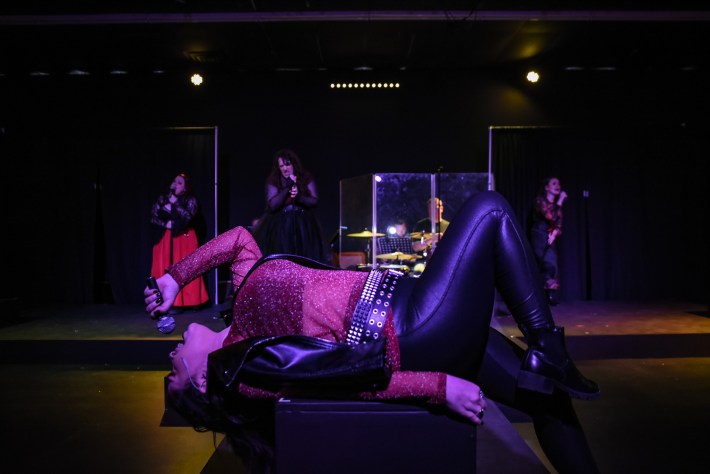
This rock aesthetic bled into some of the performances as well. Simpson joined the cast as Bridget, a role she played back when Tulsa Project Theatre produced Lizzie in 2018. She guided the audience through the story with attitude—grasping the mic stand as she sang to all sides of the audience, flipping her hair dramatically, and giving cheeky fourth wall breaks during her dialogue that made me giggle.
Also reprising her role from 2018, Liz Brillhart (Emma) commanded attention with her striking leather ensemble, stiff posture, severe stare, and consistently impressive vocal control and stamina. Her solos had a rock edge that always cut through the music.
Leah Rose joined this veteran cast as the titular character with an absolutely unruly and primal performance, animalistically embodying the traits often deemed “ugly” in women: self-centered, angry, vengeful. While this made it hard to fully stand behind Lizzie and her actions, thus dampening the celebratory ending when she is acquitted, it did give the character agency and painted a more complicated and nuanced portrait of the infamous woman.
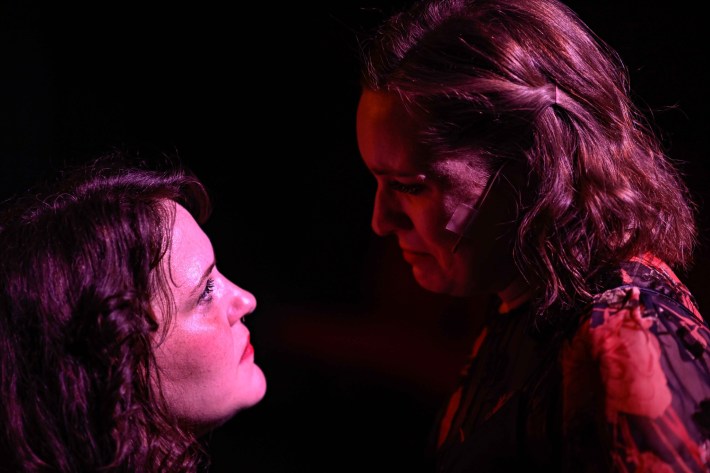
This choice also perfectly balanced Rose’s scene partner Cristen Burdell, who played Alice in that 2018 production and again here. Burdell’s gentle demeanor and longing gazes allowed us to see a softer side to Lizzie. Their relationship held so much tenderness—heightened by delicate yet powerful songs like “If You Knew” (one of the most intimate performances in the show) and “Will You Stay?”—that my heart broke when Alice, horrified by the murders, decided to testify against Lizzie. In Burdell’s performance, all the hope and goodness Alice saw in Lizzie crumbled into tears in a way that felt familiar and true.
Each actress brought masterful musical ability, blending seamlessly and beautifully in harmonies. The three-part chorus of “Why Are All These Heads Off” was so tight it scratched something in my brain. Rose and Brillhart’s beautifully complementary duet in “Watchmen for the Morning” left the room in silent awe, and the four-part harmony at the end of “Mercury Rising” was so ethereal it engulfed me in the grief Lizzie felt when she learned her father had murdered her beloved wild birds.
In fact, these women had such powerful voices that they often blew out their mics, causing the live band to overpower them. Because the story was almost entirely told through song, this technical glitch made it difficult to follow the nuances of the plot and character development, especially in songs about Lizzie’s relationship with her father and in “Thirteen Days in Taunton," which covers the entirety of the trial. It also numbed the final notes in the show’s big rock numbers, diminishing that cathartic finish you want to feel. To the actors’ credit, they never dropped their performance for a second, nor their characters’ emotional journey. And while I knew I wasn’t fully grasping the story, I was locked in—so much so that I was surprised by how soon the lights went up for intermission and the end of the show.
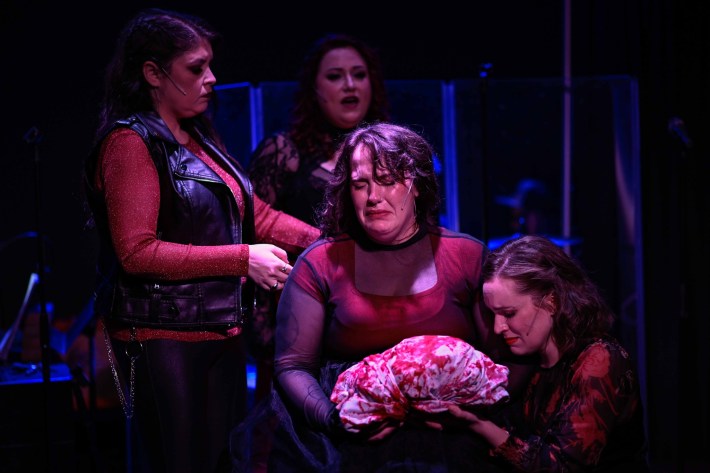
It might have been the bird funeral or the big costume change into feathered apparel in the final number, but I left Theatre Tulsa Studios thinking about Kate Chopin’s The Awakening. In this 1899 book, birds, and specifically caged birds, are a metaphor for societal restraints and the lack of freedom women experienced during the late 19th century.
It’s a metaphor Lizzie clearly embraces as well. I can’t condone murder and in the story, I saw an alternative way Lizzie could’ve escaped from her stepmother’s wrath and father’s grasp, if only she and her sister worked a little closer together, which complicates my feelings. Even so, there is something admirable about a caged woman gaining control of her independence and being able to truly live for herself—just as it is admirable to see a woman set out to produce a musical she loves, one that paid the artists involved and almost sold out every show. In that regard, Lizzie was a success.


