
American Sampler: Activating the Archive
University of Michigan Museum of Art
525 S. State St., Ann Arbor
July 7, 2026
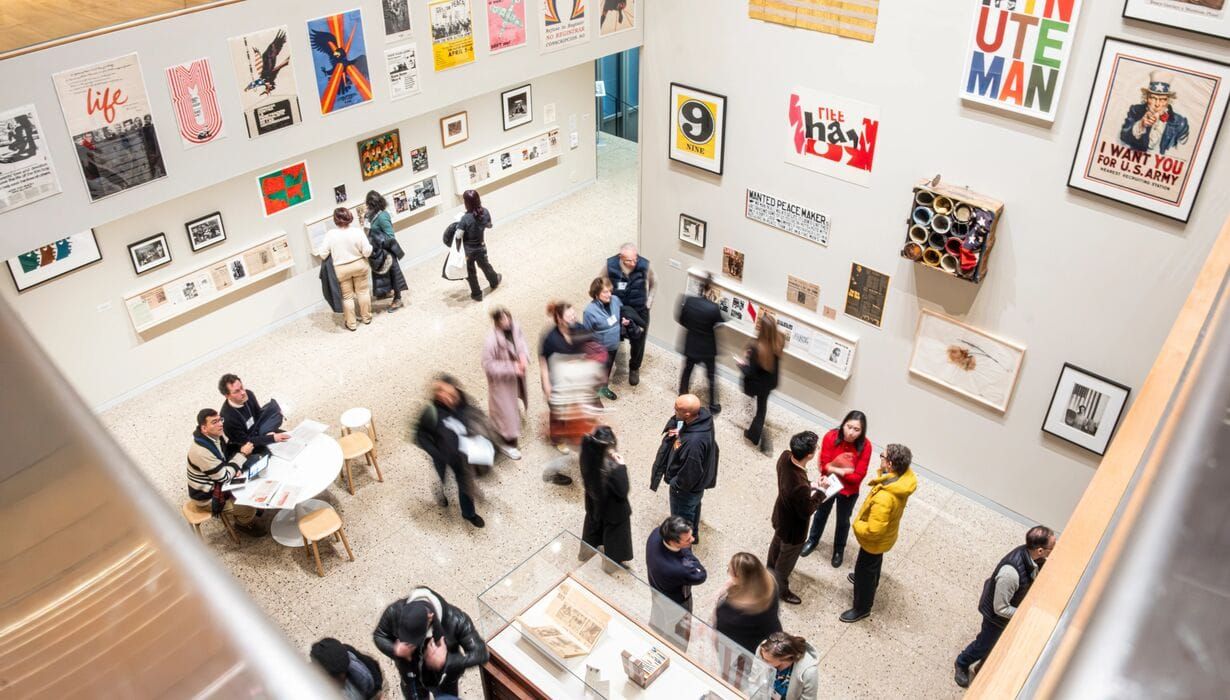
While the University of Michigan Museum of Art (UMMA) renovates its main hall, it’s pulling from its own collection for “American Sampler: Activating the Archive.”
It’s a collaboration between University of Michigan’s Labadie Collection of political dissent and all-star curator Julie Ault. Together, they pulled from a vast collection of posters, prints, newspapers, flyers, stickers, and other various ephemera of politics, protest, and social movements from the 1950s through the 1970s, with a particular focus on the Vietnam War.
On top of being a must-see for graphic design and typography nerds, it’s one of the many exhibitions across the United States marking America’s 250th birthday by pointing out the not-so-celebratory elements of our country’s history.
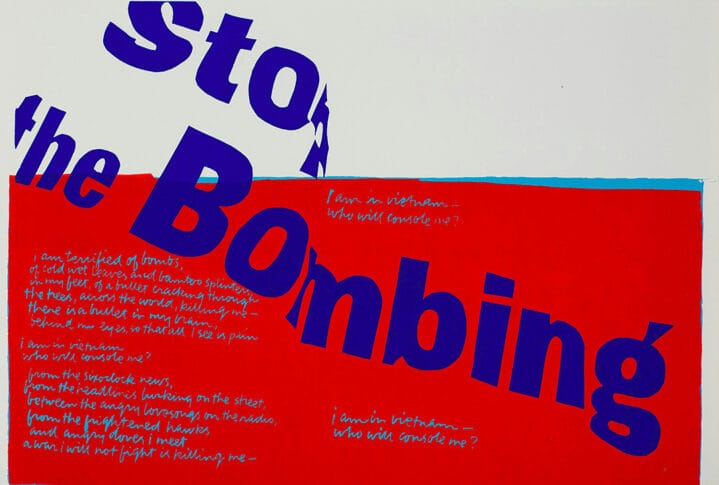
And while it’s beautifully displayed at UMMA’s Vertical Gallery, with massive wall real estate that stretches three floors and impactfully looms over patrons, the whole exhibition ends up leaving the ache of an old French phrase rattling around my head — “the more things change, the more they stay the same.”
There are big-time names here with works from Romare Bearden, Robert Indiana, Nancy Spero, and others, plus excellent hand-drawn posters promoting the Free Breakfast for School Children Program run by the Black Panther Party, and courtroom records from the Chicago Seven trial.
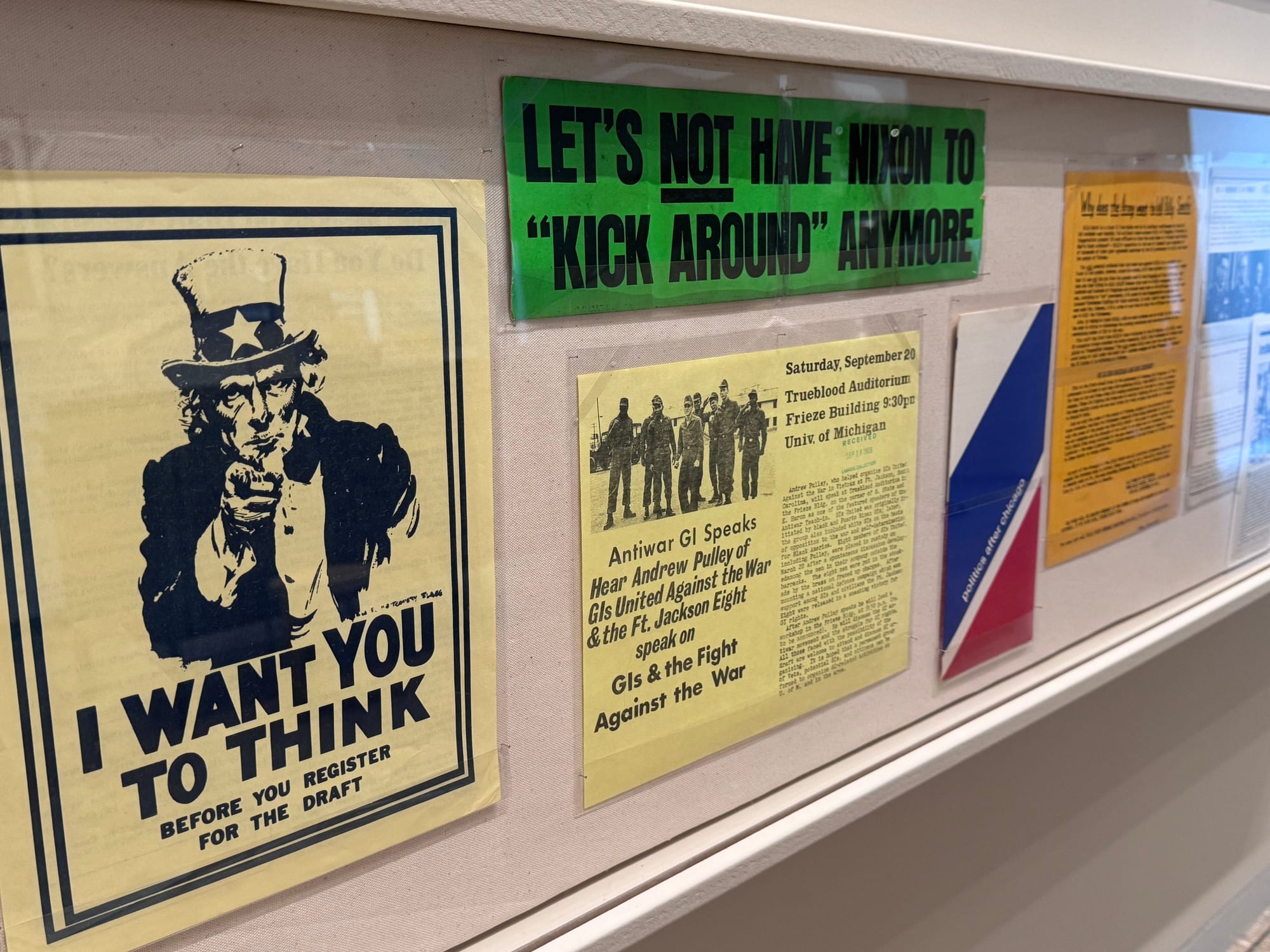
And there’s lots of concepts, questions, and foundational elements of protest artwork from the time of the Vietnam War that are being echoed yet again with this generation’s concerns and arguments about the Israeli-Palestinian conflict.
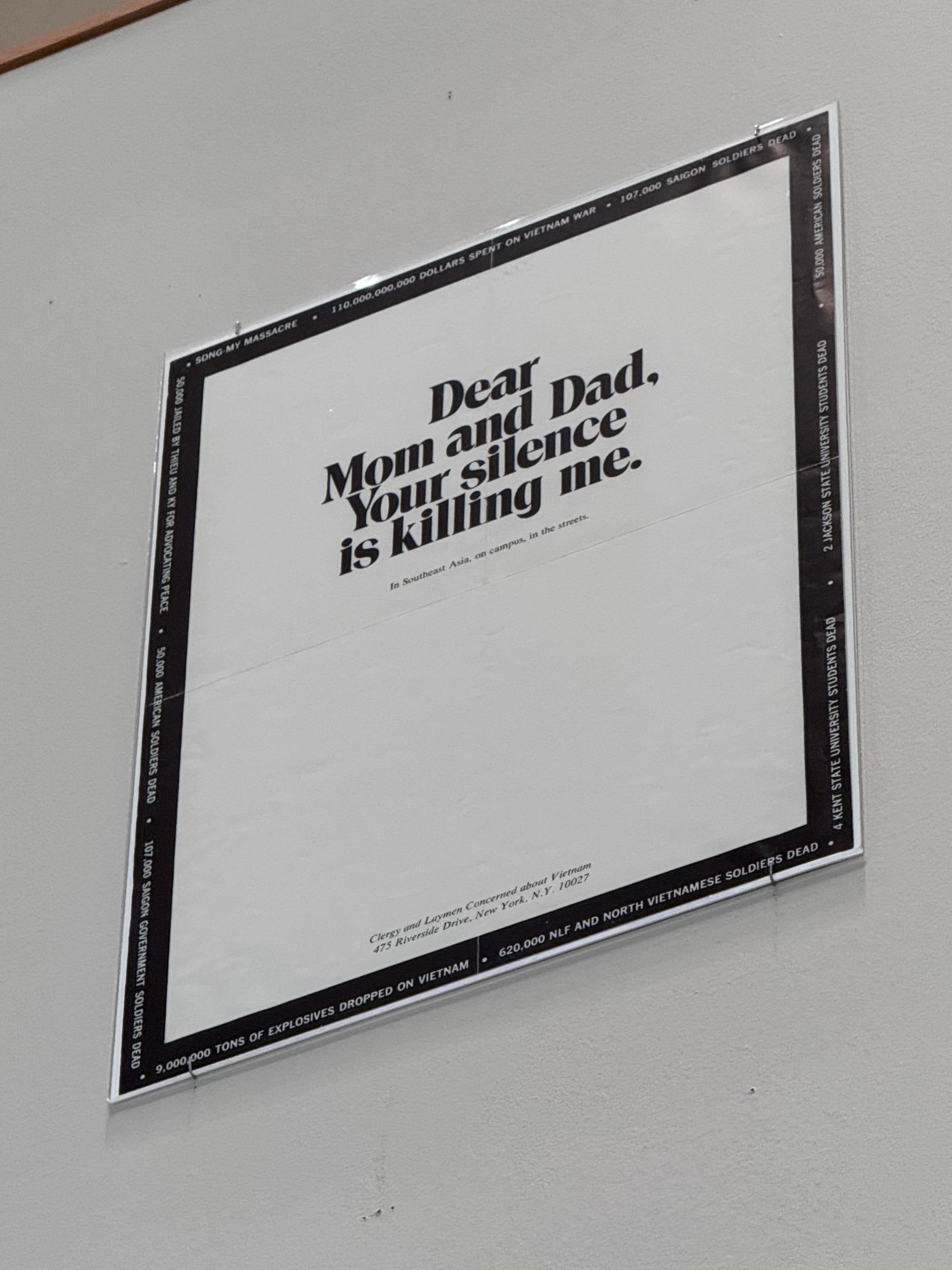
“Dear Mom and Dad, Your silence is killing me” is written on one poster, echoing the multi-generational conversations happening today about who’s speaking up for what. Another poster shows a pathway filled with dead kids, overlayed with “Q: And babies? A: And babies,” much like disbelief about the high body counts of children being tallied up throughout Gaza.
It’s far from the fault of curator Julie Ault and this exhibition that the impact of these protest materials feels a bit underwhelming in this climate. In 2026, similar concepts and phrases are yet again being deployed to little effect for actual change.
The artifacts in “American Sampler” are still incredible heirlooms of design in their own right. The main thing that has changed is that our ability to design compelling protest signs is sadly declining.
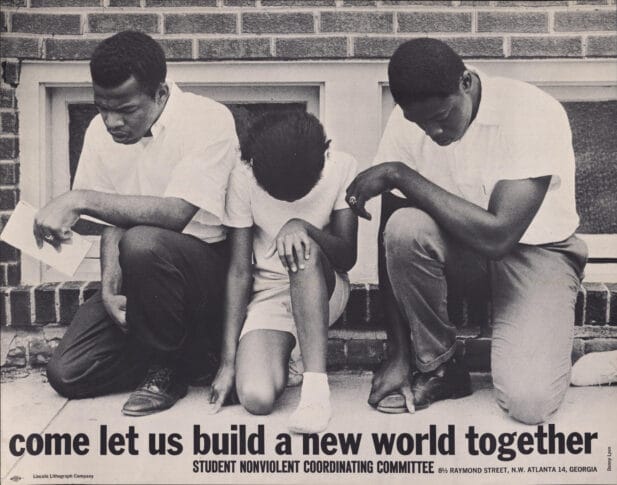
There’s some fault here, however, for the exhibition to stop in the 1970s and not try to bring some sense of current times into “American Sampler.”
“I once imagined archives as airless mausoleums of history, sealed off from the present,” wrote curator Ault about this exhibition, but it is a bit sealed off from today.
While some of the artwork displayed in “American Sampler” is truly radical (at least at one point in history), it would’ve been wholly radical if this exhibit pulled some of the protest artwork that was produced on University of Michigan’s own campus in recent years, when Pro-Palestinian student encampments were set up to protest, in part, the university’s financial ties to Israel and military companies.
Otherwise, it feels like “the more things change, the more they stay the same.”
Follow Midbrow Detroit on social media: Bluesky, Facebook, Instagram, Threads, TikTok, X.


